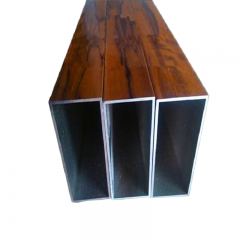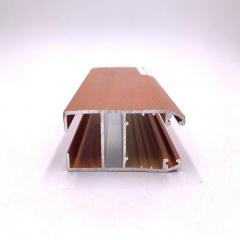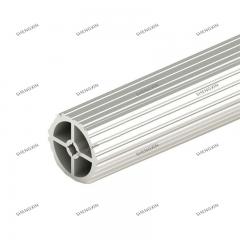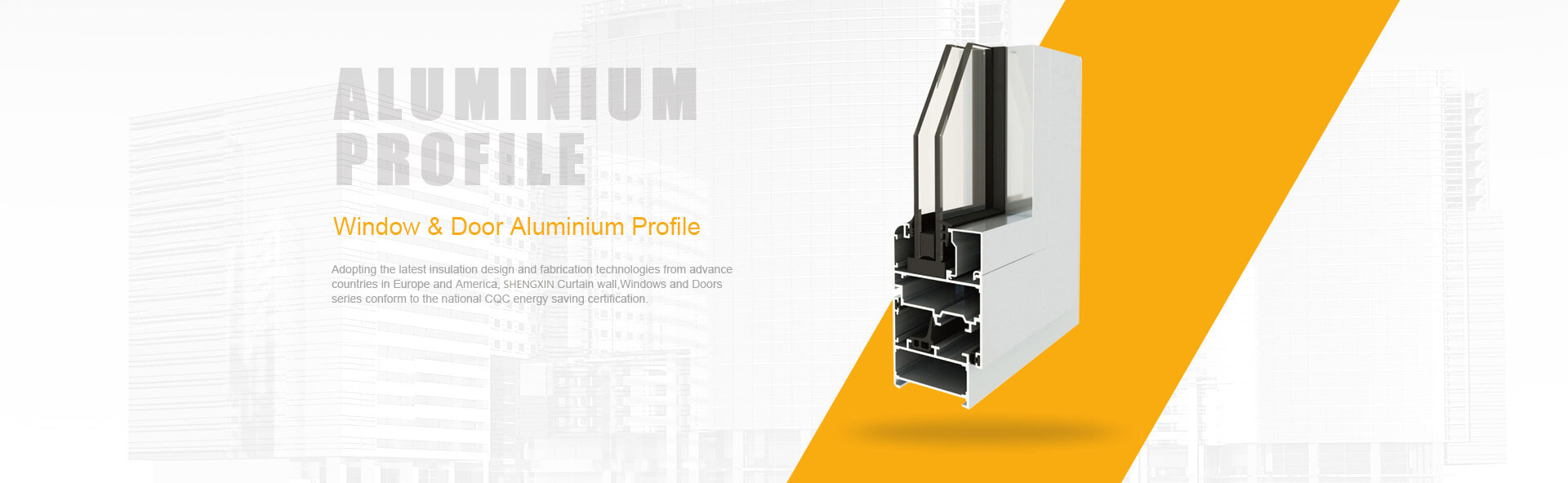
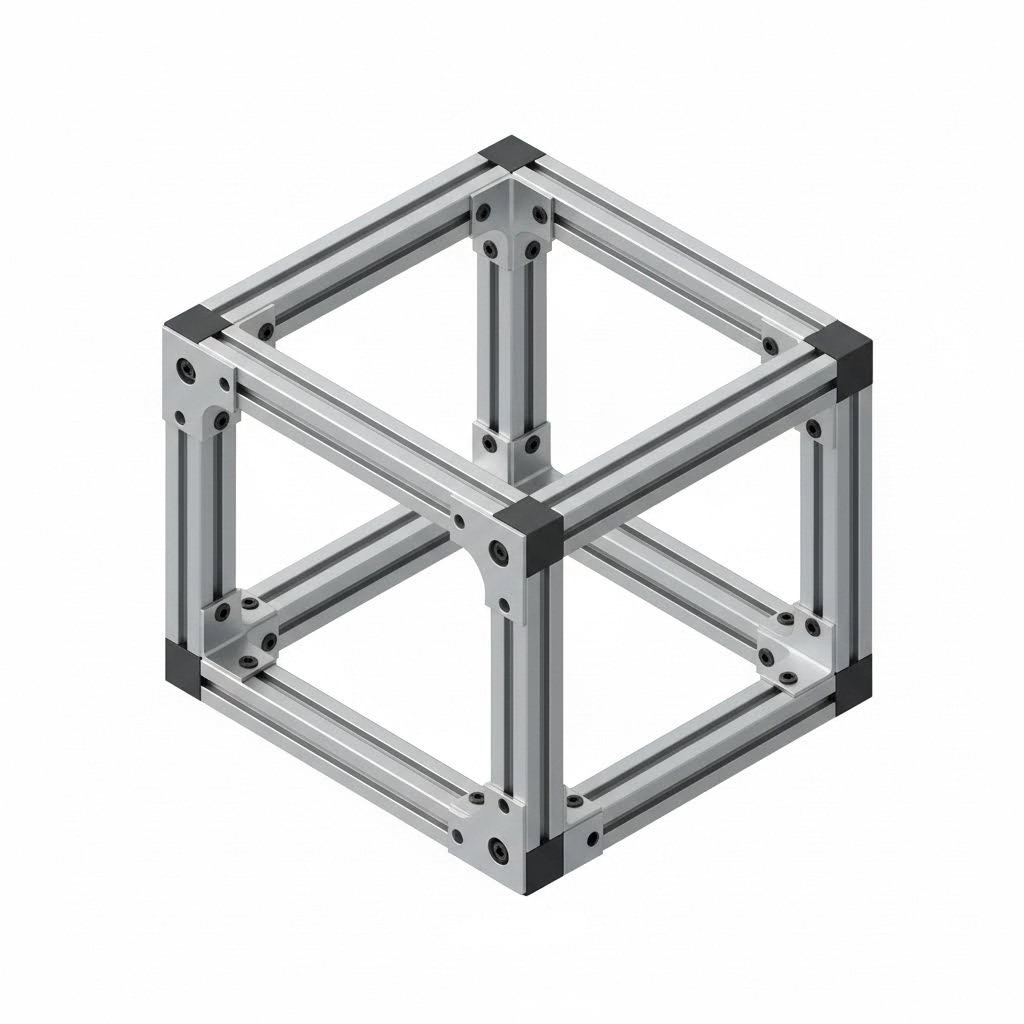
Imagine building a sturdy workstation, machine frame, or safety enclosure—and then easily modifying it next month without cutting, welding, or starting over. That's the power behind t-slotted framing, a system that has transformed how industries approach structural design and assembly.
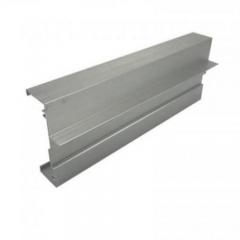
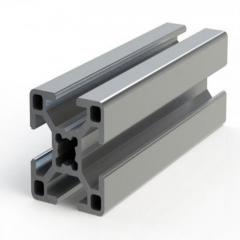
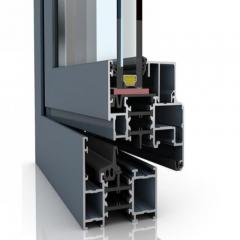
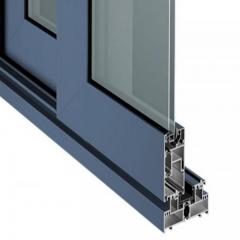
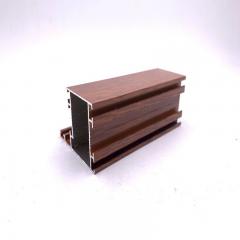
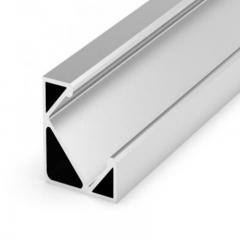
At its core, t-slotted aluminum framing consists of extruded aluminum profiles featuring distinctive T-shaped channels running along their lengths. These precision-engineered slots accept specialized fasteners like T-nuts and bolts, allowing components to slide into position and lock securely anywhere along the profile. The result? A modular aluminum framing system that functions like industrial-grade building blocks for engineers, designers, and makers alike.
Traditional framing methods—welding steel, drilling holes, or permanent bolting—create rigid structures that resist change. Need to relocate a support beam on a welded frame? You're looking at cutting, re-welding, grinding, and repainting. That's time, money, and specialized skills you might not have available.
Profile extrusions with T-slots flip this approach entirely. According to 80/20 Inc., aluminum extrusion t-slots are modular, allowing you to easily adjust them, add connections, and join profiles as necessary—all with simple hand tools. There's no welding required, no heat distortion to worry about, and no specialized certifications needed for assembly.
The aluminum extrusion process itself creates these advantages. A heated aluminum billet (typically 6063 alloy) is forced through a precisely shaped die, producing long lengths with consistent T-shaped channels. This manufacturing method delivers tight tolerances and smooth surfaces right from the start, often with a protective anodized finish already applied.
Think of extruded aluminum profiles as structural LEGOs for professional applications. The aluminum t channel design allows components to attach anywhere along the profile's length—not just at pre-drilled holes. This flexibility opens up possibilities that fixed-hole systems simply can't match.
Structures built with T-slotted framing can be assembled, modified, expanded, and completely disassembled without permanent alterations—preserving both the components and your investment for future projects.
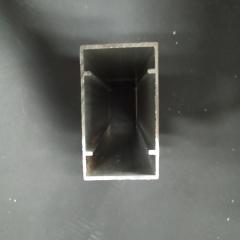
Understanding the basic anatomy of a T-slot profile helps you work with these systems confidently:
This combination of modularity, durability, and accessibility makes t-slotted framing the foundation for countless applications—from rapid prototyping to full-scale production lines. Whether you're building machine guards, custom workstations, or automation frameworks, understanding these fundamentals sets you up for success with every project that follows.
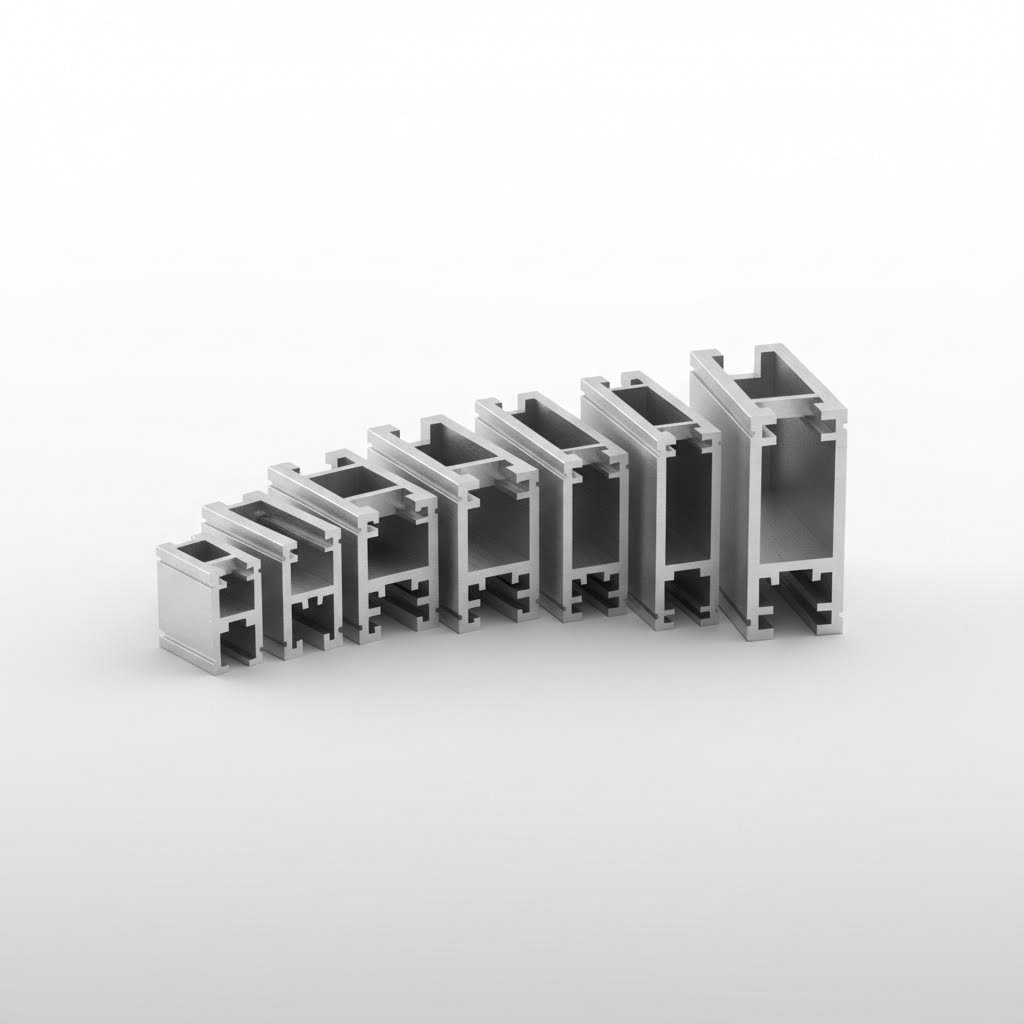
You've grasped the fundamentals of T-slotted framing—now comes the practical question that trips up many first-time buyers: which profile size do you actually need? Walk through any supplier catalog, and you'll encounter numbers like 2020, 4040, t slot 2040, or 4060 aluminum extrusion. These aren't random codes. They're your roadmap to selecting aluminum extrusion profiles that match your project's structural demands perfectly.
Here's the good news: those intimidating numbers follow a logical pattern. The series number typically corresponds to the profile's metric dimensions in millimeters. A 2020 profile measures 20mm x 20mm in cross-section. A 4040 profile? That's 40mm x 40mm. Simple, right?
According to machining-custom.com, these three specifications—2020, 4040, and 8020—represent the most popular aluminum extrusion sizes, each offering distinct advantages in structural design, load-bearing capacity, and versatility.
But here's where it gets interesting. Manufacturers use different naming conventions:
The extruded aluminum channel you select from one manufacturer may have a slightly different designation from another—even when the actual dimensions are identical. Always verify actual measurements rather than assuming series numbers translate directly between brands.
So how do you choose between a compact 20 series and a robust 80 series? The answer lies in understanding what each size brings to the table. Here's a comprehensive comparison based on data from GAP Engineering and industry specifications:
| Series | Profile Dimensions | Slot Width | Typical Applications | Relative Strength |
|---|---|---|---|---|
| 15 Series | 15mm x 15mm | 5-6mm | Miniature frames, electronics enclosures, educational kits | Light |
| 20 Series | 20mm x 20mm | 6mm | 3D printer frames, small workbenches, DIY projects, retail displays | Light to Medium |
| 30 Series | 30mm x 30mm | 8mm | Medium workbenches, automation systems, exhibition stands, roof racks | Medium |
| 40 Series | 40mm x 40mm | 8-10mm | Industrial machine frames, heavy workbenches, warehouse storage, gantry systems | Medium to Heavy |
| 45 Series | 45mm x 45mm | 10mm | Heavy industrial frames, cargo systems, material handling equipment | Heavy |
| 80 Series | 80mm x 80mm | 10mm+ | Heavy machinery bases, large automation cells, structural building elements | Maximum |
Notice how wall thickness increases alongside profile dimensions. A 2020 aluminum extrusion profile typically features wall thickness between 1.5mm and 3mm, while 8020 profiles use significantly thicker walls—directly translating to higher rigidity and load capacity.
Beyond square profiles, manufacturers offer rectangular variations like t slot 2040 (20mm x 40mm) or 4060 aluminum extrusion (40mm x 60mm). These asymmetric extruded aluminum profiles provide directional strength advantages—greater rigidity along one axis while maintaining a lower profile height. They're particularly valuable for applications like roof rack crossbars, where you want strength without excessive wind resistance.
When should you reach for lighter versus heavier aluminum extrusion profiles? Consider these practical guidelines:
Choose 15/20 Series When:
Choose 40/45 Series When:
Choose 80 Series When:
Here's a practical insight many newcomers miss: the relationship between profile size and load capacity isn't linear. Doubling the profile dimension roughly quadruples the moment of inertia—meaning a 4040 profile can support significantly more than twice what a 2020 handles. This exponential relationship makes upsizing surprisingly effective when you need extra structural margin.
One final consideration: different series use different slot widths, which determines hardware compatibility. A T-nut designed for 6mm slots won't fit 10mm slots. When mixing profile sizes within a single structure, verify that your connectors and fasteners match each profile's slot specifications—a detail that becomes critical as we explore hardware selection next.
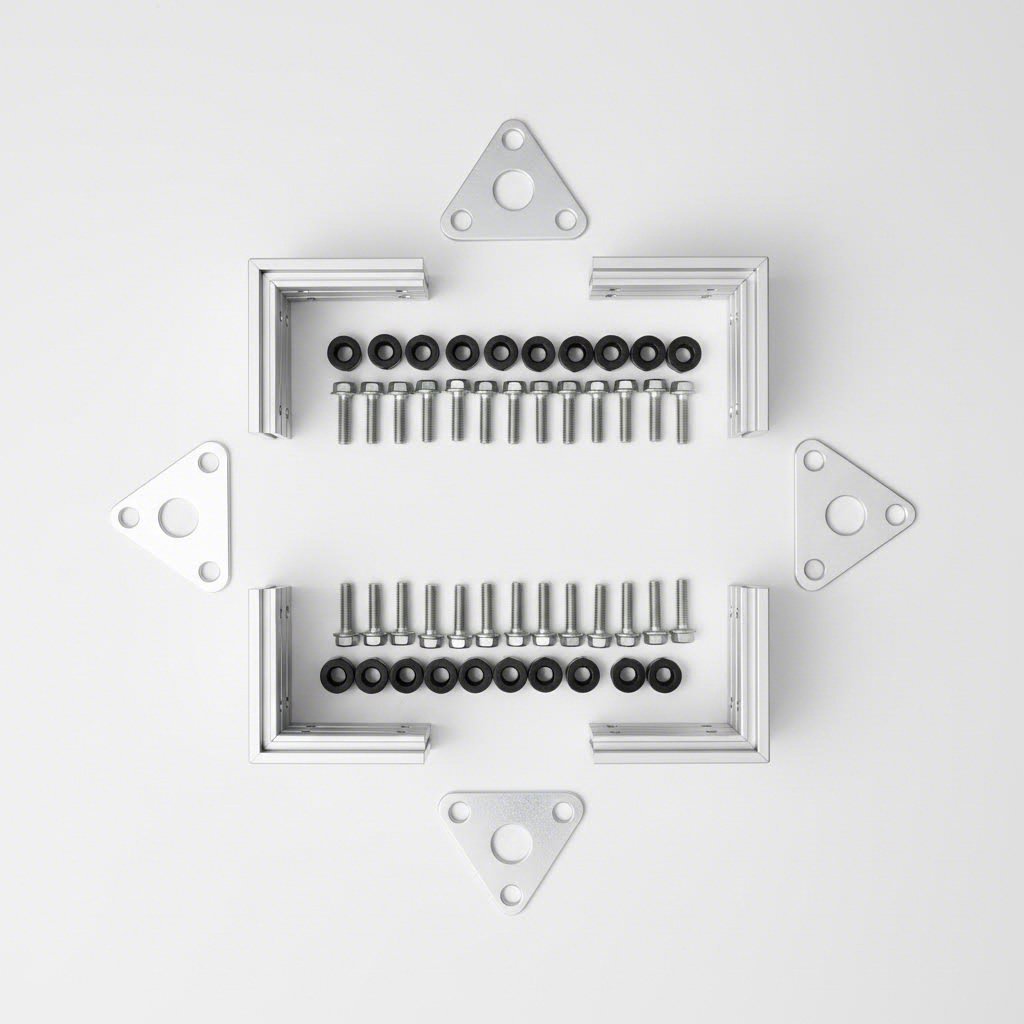
You've selected the perfect profile series for your project. Now comes the question that determines whether your structure holds together reliably or wobbles at every joint: which connectors and fasteners do you actually need? Think of hardware as the handshake between profiles—choose wisely, and you'll build something rock-solid. Choose poorly, and you'll spend hours troubleshooting loose connections.
The good news? T-slotted systems offer an extensive ecosystem of hardware designed for virtually every joint type imaginable. According to A-Line Automation, the choice of fastener often depends on required load capacity, the angle of the connection, and whether you need to hide the joint or make it easily accessible.
Understanding what's available helps you make informed decisions. Here's a comprehensive breakdown of hardware categories and their specific roles:
| Hardware Category | Primary Function | Installation Method | Best Use Cases |
|---|---|---|---|
| Corner Brackets | Create 90° connections between profiles | Mount to exterior or interior profile faces using T-nuts and bolts | Frame corners, perpendicular joints, structural reinforcement |
| T-Nuts and Bolts | Profile-to-profile joining and accessory mounting | Insert into T-slot channel, secure with button head or socket head screws | Universal connections, bracket attachment, t slot plate mounting |
| End Fasteners | Hidden right-angle connections | Require counterbored access hole; screw threads into mating profile end | Clean aesthetic applications, finished enclosures, visible structures |
| Gussets | Reinforce joints and distribute stress | L-shaped or triangular plates secured across joint intersection | High-load corners, vibration-prone structures, t slotted rail assemblies |
| Linear Bearings | Enable smooth motion along profiles | Mount to carriage plates that ride within t slot rail channels | CNC gantries, t slot slider applications, t slot roller mechanisms, automation systems |
Each category serves a distinct purpose. L shaped brackets handle the heavy lifting at corners, while threaded bolt inserts provide attachment points anywhere along your profiles. The magic lies in combining these components strategically.
T-nuts might seem simple, but choosing the wrong type leads to frustration during assembly. Here's what separates the three main varieties:
For projects requiring frequent reconfiguration, stock up on drop-in variants. For permanent structures where maximum strength matters, slide-in T-nuts remain the gold standard.
Selecting appropriate connectors goes beyond grabbing whatever's on the shelf. Consider these critical factors before purchasing:
Here's where many newcomers stumble: bolt sizes must match your profile's slot width. A M8 bolt designed for 40 series profiles won't fit 20 series slots properly. Common pairings include:
When selecting screws, you'll encounter two primary types. Button head cap screws (BHCS) provide low-profile, rounded heads ideal for smooth finishes. Socket head cap screws (SHCS) deliver higher torque capacity for demanding connections. For t slotted structures carrying substantial loads, SHCS typically offers superior clamping force.
With your hardware fundamentals covered, you're equipped to build robust joints that last. But there's another critical decision ahead—how does aluminum T-slot framing stack up against traditional materials like welded steel or wood? Understanding these trade-offs ensures you're using the right system for your specific application.
So you understand T-slotted profiles, you've picked your series, and you know which connectors to use. But here's the question many engineers and project managers wrestle with: should you even use aluminum structural framing in the first place? What about welded steel, Unistrut channel, or even traditional wood construction?
The honest answer? It depends entirely on your application. Let's break down how T-slot aluminum stacks up against the competition—no sales pitch, just practical trade-offs you can actually use.
Steel has dominated industrial construction for over a century, and for good reason. According to 80/20 Inc., steel yields a higher tensile strength than aluminum (50,000 psi vs. 36,000 psi). That raw strength makes steel the default choice for permanent, heavy-load structures where weight doesn't matter.
But here's what the strength numbers don't tell you: aluminum is roughly one-third the weight of steel. In terms of strength-to-weight ratio, aluminum is almost two times stronger than steel at the same weight. This matters enormously when you're building structures that need to be moved, modified, or assembled without heavy equipment.
The comparison below covers the major framing options you'll encounter, from metal stud framing systems to welded fabrication:
| Factor | T-Slot Aluminum | Steel (Unistrut/Strut Channel) | Welded Aluminum | Welded Steel Tube | Wood Framing |
|---|---|---|---|---|---|
| Weight | Lightweight (⅓ of steel) | Heavy | Lightweight | Very Heavy | Medium |
| Corrosion Resistance | Excellent (natural oxide layer) | Requires coating/galvanization | Excellent | Requires painting/coating | Poor (susceptible to rot) |
| Modularity | Fully reconfigurable | Limited (fixed hole patterns) | None (permanent) | None (permanent) | Limited modification possible |
| Initial Cost | Medium-High | Medium | High (welding labor) | Medium-High | Low |
| Long-term Cost | Low (reusable, low maintenance) | Medium (maintenance needed) | Medium | High (rust prevention) | High (replacement/repair) |
| Required Tools | Basic hand tools | Wrenches, possibly cutting tools | Welding equipment | Welding equipment, grinders | Standard carpentry tools |
| Skill Level Required | Low to Medium | Low to Medium | High (certified welder) | High (certified welder) | Low to Medium |
| Best Applications | Prototypes, automation, workstations, modular systems | Electrical/mechanical support, retrofit installations | Permanent custom structures | Heavy machinery bases, permanent high-load frames | Budget projects, temporary structures |
Notice something interesting? When JHFoster analyzed the total cost comparison, they found that 80/20 aluminum framing systems often save hundreds of dollars versus welding steel framing. Why? Steel requires metal machining—cutting, drilling, grinding—before assembly. T-slot aluminum eliminates most of that labor entirely.
Standard stud spacing in steel stud framing typically follows 16" or 24" on-center patterns, creating rigid but inflexible structures. T-slot systems, by contrast, let you position connections anywhere along the profile length. That flexibility alone justifies the material choice for many applications.
Here's where honesty matters. T-slot aluminum isn't always the right answer. Understanding when alternatives make more sense saves you money and headaches:
Now for the scenarios where modular aluminum framing delivers unmatched value:
The bottom line? Choose your material based on your specific application requirements—not assumptions about what's "better." For modular, adjustable, corrosion-resistant structures assembled without specialized skills, T-slot aluminum remains remarkably hard to beat. But for permanent heavy-load installations where reconfiguration has no value, traditional materials still earn their place.
With material selection clarified, there's another factor that significantly impacts both performance and aesthetics: surface finish. The treatment applied to your profiles affects everything from corrosion resistance to hardware compatibility—details we'll explore next.
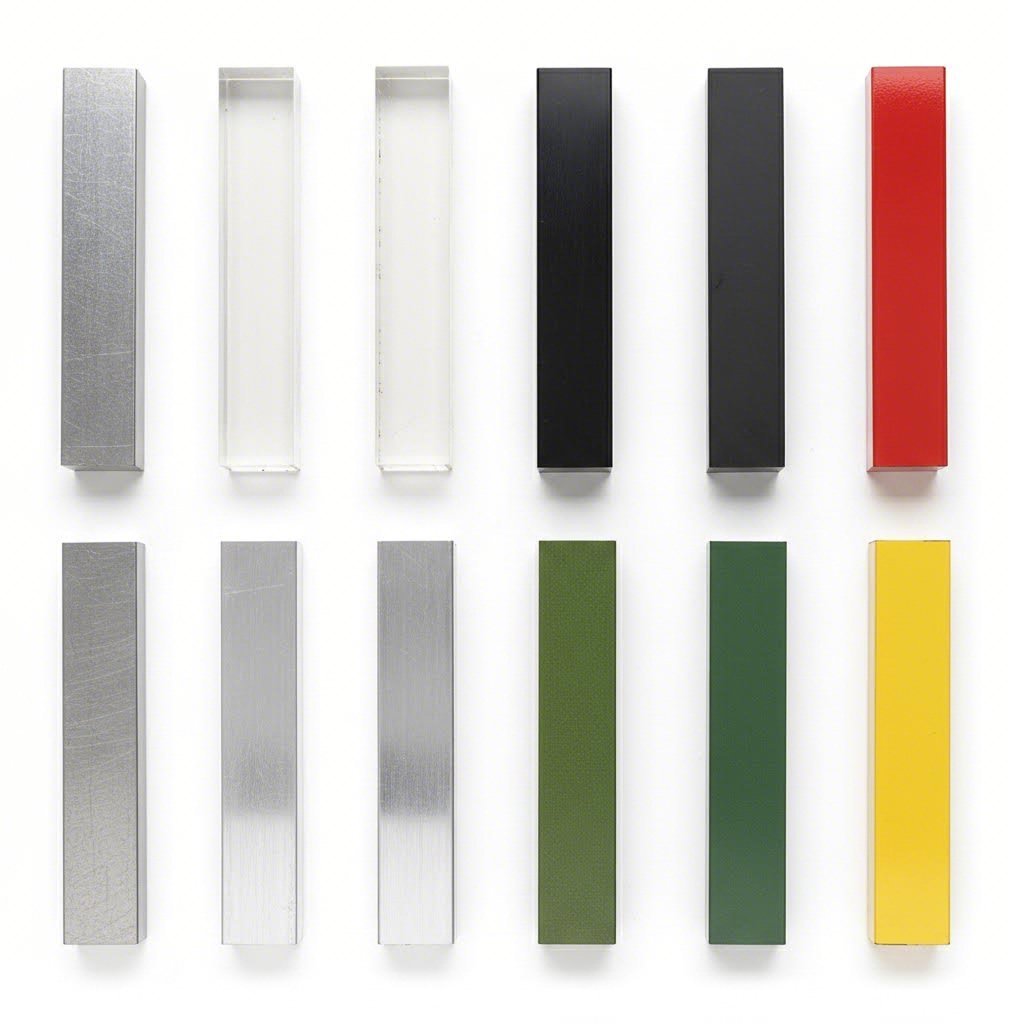
You've selected your profile series, chosen appropriate connectors, and compared aluminum against alternative materials. But here's a detail that often gets overlooked until problems arise: what finish should your aluminum T profiles actually have? The surface treatment you choose affects far more than aesthetics—it determines corrosion resistance, hardware compatibility, and whether your structure survives its intended environment.
According to BRT Extrusions, the finish of aluminum extrusions not only enhances their appearance but also provides crucial protection against wear, corrosion, and environmental elements. Selecting the right finish is essential to ensure the desired aesthetic appeal, durability, and performance of the extruded components.
Let's break down what's actually available. Each finish type serves distinct purposes, and understanding the differences helps you avoid costly mistakes:
Which finish actually performs best for your specific needs? This comparison cuts through the marketing claims:
| Finish Type | Corrosion Resistance | Scratch Resistance | UV Stability | Color Options | Cost Premium | Recommended Applications |
|---|---|---|---|---|---|---|
| Mill Finish | Basic (natural oxide only) | Low | N/A | None (raw aluminum) | Baseline | Hidden structures, temporary setups, cost-sensitive indoor projects |
| Clear Anodized | Excellent | High (HV 200-400) | Good | Natural metallic | +15-25% | General industrial use, cleanrooms, food processing, indoor workstations |
| Black Anodized | Excellent | High | Good | Black only | +20-30% | Visible equipment frames, retail displays, aesthetic applications |
| Powder Coating | Very Good | Medium-High | Good to Excellent | Unlimited | +25-40% | Outdoor structures, colored frames, architectural applications |
| PVDF | Excellent | High | Excellent (30+ years) | Wide range | +50-75% | Marine environments, extreme UV exposure, premium architectural projects |
Here's something many suppliers won't tell you: finish selection directly affects hardware compatibility. Coating thickness adds dimensional buildup to your profiles. According to industry specifications, powder coatings add 50-100 μm to surfaces, while anodizing adds only 6-25 μm. On extruded aluminum rails with tight-tolerance slots, thick powder coating can interfere with T-nut insertion or reduce the effective slot width.
For projects using standard hardware, clear or black anodized finishes typically cause no compatibility issues. If you're powder coating, verify that your T-nuts and fasteners still fit properly—or request that slot surfaces remain uncoated during the powder application process.
Your environment dictates minimum protection levels:
Special environments demand specific considerations. Cleanroom applications typically require anodized finishes because the oxide layer becomes part of the aluminum itself—there's nothing to flake, chip, or generate particulates. Food-grade applications similarly benefit from anodizing's smooth, non-porous surface that resists bacterial harborage and cleans easily.
Powder coating can work in these environments but requires careful selection. Ensure coatings meet FDA or relevant food-contact standards, and inspect regularly for chips that could contaminate products or compromise cleanroom classifications.
The finish you select today determines maintenance requirements and structural longevity for years to come. With surface treatment decisions clarified, you're ready to tackle the structural engineering side—understanding how these profiles actually handle loads and what factors determine whether your design succeeds or fails under stress.
You've selected your profiles, connectors, and finish. Now comes the question that keeps project managers up at night: will this structure actually hold up under load? Understanding structural capacity doesn't require an engineering degree—but it does require grasping a few fundamental concepts that separate successful builds from costly failures.
Here's the reassuring news: aluminum extrusions used in T-slotted framing are surprisingly capable when designed correctly. According to Vention's engineering documentation, even a 45 x 45 mm profile can handle significant loads when properly supported and connected. The challenge lies in understanding which factors actually matter for your specific application.
Let's demystify the technical jargon you'll encounter when researching structural capacity. These concepts sound intimidating, but they're actually quite intuitive once explained in plain terms:
Moment of Inertia (Area Moment of Inertia): Think of this as a profile's resistance to bending. A higher value means less deflection under the same load. According to Vention, a 45 x 45 mm V2 profile has a moment of inertia of 162,325 mm⁴, while a 90 x 90 mm profile jumps to 1,850,913 mm⁴—roughly 11 times more resistant to bending despite only doubling the dimensions.
Deflection Limits: How much bending is acceptable? Most industrial applications limit deflection to 1/200 of the span length. For a 1,000 mm horizontal beam, that means no more than 5 mm of sag at the center. Visible structures often require tighter limits—nobody wants a workbench that visibly droops when loaded.
Safety Factors: This is your margin for error. According to Vention's guidelines, if a structure theoretically fails at 1,000 N of force, a safety factor of two establishes an allowable load limit of 500 N. Industry standards typically require safety factors of 4-5 for structures where failure could cause injury.
Your structure's ability to handle loads depends on multiple interconnected variables. Understanding these helps you make smarter design decisions:
Rather than drowning in formulas, let's establish practical guidelines for common applications. These rules of thumb help you design confidently without hiring a structural engineer for every project:
For typical workbenches supporting hand assembly operations, 40-45 series aluminum tubing handles most requirements comfortably. Limit unsupported horizontal spans to 1,200 mm for moderate loads. According to Vention, when simply supported, a tabletop extrusion of 1,530 mm length can support 100 kg—but adding supports at consistent intervals dramatically increases capacity.
These structures face impact loads from potential equipment failures. Use aluminum square tube profiles one size larger than static calculations suggest, and ensure corner connections include gussets for reinforcement. The consequences of failure justify overbuilding.
Weight typically matters more than maximum load capacity here. Lighter 20-30 series profiles work well for signage and lightweight displays. Focus on lateral stability—these tall, narrow structures are more likely to tip than to fail structurally.
Some applications demand professional oversight regardless of your confidence level. Seek engineering review for:
When manufacturers provide load data, understanding how to read it matters. According to Vention's documentation, compare the maximum bending stress with the material's yield strength to estimate your extrusion's capacity. For 6005-T5 aluminum extrusions, a calculated bending stress of 65 N/mm² is well below the material's 240 N/mm² yield strength—providing significant safety margin.
Key values to look for in manufacturer specifications include yield strength (typically 140-240 MPa for common alloys), area moment of inertia (the resistance to bending mentioned earlier), and recommended fastener torque values. Proper dimensioning and tolerancing of your cuts also affects how loads transfer through connections—sloppy cuts create gaps that reduce joint strength.
Here's the insight that separates experienced designers from newcomers: your connections typically limit structural capacity before your profiles do. According to Vention's engineering data, positioning one extrusion directly on top of another transmits force efficiently, while friction-only joints depend entirely on fastener clamping force.
For friction-only joints, calculate required fasteners by dividing your total load by 2,100 N per fastener. Need to support 6,300 N? You'll need at least three properly tightened fasteners—and that's before applying safety factors. When possible, transform friction joints into three-way connections by threading fasteners directly into extrusion ends, dramatically increasing strength without adding 4x4 post brackets or heavy gussets.
Consider using a screw dimensions chart to verify your fasteners match both profile slot widths and required load capacities. Undersized hardware creates weak points regardless of how robust your aluminum plate connections appear.
The strongest profile in the world fails if connected with inadequate hardware. Design your joints first, then verify your profiles can handle the loads those joints will transmit.
With structural principles understood, you're equipped to design frames that perform reliably under real-world conditions. But theoretical knowledge only goes so far—seeing how these systems perform across actual industries reveals applications you might not have considered for your own projects.
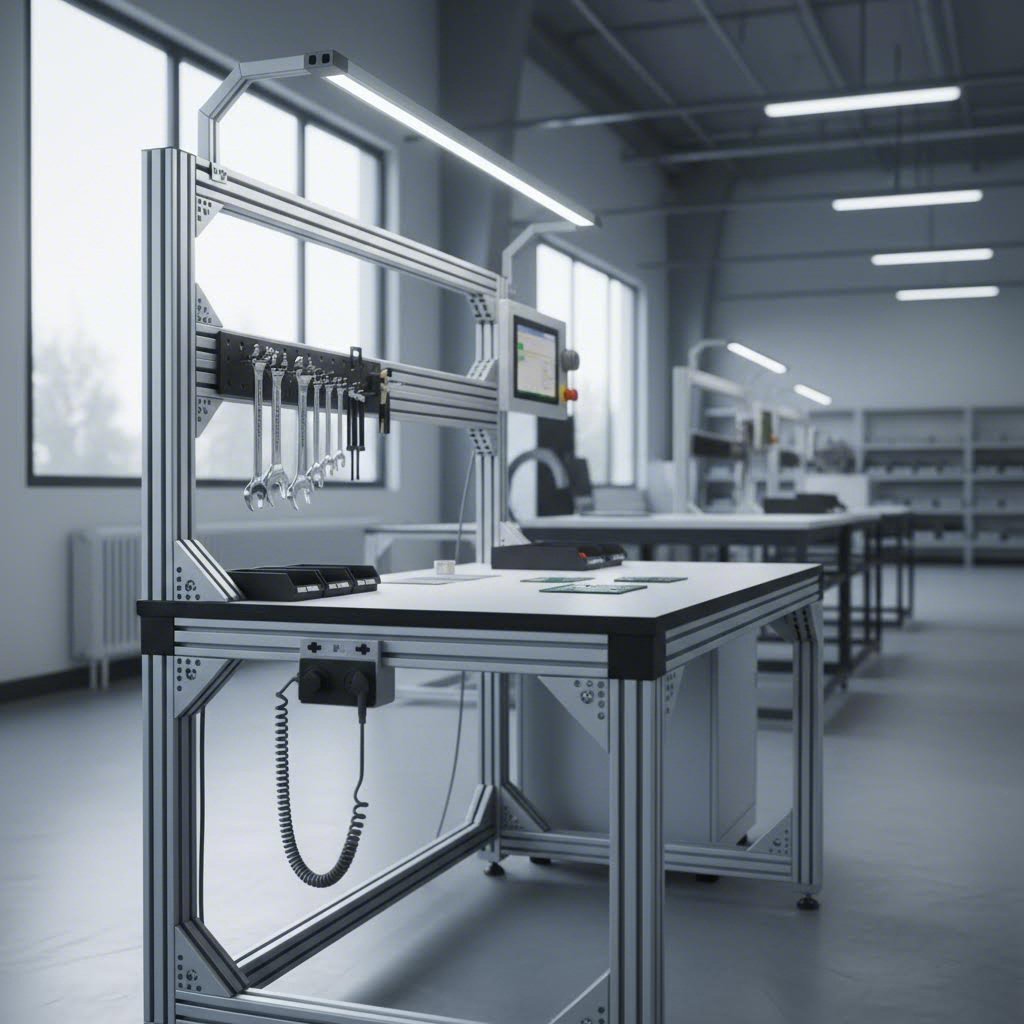
You understand the profiles, connectors, finishes, and structural principles. Now let's explore where these systems actually shine in practice. The versatility of extruded aluminum framing extends far beyond what most newcomers expect—from factory floors to maker spaces, these modular systems solve problems across remarkably diverse applications.
What makes T-slotted aluminum particularly valuable? According to MiniTec Solutions, modular aluminum framing systems streamline construction by utilizing prefabricated components, minimizing onsite fabrication while reducing both labor costs and assembly time. That adaptability translates into real advantages across every industry that adopts these systems.
Manufacturing environments demand structures that withstand constant use while adapting to evolving production requirements. Here's where aluminum extrusion frame systems deliver exceptional value:
Environmental considerations matter here too. Manufacturing facilities often experience humidity, temperature swings, and exposure to cutting fluids or cleaning chemicals. Aluminum's natural corrosion resistance—enhanced by appropriate finishes—outlasts painted steel in these demanding conditions.
Beyond the factory floor, commercial environments leverage T-slotted systems for their clean aesthetics and reconfigurability:
For commercial applications, aesthetic expectations typically run higher than industrial settings. This is where finish selection becomes critical—powder-coated frames in corporate colors or sleek black anodized profiles create professional impressions that raw steel cannot achieve.
Specialized environments demand materials that meet stringent requirements:
Cleanroom and food-grade applications require careful attention to finish selection. Anodized surfaces integrate the protective layer into the aluminum itself, eliminating flaking concerns that could contaminate sensitive processes.
The maker movement has embraced T-slotted framing for projects that demand both precision and adaptability:
When should you reach for aluminum extrusion frame kits versus designing from scratch? The answer depends on your specific requirements:
Pre-configured kits work best when:
Custom builds make sense when:
Many suppliers offer industrial pipe shelving alternatives and quick-frame solutions that provide middle-ground options—standardized connection systems with customizable dimensions. These hybrid approaches reduce engineering time while maintaining flexibility.
Each application category brings unique requirements worth considering before finalizing your design:
| Application Category | Required Precision | Environmental Factors | Load Requirements | Aesthetic Expectations |
|---|---|---|---|---|
| Industrial/Manufacturing | Medium (functional alignment) | Vibration, chemicals, temperature variation | Heavy to extreme | Low (function over form) |
| Commercial/Retail | Medium | Climate-controlled, public access | Light to medium | High (customer-facing) |
| Laboratory/Cleanroom | High (instrument-grade) | Controlled environment, cleaning protocols | Light to medium | Medium (professional) |
| DIY/Maker | Variable (project-dependent) | Home/workshop conditions | Light to heavy | Variable (personal preference) |
Understanding these factors helps you select appropriate profile series, finish options, and hardware configurations for your specific use case. A machine guard facing cutting fluid exposure needs different treatment than a retail display in a climate-controlled mall—even if the structural requirements appear similar on paper.
With applications clarified, the practical question becomes: how do you actually source these components and ensure you're getting quality materials at fair prices? The selection and procurement process involves decisions that significantly impact both project success and budget.
You've explored profiles, connectors, finishes, structural principles, and real-world applications. Now comes the practical challenge that determines whether your project stays on schedule and budget: where do you actually buy aluminum extrusions for sale, and how do you navigate the sourcing process without costly mistakes?
Whether you're searching for 80/20 aluminum components, exploring tslots options, or wondering where to buy aluminum extrusion for a specific project, the selection workflow matters as much as the technical specifications. According to Canart, understanding your project's specific requirements is the essential first step—answering these questions will help you narrow down options and choose the most appropriate extrusion profile.
Successful sourcing follows a logical sequence. Rushing to order profiles before completing earlier steps leads to compatibility issues, wasted materials, and project delays. Here's the systematic approach that experienced designers follow:
Beyond the selection workflow, practical procurement factors determine whether your project runs smoothly or encounters frustrating delays:
Lead Times: Standard profiles from major distributors like mcmaster carr aluminum extrusion offerings typically ship within days. Custom profiles requiring new dies can take 4-8 weeks. Plan accordingly, especially for projects with fixed deadlines.
Minimum Order Quantities: Some manufacturers require minimum orders that exceed small project needs. Distributors typically offer smaller quantities at higher per-unit costs. For prototype work, paying the premium often makes sense. For production volumes, direct manufacturer relationships become more economical.
Cutting Tolerances: According to AllWin Hardware's guide, precise tolerances are critical to achieving proper fitment in assembly applications. Tight tolerance control ensures profiles align correctly during installation, reducing the need for on-site adjustments. Verify what tolerances your supplier guarantees—and whether tighter tolerances cost extra.
Deep Processing Services: This is where established manufacturers with comprehensive capabilities provide significant advantages. Beyond basic cutting, look for suppliers offering:
Manufacturers like Shengxin Aluminium exemplify comprehensive processing capabilities—with 35 extrusion presses ranging from 600T to 5500T and state-of-the-art CNC machining centers, they provide end-to-end support from die development through mass production. This integrated approach means custom 6063 aluminum extrusions arrive with precision cutting, drilling, and surface treatments already completed, eliminating secondary processing at your facility.
Not all suppliers deliver equal value. When comparing options—whether established brands like tslots by bonnell aluminum, specialized manufacturers like paramount extrusions co, or direct factory sources—evaluate these critical factors:
Technical Support Capabilities: Complex projects benefit enormously from suppliers who offer engineering assistance. According to AllWin Hardware, collaborating with the manufacturer early in the design stage helps avoid tooling issues and ensures a more cost-effective, high-performing extrusion. Look for suppliers whose technical teams can validate designs before production.
Quality Control Systems: Ask about inspection processes, dimensional verification methods, and certifications. Suppliers with documented quality systems typically deliver more consistent products. According to industry guidelines, manufacturers often use advanced measuring systems to verify dimensional accuracy and maintain repeatability across production batches.
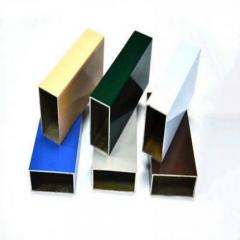
Surface Treatment Options: For projects requiring specific finishes, verify in-house capabilities versus outsourced processing. Shengxin Aluminium's integrated facility, for example, offers anodizing in custom colors like champagne and rose gold, powder coating, PVDF treatments, and micro-arc oxidation—all under one roof. This eliminates coordination between multiple vendors and reduces lead times.
Factory-Direct vs Distributor Pricing: Understanding the supply chain helps you negotiate effectively. Distributors provide convenience and smaller quantities but add margin. Factory-direct relationships with manufacturers offering comprehensive services often deliver better value for larger projects, especially when custom processing is required.
When reaching out to potential suppliers, provide complete information to receive accurate quotes:
Compare quotes on total delivered cost rather than per-foot pricing alone. A supplier offering precision-cut, pre-drilled profiles with quality surface treatment may cost more per piece but save substantial assembly labor. Factor in shipping costs, especially for heavy aluminum orders where freight charges add up quickly.
For complex projects requiring custom profiles or extensive processing, suppliers with comprehensive in-house capabilities—die development, extrusion, machining, and finishing under one roof—typically deliver faster turnaround and better quality control than supply chains involving multiple vendors. The technical team support available from integrated manufacturers like Shengxin Aluminium proves particularly valuable when navigating custom requirements or unusual specifications.
With your selection workflow complete and supplier relationships established, you're positioned to execute your project efficiently. But before placing that final order, consolidating everything you've learned into actionable next steps ensures nothing falls through the cracks.
You've covered a lot of ground—from understanding T-slotted fundamentals to navigating profile selection, hardware choices, structural principles, and sourcing strategies. Now it's time to consolidate these insights into a clear action plan that transforms knowledge into a successful build.
Before you finalize any purchase or start assembly, keep this core principle front and center:
Successful t slot aluminum framing projects depend on matching profile size to load requirements, selecting finishes appropriate for the operating environment, choosing hardware based on joint demands, and partnering with capable suppliers for complex needs.
That single framework captures the decision logic that separates smooth builds from frustrating redesigns. Whether you're constructing an aluminum t track system for a CNC gantry or assembling a slotted rail structure for industrial automation, these four elements determine success.
Before clicking "submit" on your component order, verify you've addressed each critical decision point:
Complex projects benefit enormously from manufacturers offering end-to-end support. According to Khetan Group's selection guide, choosing a reputable supplier with excellent support can enhance your overall experience and ensure you receive quality products.
This is where working with experienced manufacturers who offer comprehensive services—from custom 6063 aluminium extrusion production to precision deep processing—dramatically simplifies execution. Shengxin Aluminium exemplifies this integrated approach, with technical team support from die development through mass production and extensive surface treatment options including custom anodizing colors, powder coating, and specialized PVDF finishes. Rather than coordinating between multiple vendors, an end-to-end partnership approach keeps your project on track.
For projects requiring precision-cut profiles, pre-drilled mounting holes, or custom machining, suppliers with in-house CNC capabilities eliminate secondary processing delays. That extruded frame arrives ready for assembly—not requiring hours of additional fabrication at your facility.
Here's the encouraging reality about T-slotted systems: your first design doesn't need to be perfect. Unlike welded structures where changes mean cutting and re-fabricating, modular aluminum framing invites iteration. Build your initial structure, test it under real conditions, and refine as needed.
That workstation you assemble today can evolve into something entirely different next quarter. Add shelving when storage needs increase. Relocate mounting points when new equipment arrives. Extend the frame when production scales up. The components you purchase retain their value through multiple configurations rather than becoming scrap when requirements change.
This adaptability represents the fundamental value proposition of T-slotted systems. You're not just building a structure—you're investing in a flexible infrastructure that grows with your needs. Whether you're prototyping a new product, optimizing a production line, or creating custom solutions for unique challenges, the modular nature of these systems means your investment continues delivering value long after initial assembly.
Start with confidence, build systematically, and don't hesitate to iterate. That's how experienced designers approach T-slot aluminum framing—and now you have the knowledge to do the same.
T-slot aluminum framing consists of extruded aluminum profiles with T-shaped channels that accept specialized fasteners like T-nuts and bolts. Engineers use these modular systems to build machine guards, workstations, automation cells, conveyor frames, and equipment enclosures. The key advantage is reconfigurability—structures can be assembled, modified, and disassembled using basic hand tools without welding or permanent alterations, making them ideal for prototyping and evolving production environments.
Profile selection depends on load requirements and application. For lightweight applications like 3D printer frames or small displays, 20 series (20mm x 20mm) profiles work well. Medium-duty workbenches and automation systems benefit from 40 series (40mm x 40mm) profiles. Heavy industrial machinery bases and large automation cells require 80 series (80mm x 80mm) for maximum strength. Remember that doubling profile dimensions roughly quadruples load-bearing capacity due to exponential increases in moment of inertia.
T-slot aluminum offers significant advantages over welded steel in modularity, weight, and corrosion resistance. Aluminum weighs roughly one-third of steel while providing nearly twice the strength-to-weight ratio. It requires no painting or coating for corrosion protection. However, welded steel excels for permanent high-load structures where reconfiguration has no value and maximum tensile strength matters. Steel also performs better in extreme temperature environments.
Finish selection depends on your operating environment. Mill finish (raw aluminum) suits hidden structures and budget projects. Clear anodized provides excellent corrosion resistance for general industrial use and cleanrooms. Black anodized hides fingerprints and works well for visible equipment frames. Powder coating offers unlimited color options and thicker protection for outdoor structures. For marine or extreme UV environments, PVDF coatings deliver superior 30+ year durability.
Aluminum T-slot extrusions are available from major distributors like McMaster-Carr, specialized suppliers like 80/20 Inc. and TSLOTS by Bonnell Aluminum, and direct manufacturers like Shengxin Aluminium. For complex projects, seek suppliers offering comprehensive services including precision CNC cutting, drilling, tapping, custom surface treatments, and technical support. Factory-direct relationships with integrated manufacturers often provide better value for larger projects requiring custom processing and faster turnaround than multi-vendor supply chains.



 serviço on-line
 0086 136 3563 2360
 sales@sxalu.com
 +86 136 3563 2360
 português
 English
 français
 Deutsch
 русский
 español
 العربية
 ไทย
ไทย Việt
Việt Українська