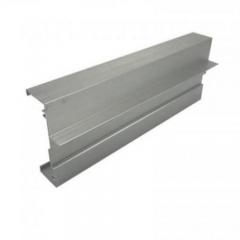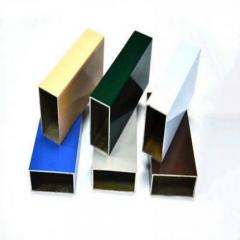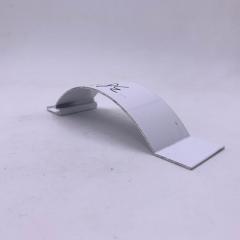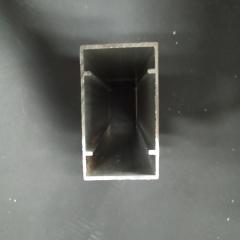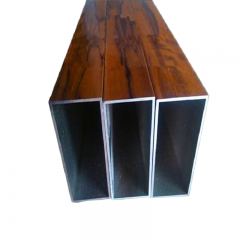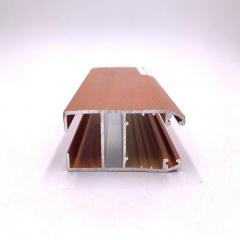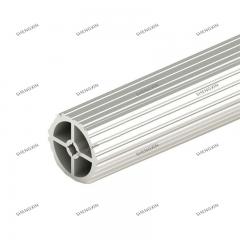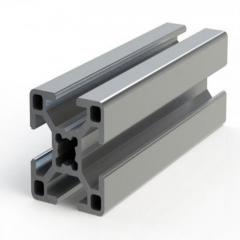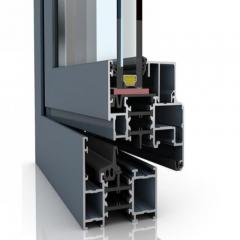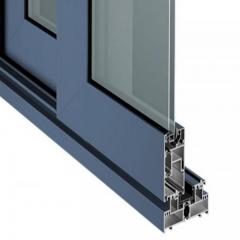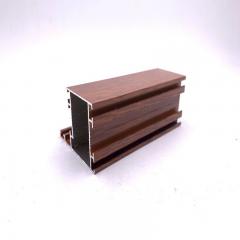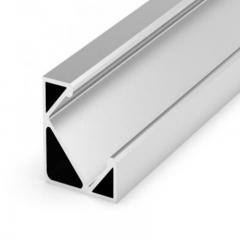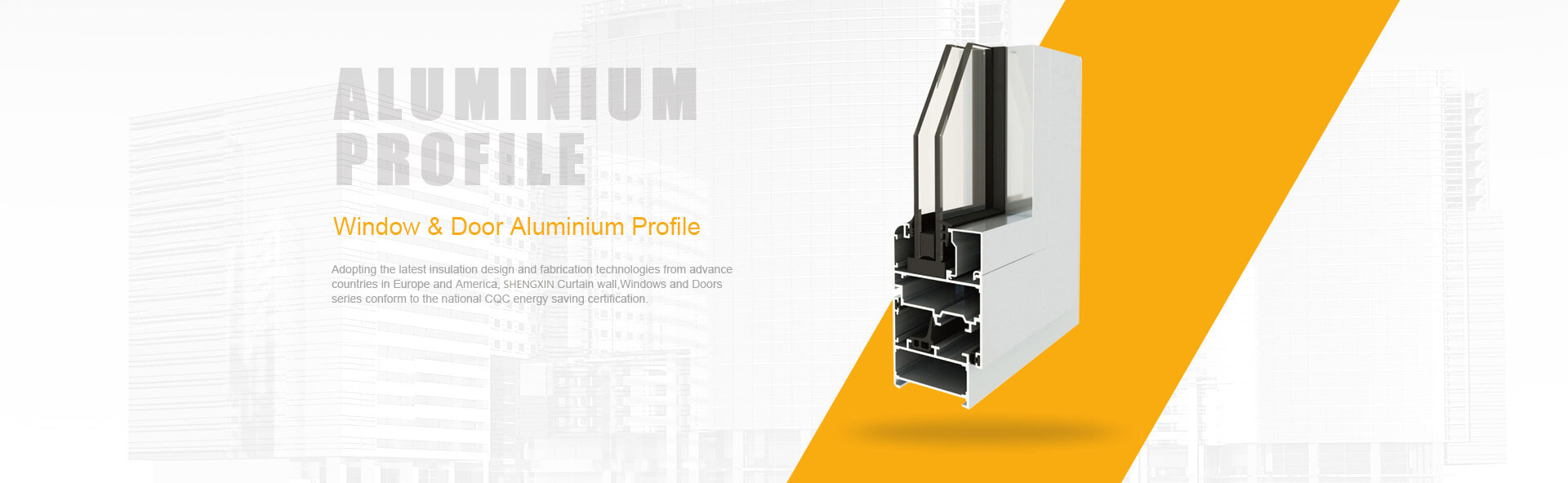

When you're searching for reliable, cost-effective materials for your next project, standard aluminum extrusions offer an ideal starting point. But what exactly makes these profiles so widely used across industries? Simply put, they are pre-designed, readily available aluminum shapes that manufacturers keep in stock for immediate purchase and delivery. Unlike custom solutions that require specialized tooling, these extruded aluminum profiles follow established dimensional standards, making them accessible for everything from quick prototypes to large-scale construction projects.
Imagine walking into a hardware store and picking up a piece of angle iron off the shelf. That's essentially how standard aluminum extrusions work—they're the "off-the-rack" solutions of the metal world. Manufacturers produce these profiles using existing dies, which means you can order them without waiting for specialized tooling or paying premium setup costs.
Custom extrusions, on the other hand, are tailored to your exact specifications. They require the creation of a new die, longer lead times, and typically higher minimum order quantities. While custom profiles offer unlimited design flexibility, they make the most sense when your application demands a unique cross-section that simply doesn't exist in standard catalogs.
Here are the key characteristics that define standard extrusions:
Ever wondered how a solid block of metal becomes a perfectly shaped channel or tube? The aluminum extrusion process is surprisingly elegant. It begins when heated aluminum billets—cylindrical logs of raw aluminum—are pressed through a specialized die under tremendous pressure. Think of it like squeezing toothpaste through a shaped opening, except the "toothpaste" is molten metal at around 900°F.
As the aluminum extrude operation continues, long continuous profiles emerge with a uniform cross-section. According to industry experts, this method allows for precise adjustments in thickness, surface texture, and alloy composition. Once shaping is complete, the sections are cooled and cut to desired lengths, ready for finishing or direct use.
This extrusion aluminum process delivers remarkable consistency—whether you're buying one piece or a thousand, each profile maintains identical specifications. That reliability is precisely why engineers and designers trust these materials for critical applications where dimensional accuracy matters.
Understanding this distinction between standard and custom options empowers you to make smarter purchasing decisions. For many applications, stock shapes provide everything you need at a fraction of the cost and lead time of custom alternatives. As we explore the various profile types, alloys, and applications in the following sections, you'll gain the knowledge to confidently select the right aluminum extrusions for your specific requirements.
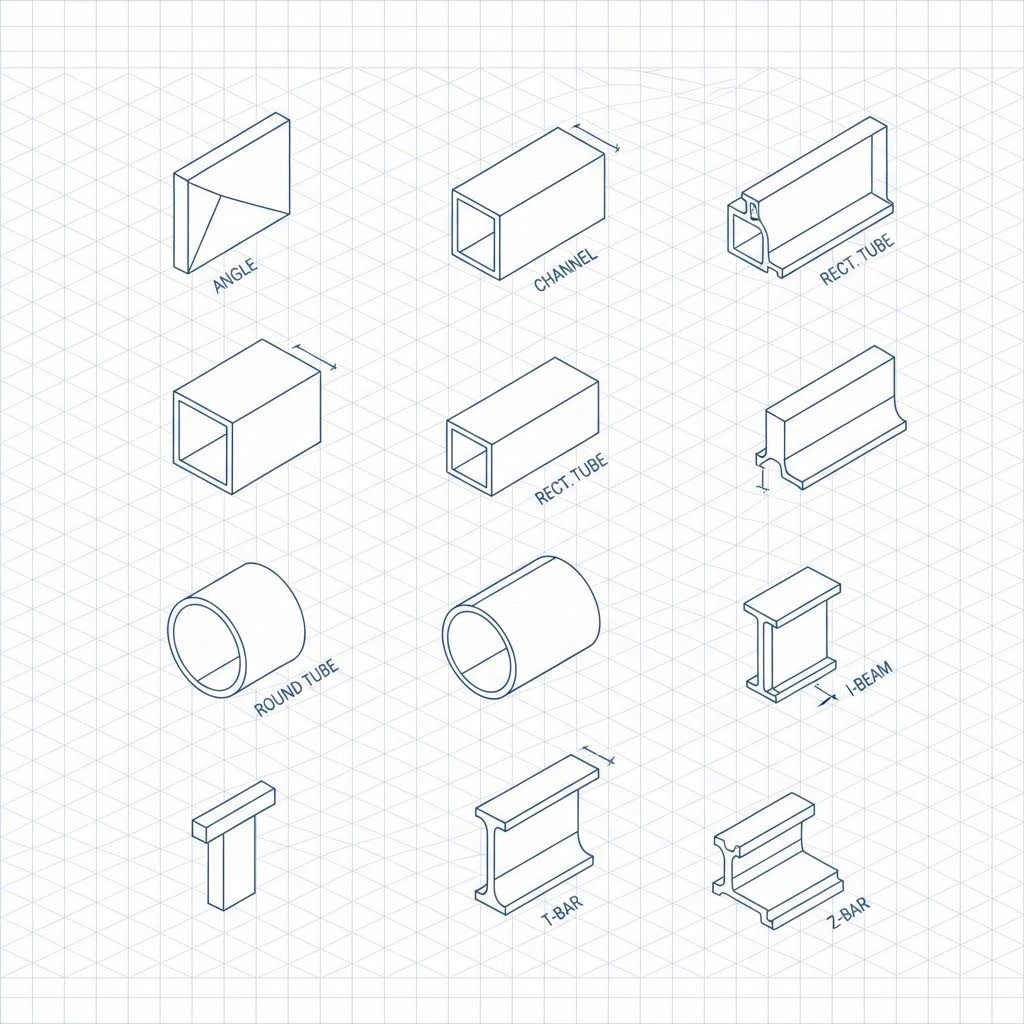
Now that you understand how standard aluminum extrusions are made, let's explore what's actually available. Walk into any metal supplier's warehouse, and you'll encounter dozens of profile shapes—each engineered for specific structural demands. But here's the thing: not all shapes perform equally in every situation. Knowing why an aluminum channel outperforms an angle in certain applications, or when aluminum square tubing beats round tubing, can save you money and prevent structural headaches down the road.
When you need to create frames, reinforce corners, or build lightweight structural assemblies, aluminum angles and channels are your go-to profiles. These shapes have earned their reputation as the workhorses of structural framing for good reason.
Aluminum angles feature an L-shaped cross-section, typically with equal or unequal leg lengths. You'll find them in dimensions ranging from small 1/2" x 1/2" pieces to heavy-duty 6" x 6" profiles. Their geometry makes them exceptionally useful for corner reinforcement, edge protection, and creating rigid connections between flat surfaces. The 90-degree intersection provides excellent resistance to twisting forces when properly secured.
Aluminum channel profiles, shaped like the letter C or U, offer even greater versatility. Their enclosed design creates natural tracks for sliding components, cable management systems, and protective covers. Common dimensions span from compact 1" widths to industrial 8" profiles. What makes channels particularly valuable is their ability to distribute loads across the web while the flanges resist bending—imagine them as simplified i beams without the top flange.
When your project demands serious load-bearing capacity, aluminum tubing and solid bars step up to the challenge. These profiles handle compression, tension, and torsional forces that would overwhelm lighter shapes.
Aluminum square tubing delivers outstanding torsional rigidity—that's engineering-speak for resistance to twisting. A square tube with a 2" x 2" cross-section and 1/8" wall thickness can handle significantly more twisting force than a round tube of comparable weight. This makes it ideal for machine frames, furniture construction, and architectural railings where rotational stability matters.
Rectangular tubing offers similar benefits with added directional strength. When loads primarily come from one direction, rectangular profiles let you optimize material placement exactly where you need it. Think of guard rails, trailer frames, and support beams where the load direction is predictable.
Round tubes excel in applications involving pressure, fluid transport, or uniform loading from all directions. Their circular cross-section eliminates stress concentration points that can develop at corners, making them preferred for handrails, pneumatic systems, and structural columns.
Aluminum i beams represent perhaps the most efficient load-bearing shape ever devised. As noted by structural engineering experts at Bobco Metals, the I-beam puts most of its material along the flanges rather than scattering weight throughout, doing a remarkably effective job of handling loads while using less material. This clever distribution of mass allows i beams to resist bending and shear stress better than solid rectangular bars of equivalent weight. You'll spot them spanning large distances in commercial construction, bridges, and industrial platforms.
T-bars and Z-bars round out the structural profile family. T-bars work well for creating ledges and supports, while Z-bars—with their offset flanges—connect panels at angles and handle complex architectural transitions.
Choosing the right profile becomes easier when you can compare options side by side. The following table breaks down each major shape's characteristics:
| Shape Type | Common Dimensions | Key Structural Properties | Typical Applications |
|---|---|---|---|
| Aluminum Angle | 1/2" to 6" leg lengths; 1/16" to 1/2" thickness | Corner rigidity, edge protection, easy fastening | Frame corners, trim, brackets, supports |
| Aluminum Channel | 1" to 8" width; various depths | Bending resistance, enclosed profile for mounting | Tracks, cable trays, door frames, equipment housings |
| Square Tube | 1/2" to 6" sides; 1/16" to 1/4" wall | Excellent torsional rigidity, uniform strength | Machine frames, furniture, railings, structural posts |
| Rectangular Tubing | 1" x 2" to 4" x 8"; various walls | Directional strength optimization, efficient material use | Trailer frames, support beams, architectural elements |
| Round Tube | 1/2" to 6" OD; various walls | No stress concentration, pressure resistance | Handrails, columns, fluid systems, telescoping assemblies |
| I-Beam | 3" to 12" height; various flange widths | Maximum bending resistance, efficient load distribution | Long spans, bridges, industrial platforms, heavy structures |
| T-Bar | 1" to 4" dimensions | Single-sided mounting surface, ledge creation | Shelf supports, ceiling grids, edge finishing |
| Z-Bar | 1" to 3" dimensions | Angular connections, offset mounting capability | Panel connections, purlins, cladding supports |
Notice how each shape fills a distinct niche? That's no accident—decades of engineering refinement have optimized these profiles for their specific roles. When selecting your shape, consider not just the loads involved but also how you'll connect components, what aesthetic requirements exist, and whether the profile needs to accommodate other elements like wiring or sliding mechanisms.
With these structural fundamentals in hand, you're ready to tackle another critical selection factor: the aluminum alloy itself. Different alloys dramatically affect strength, corrosion resistance, and workability—topics we'll explore next.
You've selected the perfect shape for your project—but here's a question that trips up even experienced buyers: which alloy should you choose? The aluminum profile sitting on a supplier's shelf might look identical to another, yet their performance characteristics can differ dramatically. Understanding alloy selection is arguably the most overlooked aspect of working with standard aluminum extrusions, and getting it wrong can mean premature failure or unnecessary expense.
When browsing aluminum extrusion profiles, you'll encounter two alloys more than any others: 6061 and 6063. Both belong to the 6000 series, meaning they contain magnesium and silicon as primary alloying elements. But don't let their similar compositions fool you—each serves distinctly different purposes.
6061 aluminum is the structural powerhouse. According to Metal Supermarkets, this alloy typically achieves a Brinell hardness of 95, compared to just 73 for 6063. That higher hardness translates to superior yield strength and fatigue resistance. You'll find 6061 tubing and profiles in applications where mechanical stress is the primary concern: trailer frames, truck beds, aerospace components, and heavy-duty machine structures.
6063 aluminum, often called "architectural aluminum," takes a different approach. It sacrifices some strength for exceptional surface quality and superior corrosion resistance. When your project faces environmental exposure but doesn't demand maximum strength, this alloy shines. Window frames, door frames, sign structures, and decorative trim all benefit from 6063's smooth finish and anodizing capability.
Here's an interesting nuance: for round tubing extrusions specifically, 6063 actually delivers higher product strength than 6061 in that particular configuration. However, when you need extruded aluminium angles or channels for structural support, 6061 remains the stronger choice.
Sounds complex? Let's simplify the decision. Before selecting an aluminium extrusion alloy, evaluate these key properties against your application requirements:
Ever noticed those mysterious letters and numbers following an alloy designation—like 6061-T6 or 6063-T5? These temper designations reveal how the aluminum was heat-treated, which directly affects its strength and workability.
According to engineering resources at Engineering Express, the heat treatment process involves raising the alloy temperature to approximately 980°F, holding it there to dissolve alloying elements into a solid solution, then quenching rapidly in water. What happens next determines whether you get T5 or T6 material.
T5 temper results when manufacturers quench extrusions directly from the extrusion press while still hot, then age the material. This process is efficient and cost-effective, producing aluminium profiles with good strength for many applications.
T6 temper delivers maximum strength through a more controlled process: solution heat treatment by artificial aging at temperatures between 325°F and 400°F. This aging process creates ordered atomic structures called GP zones within the aluminum matrix, strengthening the material considerably. Three common aging cycles—one hour at 400°F, five hours at 350°F, or eight hours at 325°F—all achieve equivalent results.
When should you specify each temper? Consider these guidelines:
Remember, the T6 designation always indicates higher yield strength and fatigue resistance than T5 within the same alloy family. If your application involves repeated loading, vibration, or safety-critical components, investing in T6 temper provides meaningful peace of mind.
With alloy and temper selection sorted, you're ready to match these materials to specific industry applications—from construction framing to precision manufacturing systems.
You've mastered the shapes and alloys—now where do they actually go to work? Understanding how different industries leverage standard aluminum extrusions helps you identify which profiles align with your project's specific demands. Whether you're framing a commercial storefront, building a modular workstation, or reducing weight in a transit vehicle, the right profile choice can dramatically impact performance, cost, and installation efficiency.
Walk through any modern building, and you're surrounded by aluminum extrusions—often without realizing it. The construction industry relies heavily on these profiles because they deliver something steel simply can't match: corrosion resistance without protective coatings, combined with dimensional stability that keeps frames true for decades.
Consider door framing applications. Aluminum channels and angles create the structural backbone for commercial entrance systems, providing the rigidity needed to support heavy glass panels while resisting the moisture and temperature swings that would cause steel to rust or wood to warp. Unlike metal studs made from galvanized steel, aluminum frames won't corrode even when exposed to rain infiltration or high-humidity environments.
Here are the primary construction applications where standard extrusions excel:
Why does a metal stud alternative matter? In environments with moisture exposure—coastal buildings, pool enclosures, or exterior applications—aluminum's natural oxide layer provides permanent protection. You won't face the callback costs of rusted framing that plagues steel installations in challenging environments.
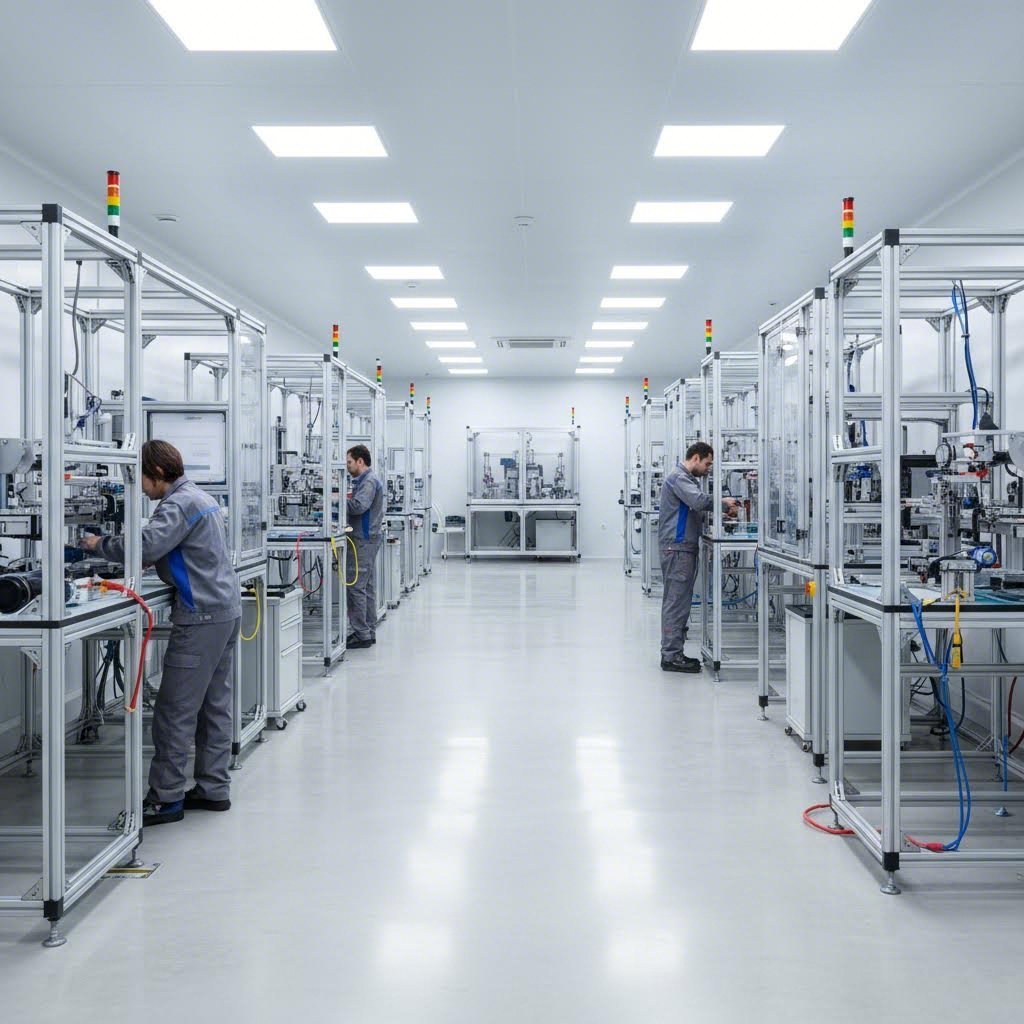
Step onto any modern factory floor, and you'll encounter a different application landscape. Here, modularity and precision trump aesthetic considerations. That's where 80/20 aluminum T-slot profiles have revolutionized industrial construction.
These specialized extrusions feature precisely machined slots running along each face, accepting standardized fasteners, brackets, and accessories. According to Taber Extrusions, extruded aluminum can be shaped into complex profiles with tight tolerances, enabling engineers to design custom solutions tailored to specific needs—and T-slot systems exemplify this capability perfectly.
The 80 20 aluminum system has become the de facto standard for building:
What makes this system so popular? Imagine needing to relocate a quality inspection station or add a new sensor mount. With welded steel, you're looking at cutting, grinding, and rewelding. With T-slot aluminum, you loosen a few bolts, reposition components, and tighten—often completing changes in minutes rather than hours.
When every pound matters, aluminum extrusions deliver advantages that steel simply cannot match. Originally indispensable for its lightweight properties in the aerospace industry, aluminum is now widely used across all transportation sectors, including cars, buses, coaches, lorries, trains, ships, ferries, aircraft, and bicycles, as noted by GAL Aluminium.
Transportation applications leverage aluminum's exceptional strength-to-weight ratio:
The sustainability angle matters increasingly here too. Aluminum is 100% recyclable without losing its inherent properties, making it a sustainable choice for transportation applications where lifecycle environmental impact faces growing scrutiny.
How do you translate these application categories into specific purchasing decisions? Start by identifying your primary performance requirements:
Understanding these industry-specific requirements positions you to ask the right questions when specifying materials. But before finalizing your selection, there's another critical factor many buyers overlook: dimensional tolerances and how they affect your assembly's fit and function.
Here's a scenario that frustrates countless buyers: you order aluminum tubing sized perfectly for your assembly, only to discover the pieces don't quite fit together as planned. What went wrong? In most cases, the answer lies in a critical but often overlooked specification—dimensional tolerances. Every standard aluminum extrusion comes with allowable variations from its nominal dimensions, and understanding these tolerances separates successful projects from frustrating rework.
When manufacturers produce an aluminum tube or rectangular tube profile, perfect precision isn't physically possible—nor is it necessary for most applications. Instead, industry standards define acceptable ranges of variation. According to the Aluminum Extruders Council, tolerance tables published in Aluminum Standards & Data establish both standard and precision tolerance classes for the industry.
But what do these classifications actually mean for your project? Standard tolerances represent the normal manufacturing variation you can expect from any reputable supplier. Precision tolerances—tighter specifications achievable with additional process controls—cost more but deliver closer dimensional accuracy when your application demands it.
Consider how tolerances scale with profile size. Based on industry data from MK Metal, the following table illustrates typical cross-sectional dimension tolerances for extruded profiles:
| Specified Dimension (inches) | Standard Tolerance (± inches) | Precision Tolerance (± inches) |
|---|---|---|
| Up through 0.124 | 0.006 | 0.004 |
| 0.125 - 0.249 | 0.007 | 0.005 |
| 0.250 - 0.499 | 0.008 | 0.005 |
| 0.500 - 0.749 | 0.009 | 0.006 |
| 0.750 - 0.999 | 0.010 | 0.007 |
| 1.000 - 1.499 | 0.012 | 0.008 |
| 1.500 - 1.999 | 0.014 | 0.009 |
| 2.000 - 3.999 | 0.024 | 0.016 |
Notice how tolerances increase with dimension size? A 2-inch aluminum channel allows three times the variation of a 1/4-inch profile. This scaling reflects manufacturing realities—larger profiles experience more thermal expansion and flow dynamics during extrusion.
When comparing aluminum tubing sizes to rectangular steel tubing sizes or rectangular steel tube dimensions, you'll find aluminum tolerances are generally comparable to steel specifications. However, aluminum's lower density means thermal behavior differs, so don't assume steel experience translates directly to aluminum applications.
Ever read a product specification sheet and felt overwhelmed by unfamiliar terminology? Let's decode the key terms you'll encounter when evaluating aluminum channel sizes, tube specifications, or structural profiles:
For aluminum tube sizes specifically, tolerances address multiple characteristics simultaneously. The industry standard distinguishes between mean diameter (the average of measurements taken at right angles) and diameter at any point. According to published standards, a round tube with 1.000 to 1.999 inch specified diameter allows ±0.012 inch deviation on mean diameter but ±0.025 inch at any single measurement point.
Why should you care about these seemingly small numbers? Imagine assembling a modular frame where square tubes must slide inside one another for telescoping adjustment. If the outer tube measures at the low end of its tolerance and the inner tube measures at the high end, you might have an interference fit instead of the sliding fit you designed.
Here's how to account for tolerances in your designs:
Beyond dimensions, surface quality matters—especially for visible applications. Standard extrusions arrive in mill finish, the natural surface produced during extrusion. This finish includes minor die lines (longitudinal marks from the extrusion die) and may show slight variations in texture.
Industry specifications define allowable surface roughness based on section thickness. For profiles under 0.063 inches thick, surface conditions (including die lines and handling marks) cannot exceed 0.0015 inches depth. Thicker sections up to 0.500 inches allow conditions up to 0.004 inches, with heavier sections permitting up to 0.008 inches.
What does this mean practically? Mill finish works fine for structural applications hidden from view or destined for painting. For architectural or decorative uses, plan on anodizing or powder coating to achieve the uniform appearance most designs require.
Armed with tolerance knowledge, you're positioned to specify materials that actually work in your assemblies. But surface treatment options extend far beyond simply covering mill finish imperfections—they can dramatically enhance durability, aesthetics, and corrosion resistance, as we'll explore next.
You've specified the right shape, selected the optimal alloy, and verified your tolerances—but your standard aluminum extrusions still need one final decision: surface treatment. This choice affects far more than appearance. The finish you select determines corrosion resistance, maintenance requirements, color options, and even environmental impact. Whether you're working with aluminum angles for architectural trim or aluminum channels for industrial framing, understanding your finish options helps you balance aesthetics, durability, and budget.
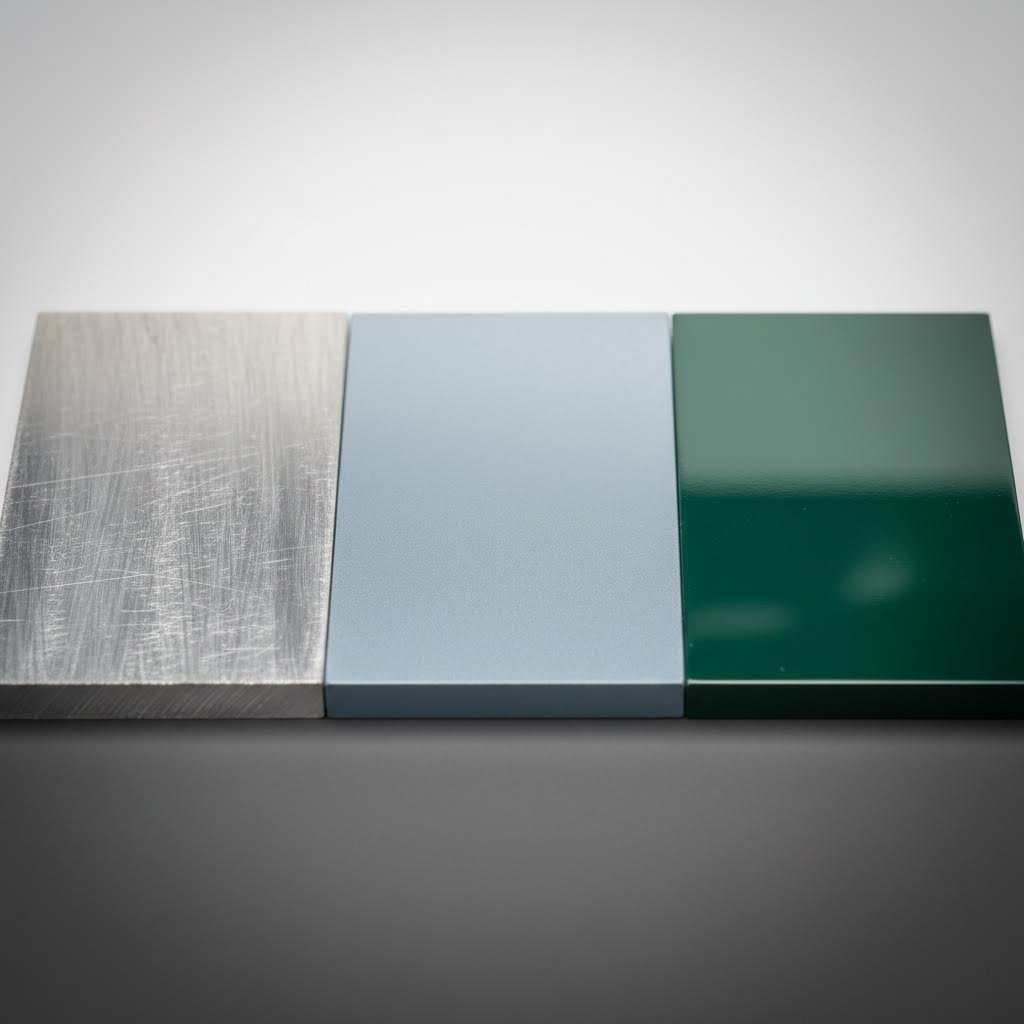
Every aluminum extrusion starts with mill finish—the natural surface produced directly from the extrusion process. From there, you can leave it as-is or apply protective treatments that transform both appearance and performance.
Mill Finish is simply raw extruded aluminum with its natural oxide layer intact. According to industry experts at Gabrian, aluminum naturally develops a thin passive oxide layer when exposed to air, which protects the underlying metal from environmental damage. Mill finish works well for structural applications hidden from view, components destined for further processing, or situations where cost minimization is paramount.
Anodized aluminum takes protection to another level. The anodizing process submerges profiles in an electrolytic bath and runs electric current through them, thickening the natural oxide layer significantly. This enhanced oxide layer improves wear resistance, corrosion protection, and heat dissipation while creating an ideal surface for adding dyes. You'll commonly see anodized finishes on window frames, electronic enclosures, and architectural components where c channel aluminum or alu channel profiles require both durability and visual appeal.
Powder coating offers the broadest palette of colors and textures. Unlike wet painting, this dry application process uses electrostatically charged powder that adheres to grounded aluminum parts, then cures in an oven to form a uniform solid layer. As Gabrian notes, no solvents are used, making powder coating an environmentally friendly alternative to liquid finishes.
PVDF coatings represent the premium tier for architectural applications. These fluoropolymer-based finishes deliver exceptional weathering resistance and color retention, making them the preferred choice for building facades, curtain walls, and other high-visibility exterior applications where decades of performance matter.
How do you choose among these options? Start by evaluating your application environment and priorities:
There's another factor increasingly influencing buyer decisions: sustainability. According to the Aluminum Association, aluminum can be recycled repeatedly without degrading its fundamental properties—unlike plastics, which break down through recycling. A comprehensive industry analysis shows that nearly 75% of all aluminum ever produced remains in use today, continuously recycled into new applications.
This recyclability advantage extends to finished profiles. Whether your aluminum channels carry mill finish, anodizing, or powder coating, the base metal retains full recycling value at end of life. For projects where environmental impact matters—and buyer interest in sustainability continues growing—aluminum's circular economy credentials provide meaningful differentiation from competing materials.
With surface treatment selected, you've addressed the major technical specifications for your extrusion project. But one fundamental question remains: should you work with these standard profiles at all, or does your application warrant custom extrusions? Understanding that decision framework can save significant time and money.
You've learned about shapes, alloys, tolerances, and finishes—but here's the question that ultimately determines your project's cost and timeline: should you use standard aluminum extrusions or invest in custom profiles? This decision impacts everything from upfront expenses to delivery schedules, and getting it right can mean the difference between a smooth project and costly delays.
Standard profiles exist for a reason—they solve the most common design challenges efficiently and economically. Before assuming you need something custom, consider whether existing shapes can accomplish your goals.
Extruded aluminum profiles in stock shapes offer compelling advantages that custom solutions simply can't match. According to the Aluminum Extruders Council, extrusion tooling for custom dies typically costs between $1,000 and $4,000 with lead times of 2 to 3 weeks—costs you completely avoid with standard shapes.
Standard extrusions make the most sense when:
Consider this practical example: you need aluminum rectangular tubing for a machine frame prototype. A standard 2" x 4" tube with 1/8" wall ships within days at a few dollars per foot. The same profile as a custom extrusion would require $1,500+ in die costs, three weeks of lead time, and a minimum order that might exceed your total project needs.
Sometimes stock shapes simply won't work—and recognizing when custom extrusions become the smarter choice saves you from forcing square pegs into round holes.
Custom aluminum extrusion profiles make economic sense when your application demands unique characteristics. As industry experts at CEN Machining note, custom parts offer a perfect fit for specific applications, which can improve the performance and functionality of the end product while providing a competitive edge.
Consider custom extrusions when you encounter:
The Aluminum Extruders Council emphasizes that custom extrusions can create signature design solutions with differentiation, personalization, enhanced function, and greater value—and the aluminum extrusion process is ideal for custom solutions, with tooling costs and turnaround times among the lowest of material processes.
Making this decision becomes clearer when you evaluate the key factors directly. The following table breaks down how standard and custom extrusions compare across the specifications that matter most:
| Factor | Standard Extrusions | Custom Extrusions |
|---|---|---|
| Tooling Costs | None—existing dies already in production | $1,000–$4,000+ depending on complexity and press size |
| Lead Times | Days to weeks—ships from stock | 3–6 weeks minimum for die development plus production |
| Minimum Order Quantities | Often as low as single pieces or short lengths | Typically 1,000–2,000 pounds per shape minimum |
| Design Flexibility | Limited to available catalog shapes | Virtually unlimited—metal placed exactly where needed |
| Per-Unit Pricing | Fixed catalog pricing; may be higher for common shapes at volume | Higher initially; becomes competitive at scale as die costs amortize |
| Availability | Immediate—multiple suppliers stock common shapes | Single-source dependency on your die holder |
| Best For | Prototypes, small runs, tight timelines, budget-conscious projects | High-volume production, unique designs, optimized performance |
Notice the crossover point? For most projects, the decision comes down to volume and design requirements. An aluminum square tube from stock works perfectly for a one-off workstation frame. But if you're manufacturing thousands of window assemblies annually, a custom profile with integrated weatherstripping grooves and snap-fit glazing channels pays for its tooling many times over.
Here's a factor many buyers underestimate: availability. When your project hits an unexpected delay or design change, standard square aluminum tubing or aluminum round tube profiles can arrive within days. Custom extrusions offer no such flexibility—you're committed to die lead times regardless of schedule pressures.
This availability advantage extends beyond initial procurement. Need replacement parts five years from now? Standard extruded aluminum profiles remain available from multiple suppliers. Custom dies may have been scrapped, requiring expensive re-tooling for small follow-up orders.
Smart project planning often combines both approaches: standard shapes for structural framing and prototyping, custom profiles for high-volume production components where optimization justifies the investment.
With your standard versus custom decision clarified, one critical consideration remains: understanding what drives costs and how to source quality extrusions from reliable suppliers.
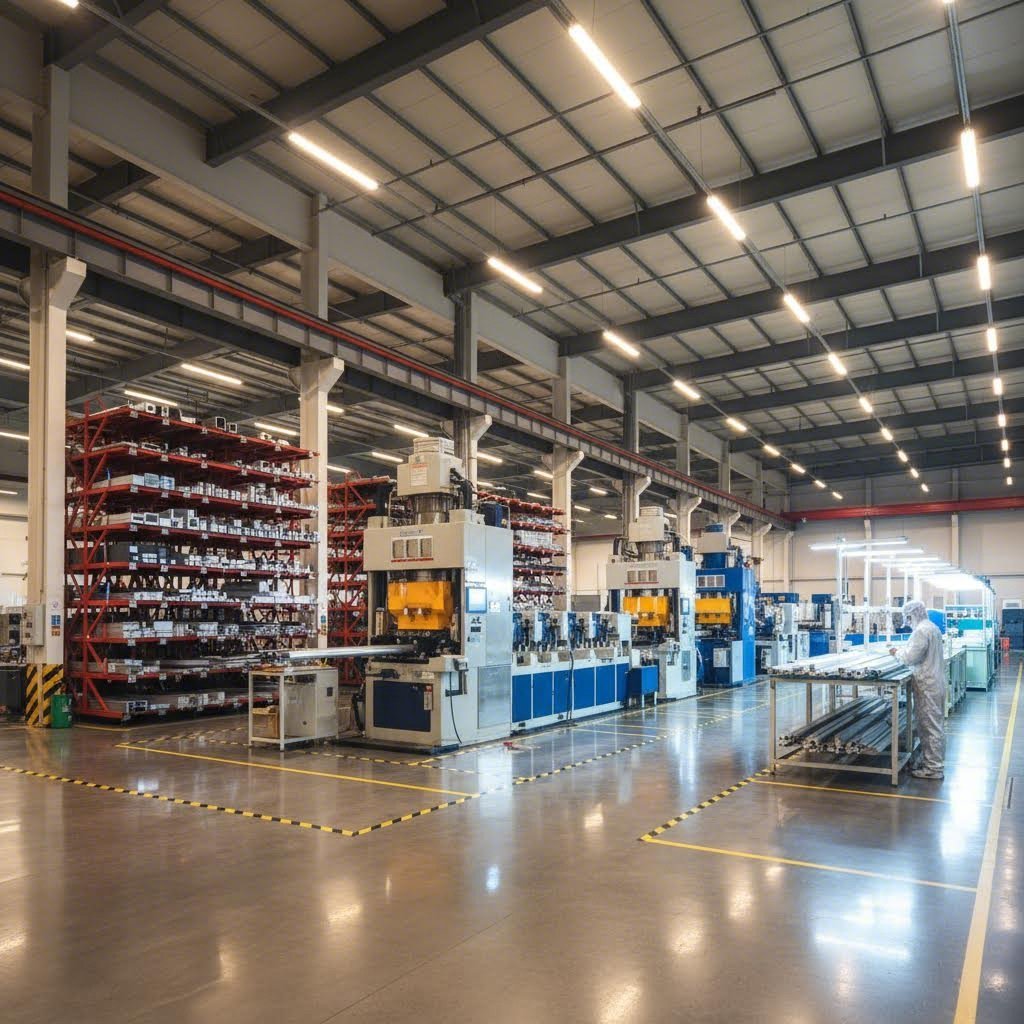
You've determined the right shape, alloy, and finish for your project—but how much will it actually cost? And where should you buy aluminum tubing, bars, or structural profiles to get the best value? These questions matter more than many buyers realize. The difference between a savvy purchasing decision and an expensive mistake often comes down to understanding pricing variables and knowing what separates a reliable supplier from a risky one.
Ever wonder why quotes for seemingly identical aluminum pipes or bars vary so dramatically between suppliers? The answer lies in multiple cost components that combine to determine your final price per pound—or per piece.
According to industry pricing data from Sino Extrusion, standard 6063 or 6061 extrusions in common sizes typically range between $0.90 and $2.50 per pound, though special orders or heavy-duty profiles may fall outside this range. But that base price represents just the starting point.
Here's what actually drives your total cost:
When you buy aluminum tubing or schedule 40 aluminum pipe, don't focus solely on the quoted price per pound. Request itemized quotes that break down base material, processing, finishing, and shipping separately. This transparency helps you compare suppliers fairly and identify where costs might be optimized.
A low price means nothing if your supplier delivers late, ships defective material, or can't support your technical requirements. Finding a partner you can trust requires evaluating capabilities beyond basic quoting.
According to supplier evaluation guidance from Inquivix Technologies, choosing the right supplier affects your product design, manufacturing process, product quality, and cost—making thorough evaluation essential before committing to any vendor.
What should you look for when sourcing aluminum bar, plate, or extruded profiles? Consider these essential criteria:
When evaluating where to source your extrusions, consider the advantages of working directly with manufacturers rather than distributors or brokers. Factory-direct relationships typically offer:
For example, Shengxin Aluminium exemplifies the comprehensive capabilities buyers should seek. With over 30 years of experience, they operate 35 extrusion presses ranging from 600T to 5500T capacity, providing flexibility for projects of virtually any scale. Their deep processing services include CNC machining centers for precision cutting, drilling, and bending, plus extensive surface treatment options including anodizing in custom colors, powder coating, PVDF, and micro-arc oxidation. This integrated approach—from die development through finished components—streamlines procurement while maintaining quality control throughout the production chain.
Whether you need standard aluminum pipes for a quick prototype or high-volume custom profiles with complex finishing requirements, establishing relationships with capable manufacturers positions you for long-term success. The investment in supplier evaluation pays dividends through reliable delivery, consistent quality, and competitive total cost of ownership.
With cost factors and sourcing strategies understood, you're equipped to make informed purchasing decisions. But before placing that order, let's consolidate the key selection criteria and address common pitfalls that trip up even experienced buyers.
You've navigated shapes, alloys, tolerances, finishes, and sourcing strategies—now it's time to bring everything together into actionable guidance. Whether you're specifying aluminum profiles for a construction project, selecting aluminum beams for industrial framing, or evaluating aluminum tubes for a prototype, the selection process follows a logical path. Master this framework, and you'll avoid the costly mistakes that derail projects and frustrate teams.
After exploring every aspect of standard aluminum extrusions, what matters most? The following criteria should guide every purchasing decision:
Match your alloy selection to actual performance requirements—not assumed needs. Choose 6061-T6 for structural loads and 6063-T5 for architectural aesthetics. Specify tolerances based on assembly fit requirements, and always account for worst-case stack-up in mating parts.
Beyond this core principle, keep these priorities in mind:
Even experienced buyers stumble into preventable errors. According to guidance from MMG Extrusions, the most common design issues include lack of proper information, non-symmetrical shapes, over-specifying tolerances, and incorrectly notating tolerance requirements. Here's how to sidestep these pitfalls:
Your relationship with suppliers determines project success as much as material selection. From initial inquiry through delivery, effective communication prevents misunderstandings and ensures you receive exactly what your application requires.
Start every project conversation with complete requirements. As Gabrian emphasizes, involving your extruder early in the process provides manufacturing engineering perspective and identifies potential issues before they become expensive problems.
When engaging suppliers, provide:
The buyer journey from understanding basics through selection to specification rewards preparation. You now understand how extrusions are made, which aluminum shapes serve which purposes, how alloys and tempers affect performance, what tolerances mean for your assemblies, and how surface treatments protect your investment.
Whether you're choosing standard profiles for immediate availability or exploring custom solutions for unique requirements, partnering with experienced manufacturers ensures access to technical expertise and comprehensive processing capabilities. Suppliers like Shengxin Aluminium offer end-to-end support—from die development through mass production—with extensive finishing options including anodizing, powder coating, PVDF, and precision CNC machining.
Ready to move forward? Start by gathering your project specifications, identifying the shapes and alloys that match your requirements, and reaching out to qualified suppliers for detailed quotations. For projects requiring deep processing services like precision machining or specialized surface treatments, factory-direct relationships deliver the quality control and technical collaboration that complex applications demand.
The right aluminum extrusion transforms your design from concept to reality. Armed with the knowledge from this guide, you're prepared to make informed decisions that balance performance, cost, and timeline—achieving results that meet your exact specifications.
Standard aluminum extrusion shapes are pre-designed, readily available profiles manufactured using existing dies. Common shapes include angles, channels, square tubing, rectangular tubing, round tubes, I-beams, T-bars, and Z-bars. These profiles follow established dimensional standards and are stocked by suppliers for immediate purchase, offering lower costs and faster delivery compared to custom extrusions. They're ideal for prototyping, small production runs, and applications where existing geometries meet design requirements.
6061 aluminum is the structural powerhouse with higher tensile strength and hardness (Brinell 95), making it ideal for load-bearing applications like trailer frames and machine structures. 6063 aluminum, often called architectural aluminum, offers superior surface finish and corrosion resistance but lower strength (Brinell 73). Choose 6061-T6 for maximum structural performance and 6063-T5 for window frames, decorative trim, and applications requiring excellent anodizing response.
Standard 6063 or 6061 extrusions in common sizes typically range between $0.90 and $2.50 per pound. However, total cost depends on multiple factors: raw aluminum commodity prices, alloy selection, profile complexity, surface treatment (mill finish, anodizing, or powder coating), order quantity, and secondary processing like CNC machining. Larger orders spread setup costs across more material, reducing per-unit pricing significantly. Factory-direct relationships often provide competitive pricing by eliminating middleman margins.
Custom extrusions make economic sense for high-volume production (typically over 1,000-2,000 pounds), unique cross-sections not available in catalogs, integrated functionality like snap-fit connections or wire channels, weight optimization, or proprietary designs. Custom die tooling costs $1,000-$4,000+ with 2-3 week lead times, but these costs amortize across large orders. For prototyping, small runs, or tight deadlines, standard profiles offer immediate availability without tooling investment.
Common finishes include mill finish (raw extruded surface), anodizing (thickened oxide layer for corrosion and wear resistance with color options), powder coating (thicker protective layer with unlimited colors), and PVDF coatings (premium fluoropolymer finish for architectural applications). Mill finish suits hidden structural applications. Anodizing works well for visible metallic finishes. Powder coating provides vibrant colors and fade resistance for outdoor use. Suppliers like Shengxin Aluminium offer comprehensive finishing options including custom anodizing colors and micro-arc oxidation.



 serviço on-line
 0086 136 3563 2360
 sales@sxalu.com
 +86 136 3563 2360
 português
 English
 français
 Deutsch
 русский
 español
 العربية
 ไทย
ไทย Việt
Việt Українська