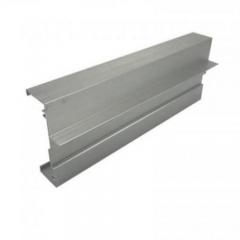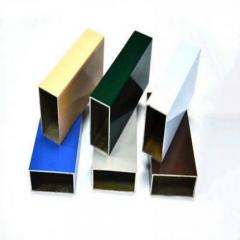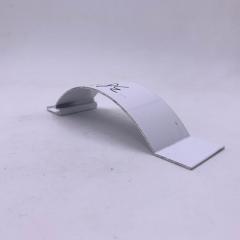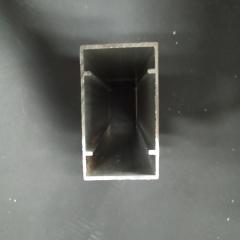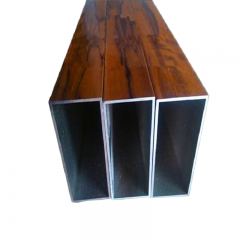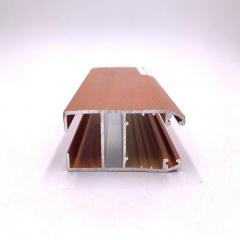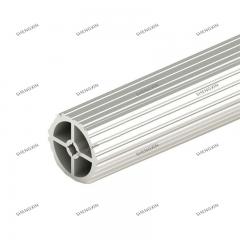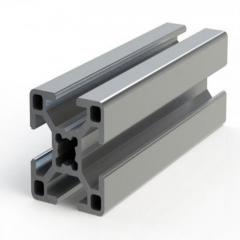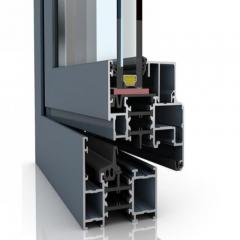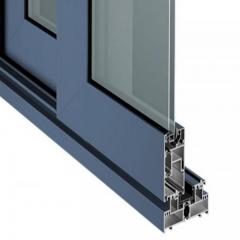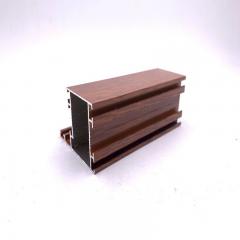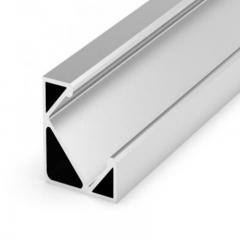
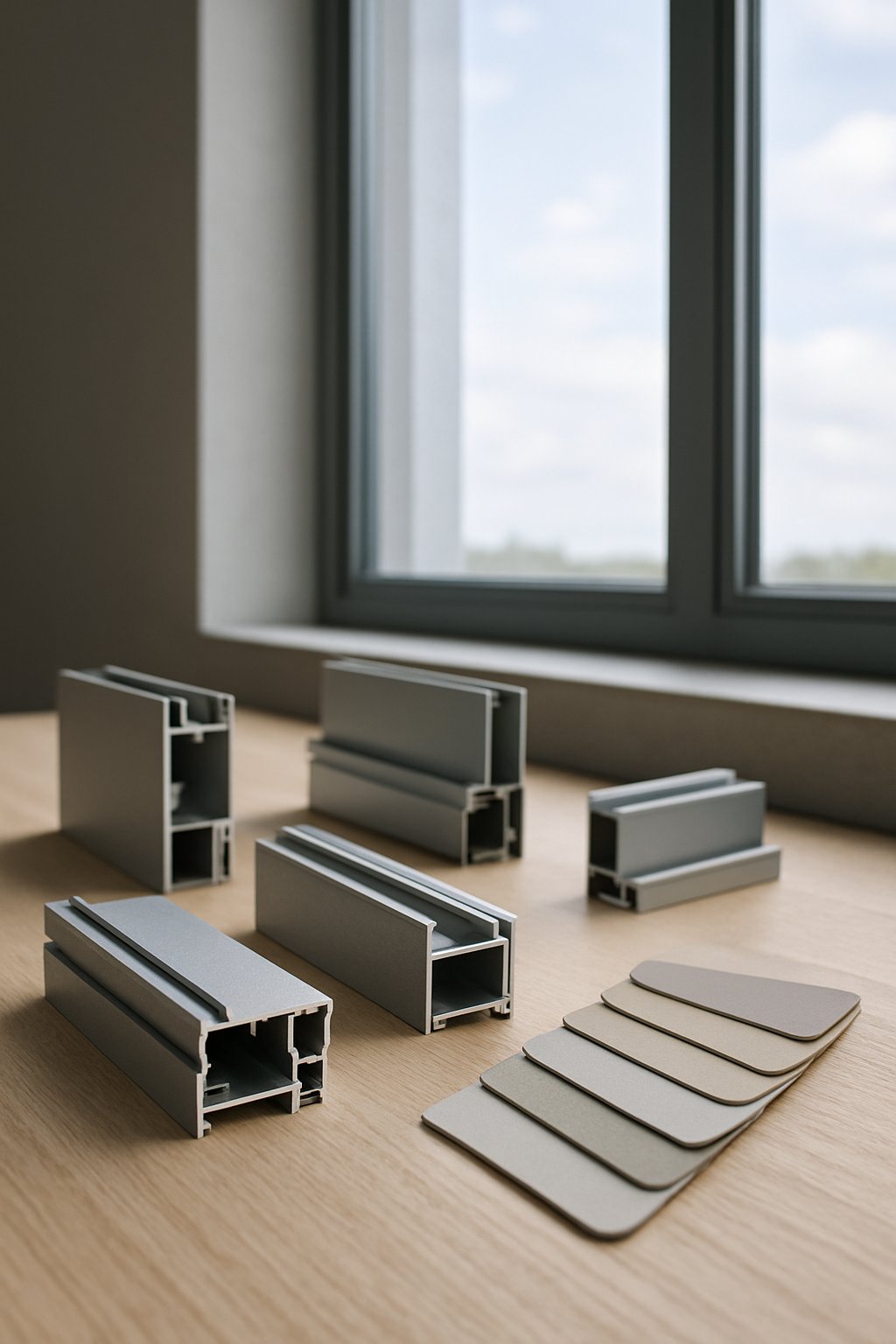
An aluminum window profile is the extruded cross-section that forms the structural base of a window system. It supports glass, seals, drainage, and hardware, but by itself it is not a complete installed window.
If you are comparing quotes, this distinction matters right away. A profile is the shaped aluminum section used to build the frame or sash. A finished window includes that section plus glazing, gaskets, hardware, corner assembly, surface finish, and installation context. Profile-level research helps you understand the section drawing. Finished window shopping is about the assembled unit and how it will perform in a real opening.
In buyer-friendly terms, it is the metal skeleton behind the window. In specification language, it is the engineered member that supports glazing, sealing systems, and hardware. Trade guides from Haomei and Ya Ji Aluminum describe these sections as precision-formed extrusions used for frames and sashes. Put simply, a window aluminum profile is the shape you see in a cross-section drawing. An aluminum window frame profile usually refers to the fixed outer perimeter, while sash profiles form the moving or glazed inner member. Buyers reviewing aluminium window profiles should also check whether a supplier is offering raw extrusions, fabricated parts, or a complete window system.
That anatomy explains why two windows can look similar from the room side yet differ once glass makeup, sealing method, or opening style enters the picture.
Geometry does more than define appearance. Hollow sections can reduce weight while helping maintain rigidity. Multi-chamber profiles may create room for drainage, gaskets, and insulation strategies. Slimmer face widths can deliver cleaner sightlines and larger glass areas, but slim does not automatically mean better. The section still has to support glazing loads, accept hardware, and keep corners stable. That is why aluminium window profiles are evaluated by cross-section, not by visible width alone.
For buyers, the practical move is simple: ask for the section drawing and identify what each part actually does. A profile that looks clean on paper can lead to very different outcomes once extrusion, finishing, and fabrication shape the final system.
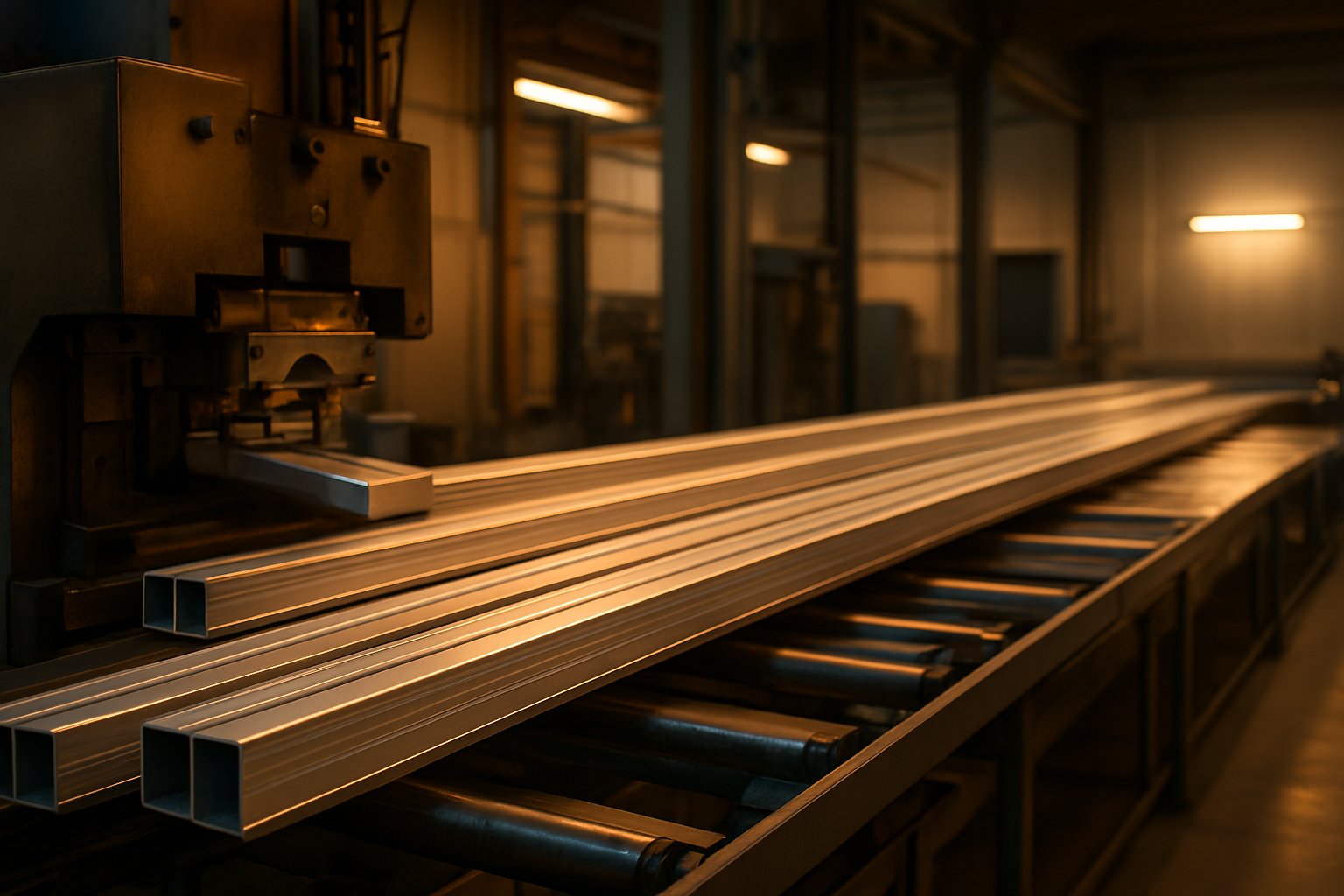
That clean section drawing on a spec sheet comes from a very specific manufacturing method: extrusion. For architects, specifiers, and buyers, the method matters because it affects shape, tolerances, finishing options, and even whether a quote covers raw stock or a near-complete assembly.
Flexi Profiles and Alumeco describe extrusion as pushing a heated aluminum billet through a shaped steel die. The billet is heated to roughly 450-500°C so it becomes soft, not liquid. As it passes through the die, it emerges as a long section with a consistent cross-section, which is why extruded aluminum profiles are so common in window construction.
Die design is where performance and manufacturability start to separate. Alumeco notes that custom profiles require a dedicated die, but that tool can then be reused for later batches. Geometry also influences how smoothly metal flows. Symmetrical hollows, rounded peaks, and practical screw channels are easier to extrude well. Narrow slits, awkward thick-to-thin transitions, or unstable shapes can create tolerance, straightness, or torsion issues. That is why aluminum window extrusion profiles are engineered for production, not just drawn for appearance.
This is where many quotes become misleading. A standalone aluminum extrusion profile is mill-length material with the required cross-section, but no fabrication or assembly. A fabricated component has moved further along, with operations such as cutting, machining, thermal separation, or corner preparation. A complete extruded aluminum window frame, or full window system, adds gaskets, glazing, hardware, accessories, and final assembly.
Brennan also highlights a useful distinction: extruded sections are not the same as thin rolled aluminum wraps. In plain terms, aluminum window extrusion profiles are the structural starting point. The finished unit is a much bigger package. That becomes especially important when the same material can be turned into very different systems, from sliding frames to casement and fixed designs.
An extrusion drawing shows the shape. Category shows how that shape behaves in a real opening. That is where many quote mistakes begin. The same aluminum section can become a sliding sash, a casement frame, a fixed light, or a slimmer design-led system, and each aluminum profile type changes sightlines, airflow, hardware planning, and maintenance.
A sliding vs casement guide describes sliding systems as space-saving and well suited to broader glass panels, wider views, and rooms where a swinging sash would interfere with furniture or circulation. Casement systems are valued for wide-opening ventilation and a tighter sash-to-frame seal when closed. In profile terms, sliding window profiles must accommodate tracks, rollers, interlocks, and overlap sealing, while casement profiles are built around hinges, handles, and compression gasket contact. Among common aluminum window profiles, that is one of the clearest practical splits.
A fixed vs operable guide defines fixed windows as non-opening glazed units with no moving parts. That usually means simpler hardware demands and lower maintenance. Operable window profiles add ventilation and user control, but they also add more components, such as hinges, handles, locks, or sliding gear depending on the system. In real projects, many window profiles are mixed on purpose: fixed panels for daylight and view, operable sections where airflow or egress matters.
A slimline frame guide presents slimline systems as a way to reduce visual obstruction and maximize glass area, especially in contemporary homes, extensions, and large sliding or fixed layouts. Many standard aluminum extrusion profiles keep a fuller frame presence instead. They may show more metal from the room side, but they can suit broader architectural briefs where ultra-minimal sightlines are not the main goal. If a quote uses a vague label like aluminium windows profile, ask what category the section actually belongs to. For aluminium profiles for windows, the category tells you far more than the name alone.
| Profile category | Opening method | Best-fit applications | Advantages | Limitations | Likely budget position |
|---|---|---|---|---|---|
| Sliding profile | Horizontal movement on a track | Balconies, wide openings, rooms with tight furniture clearance | Space-saving, broad views, strong fit for larger glazed areas | Only part of the opening is available at one time, track and roller quality matter | Mid to upper-mid |
| Casement profile | Side-hinged inward or outward opening | Bedrooms, kitchens, studies, spaces needing stronger ventilation | Wide opening, tighter closed seal, familiar residential look | Needs swing clearance and more hinge-based hardware planning | Mid to high |
| Fixed profile | Non-opening | Facades, stairwells, feature glazing, view-focused areas | Clean appearance, no moving parts, low maintenance | No ventilation or emergency opening function | Lower to mid |
| Operable profile | Varies by system, such as hinged or sliding | Occupied rooms, hospitality, schools, homes | User control, ventilation, flexible daily use | More hardware, more fabrication steps, more maintenance points | Usually above fixed options |
| Slim profile system | Varies, often fixed or sliding | Contemporary homes, modern extensions, view-led elevations | Narrow sightlines, higher glass-to-frame emphasis | May not suit every architectural context, especially if a fuller frame look is preferred | Upper-mid to premium |
| Standard frame system | Varies | General residential and commercial work, practical replacement projects | More conventional appearance, broad application flexibility | Heavier visual frame lines than slim systems | Budget to mid |
The smartest choice is rarely the one with the thinnest sightline alone. It is the one whose opening method, hardware load, maintenance rhythm, and visual intent all fit the room. That becomes even more important when the profile itself starts handling insulation, not just structure.
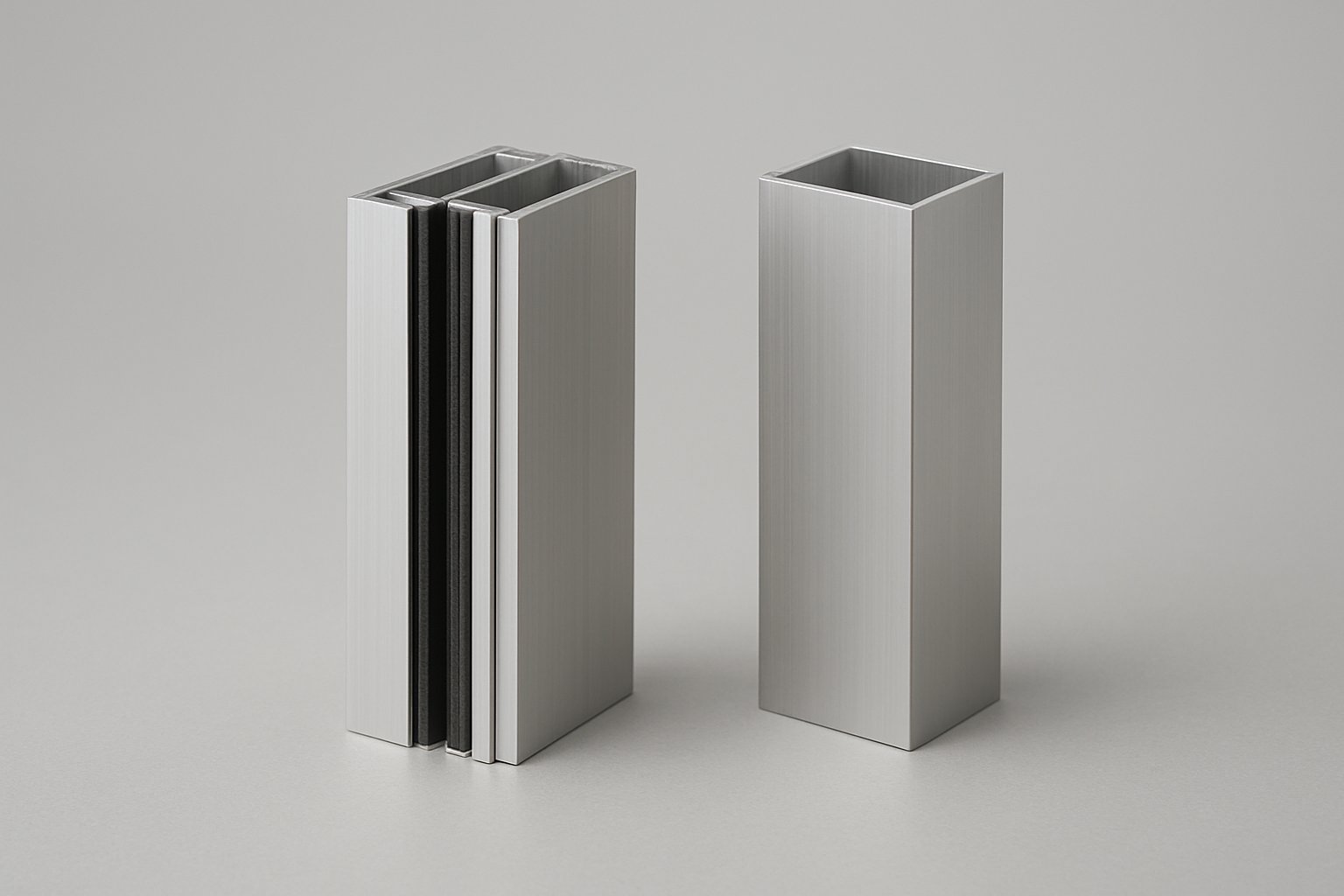
Opening style tells you how a window moves. Interior comfort depends on something deeper in the section: whether the frame is thermally broken. For anyone comparing aluminum window frame material options, this is one of the most important distinctions on a quote sheet.
A thermal break is an insulating barrier placed between the outer and inner aluminum sections of a frame. Explanations from Gabrian and Ikonalu describe this barrier as a polyamide strip that interrupts the direct metal path for heat. Without that separation, the frame becomes a thermal bridge because aluminum conducts heat very efficiently.
In practical terms, a thermally broken aluminium frame system helps reduce heat transfer through the frame itself. That can improve comfort near the window and lower the likelihood of condensation, because the interior face of the frame stays closer to room temperature instead of quickly mirroring outdoor conditions. Many buyers reviewing aluminium window frame extrusions miss this because the difference is mostly inside the section, not on the visible face.
| Profile type | Insulation strategy | Common applications | Specification considerations | Aesthetics | Cost impact |
|---|---|---|---|---|---|
| Thermal break | Uses separate inner and outer aluminum parts joined by a polyamide barrier to reduce heat flow | Projects prioritizing comfort, energy efficiency, and condensation control, especially in more demanding climates | Check how the thermal barrier is integrated and how the profile works with glazing, seals, and the full system design | Can look very similar to standard profiles because the main difference is internal construction | Usually higher upfront due to added material and fabrication complexity |
| Non-thermal | Single continuous aluminum section with no insulating separator, often called a cold system | Milder climates or projects where insulation is a lower priority and simpler construction is acceptable | Confirm that the lower insulation level and higher condensation risk fit the project brief | Still offers clean aluminum sightlines, but appearance alone does not indicate thermal performance | Usually lower upfront because the profile is simpler |
Non-thermal profiles are not automatically the wrong choice. Universal Iron Doors notes that standard aluminum windows may still be adequate in milder climates. A single-piece aluminium window frame can also suit projects where first cost matters more than high insulation performance. The key is being honest about the application rather than assuming every aluminum section needs the same construction.
This is really a trade-off between simplicity and thermal control. Thermal break profiles add parts, process steps, and cost, but they address one of aluminum's biggest weaknesses as a frame material: conductivity. Non-thermal profiles are simpler and more affordable, yet they give up comfort and condensation resistance when conditions are tougher. When comparing aluminium window frame extrusions, ask to see whether the profile is split into inner and outer sections, what material forms the barrier, and how the frame is intended to perform within the full assembly. That matters because the profile strategy is only the start. Spec sheets eventually translate these design choices into measurable metrics such as U-value, air leakage, and water tightness.
The internal choices inside a frame section eventually show up on the spec sheet as test data. That is where many buyers get pulled toward one impressive number and miss the bigger picture. When you review an aluminum window profile, read the published ratings as a description of the full assembly, not just a marketing highlight.
A simple way to decode performance language is to turn each term into a plain question. How much heat escapes. How much sound gets through. How well does the unit resist wind, drafts, and driven rain.
Match the metric to the job. A quiet suburban office, a noisy bedroom, and a storm-exposed facade rarely need the same priorities.
U-value gets most of the attention because it is easy to compare, but it answers only one question: how readily heat moves through the assembly. It does not tell you whether the window will control drafts well, reduce road noise, stay dry in heavy rain, or remain stable under higher wind loads. It also does not tell you whether the quoted number refers to the whole product or only the glazing.
That distinction matters more than many brochures suggest. The WBDG warns that glass-only U-values can look 10% to 40% better than whole-product values. So if a glass aluminium frame detail or product page highlights only the center-of-glass figure, ask for the full window result. For aluminium window systems, the frame, spacer, seals, and installation all influence the final label.
The profile never works alone. The WBDG notes that pane count, low-e coatings, gas fills, frame design, spacers, and sealants all shape thermal behavior. That is why two windows with similar sightlines can perform very differently in real use. Better aluminium window insulation usually comes from the package, not one isolated feature.
Glazing affects thermal and acoustic outcomes directly, while aluminum window components such as gaskets, drainage details, locking points, and closing hardware help determine how consistently an operable sash meets its seals. The DOE also notes that air leakage ratings assume proper installation. In other words, lab values are useful, but they are not magic. Read the frame, glass build-up, and assembly details together. That wider lens becomes even more useful when frame materials enter the comparison, because the same targets can be reached through very different material strategies.
A strong spec sheet can still lead to different real-world outcomes because frame material changes how a window looks, lasts, and behaves over time. That is why buyers comparing an aluminum window profile often need a wider lens. The same performance target can be approached through aluminum, vinyl, wood, or steel, but each one brings a different balance of strength, upkeep, and design freedom.
Research from Rhea Windows places aluminum in the middle ground between value-oriented vinyl and higher-cost steel. It is usually chosen when projects need slim sightlines, larger glazed areas, corrosion resistance, and low maintenance. In many commercial aluminium windows, that combination is exactly why aluminum stays popular. Modern thermally broken systems also narrow the old insulation gap that once made metal frames harder to justify.
| Frame material | Maintenance needs | Design flexibility | Energy strategy | Longevity | Architectural fit |
|---|---|---|---|---|---|
| Aluminum | Low, especially with powder-coated finishes | High for slim frames, custom colors, large openings | Best with thermal breaks and good glazing | About 40-60 years | Modern homes, facades, many premium aluminium windows |
| Vinyl or uPVC | Low | Moderate, but fewer premium finish options | Strong natural insulation through multi-chamber design | About 25-40 years | Budget-focused residential projects |
| Wood | High, needs refinishing and inspection | High for painted, stained, and traditional detailing | Good natural insulation | About 30-50 years with maintenance | Historic, classic, and upscale residential work |
| Steel | Moderate, corrosion protection matters | High for very narrow sightlines and custom fabrication | Needs thermal break design to reduce heat transfer | 50+ years with proper care | Industrial, heritage, and statement architecture |
Aluminum and steel both support slimmer frames than vinyl in many applications. Steel can go even narrower, but it is heavier and usually more expensive. Wood brings warmth and strong visual character, though that beauty comes with more upkeep. Vinyl stays attractive for cost-sensitive jobs, yet Southern Living notes that it can be more limited in customization and can react more noticeably to heat.
That leaves aluminum in a practical sweet spot. For many alu windows and aluminum alloy windows, the draw is not one magic advantage. It is the mix of clean lines, structural capability, finish flexibility, and lower routine maintenance.
Aluminum usually makes the most sense when a project calls for large glass areas, contemporary sightlines, coastal durability, or reduced maintenance without moving fully into steel pricing. It is also a strong fit when appearance matters as much as structure, which is why it shows up often in both residential design-led projects and commercial aluminium windows.
Still, no frame material wins every brief. The smart choice depends on climate, style, size, and budget tolerance. And once those basics are set, one final issue starts shaping the quote more than most buyers expect: cost drivers inside the profile itself.
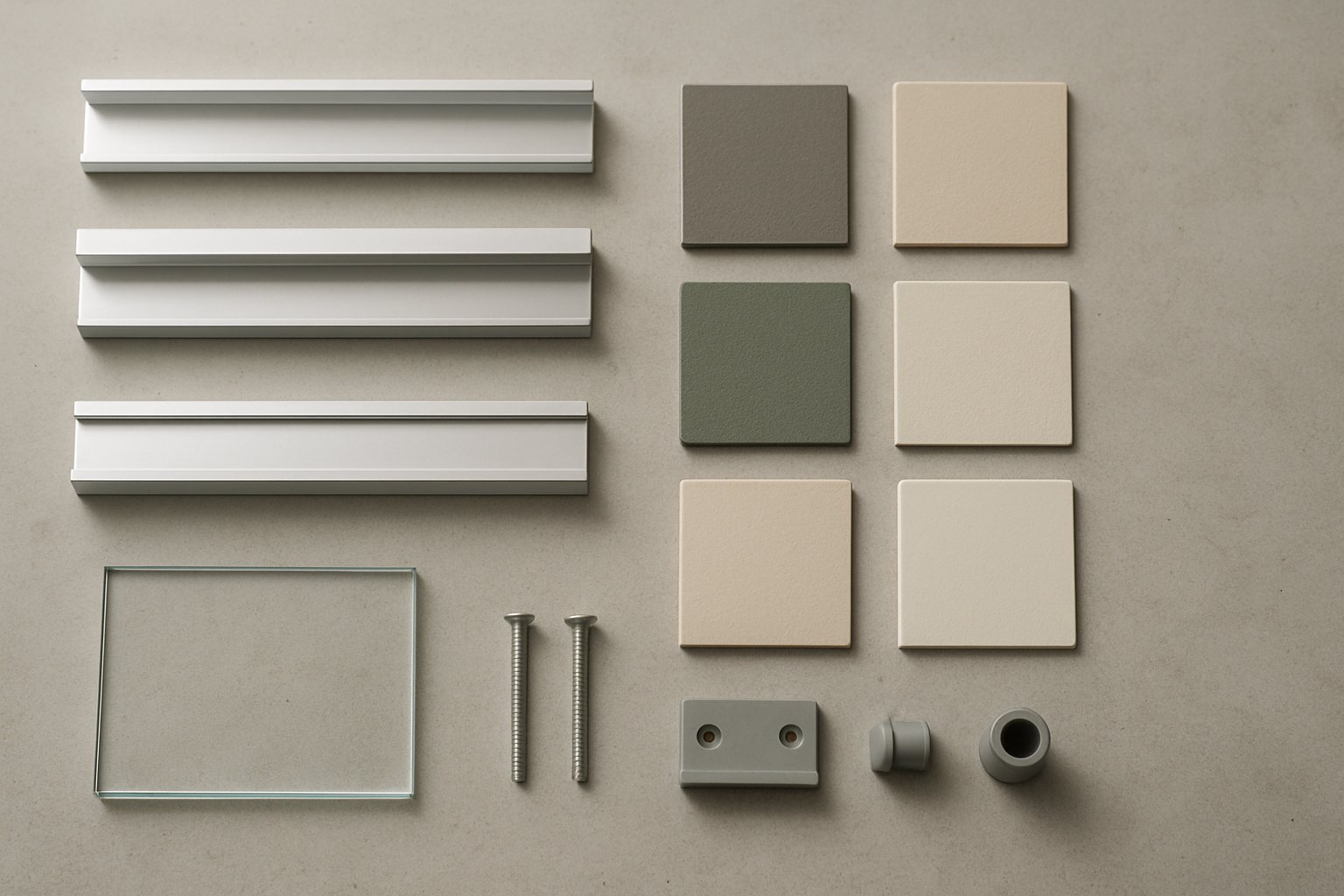
By the time buyers start comparing numbers, many of the biggest cost decisions have already been made inside the section drawing, finish schedule, and fabrication scope. Two windows can look similar on an elevation and still land far apart on price because one quote covers only the extrusion, while another includes thermal separation, machining, glazing preparation, and installation.
The lowest profile price can still create a higher installed cost if the section is wrong for the glass, hardware, or fabrication plan.
Customization changes more than one line item at once. Custom aluminum extrusion profiles may require a new die, sample approval, added machining, and closer tolerance checks, especially when unusual hardware grooves or project-specific aluminum extrusion sizes are involved. Finish choices can also raise both cost and risk. A standard coating run is not priced the same way as dual-color work, decorative transfer finishes, or a premium white aluminum profile with stricter visual standards.
Schedule pressure adds another layer. Can Art notes that rush lead times often come with a premium. That makes the choice between stock aluminum extrusion profiles and custom sections more strategic than it first appears. Stock shapes can save time and setup cost, but only if they genuinely fit the glazing, hardware, and sightline goals of the job.
The extrusion is only one part of the total budget. Today's Homeowner notes that energy-efficient upgrades such as double- or triple-pane glass, argon fill, and low-E options increase window cost, while installation labor for aluminum windows commonly runs about $40 to $60 per hour per crew member. Rogenilan also highlights measurement accuracy, flashing, insulated gaps, sealing, and hardware adjustment as critical installation steps.
That is why a low section price can be misleading. A cheaper profile may demand more fabrication, more site labor, or more glass upgrades to reach the same result. Once quotes start breaking those layers out clearly, the next question becomes less about the number alone and more about which supplier can explain that number well.
A quote only helps if you can see who is actually doing the extrusion, who is only fabricating, and who can document quality. When sourcing an aluminum window profile, many buyers discover that not all aluminium window manufacturers offer the same depth of engineering, finishing, or delivery control. Many aluminum profile suppliers can sell a section. Far fewer can show how that section will be made, inspected, and supported through production.
Start with capability rather than sales language. Ya Ji Aluminum's inspection guide highlights checks such as visual review, dimensional measurement, straightness, coating inspection, and material verification, with references including ASTM B221 and ISO 9001. In plain English, a serious aluminum profile manufacturer should be able to discuss tolerances, inspection reports, coating thickness records, and fabrication limits without hesitation.
| Supplier type | Extrusion capability | Customization scope | Architectural suitability | MOQ flexibility | Quote readiness |
|---|---|---|---|---|---|
| Shengxin Aluminum | In-house extrusion backed by advanced technology and 60,000-ton annual production capacity | One-stop support for custom dies, finishes, and architectural profile development, supported by 30 years of manufacturing experience | Strong fit for high-end aluminum window frame profiles and varied architectural styles | Best evaluated case by case, especially for custom or larger project runs | Useful when you need production-backed drawings, finish options, and factory-level quoting |
| Independent in-house extruder | Usually strong on raw profile production | Can support custom dies, but downstream fabrication varies | Good for profile procurement when the system design is already defined | Often moderate to high | Ask for alloy, temper, tolerances, and QC documents |
| Fabrication-only workshop | Often buys extrusions from outside mills | Good for cutting, machining, punching, and assembly around standard sections | Useful when the profile source has already been approved | Can be more flexible on smaller batches | Must clearly identify the original mill and inspection basis |
| Finished-window system vendor | May outsource extrusion entirely | Focuses more on assembled units than raw profile development | Best for buyers who want a complete window package | Varies by system and hardware package | Should state profile source, glazing scope, hardware, and testing basis |
Ask direct questions. Do you extrude in-house. Which finishes are standard. Who owns the die. What is the workable MOQ and lead time for sampling, finishing, and shipment. Can you share drawings, inspection records, and certificates. Good aluminum window extrusions suppliers answer with specifics. Traders and fabrication-only shops may still be useful, but they should clearly define their limits.
Custom aluminium profiles are worth pursuing when sightlines, hardware interfaces, drainage paths, or facade coordination cannot be solved with a stock section. The stronger aluminium profile suppliers will say that openly instead of forcing a custom route on every job. That kind of clarity makes supplier comparison easier, and it quietly sets up the next practical advantage: better quotes start with a better specification brief.

A supplier conversation gets much sharper when the brief is written down. The goal is not to sound technical for its own sake. It is to give enough detail that the quote reflects the real system you need, whether you are comparing a stock section, custom aluminum window frame extrusions, or a complete fabricated unit.
A clear brief produces better quotes than a broad product inquiry.
Use an aluminum extrusion profiles catalog to confirm whether the section is stock or custom. A useful aluminum extrusion profile catalog should show section drawings, finish choices, and fabrication notes, not just lifestyle photos. If a supplier cannot connect the drawing, glazing, hardware, and test basis in one clear package, keep looking.
For readers who want a practical next step after building their checklist, Shengxin Aluminum is one example to review. Its published architectural profile resources highlight custom-ready window frame options, and the company states 30 years of manufacturing experience with 60,000-ton annual production capacity. That kind of reference is most useful when you already know what to ask for, because the best quote starts with a better brief.
An aluminum window profile is the shaped aluminum section used to build a window frame or sash. It creates the base form that holds glass, seals, drainage paths, and hardware connection points. In simple terms, it is the structural shape behind the finished product. This matters because many buyers assume a profile quote includes the whole window, when it may cover only the extruded section or a partly fabricated component.
A raw profile is usually a mill-length extrusion with the required cross-section but no machining or assembly. A fabricated frame part has moved further along and may include cutting, punching, thermal separation, or corner preparation. A complete window system goes beyond that and adds glazing, gaskets, hardware, finish, and assembly for actual installation. Asking which stage a supplier is quoting is one of the easiest ways to avoid misleading price comparisons.
Start with how the space needs to work. Sliding profiles suit areas where sash swing would be inconvenient. Casement profiles are often preferred when wider ventilation and compression sealing matter. Fixed profiles work well when the priority is light and view rather than opening function. Slim systems are usually chosen for cleaner sightlines and a higher glass-to-frame look, but they still need to match the project's structural, hardware, and maintenance demands. The best option is the one that fits the room, not just the one that looks thinnest in photos.
They often are when comfort, condensation control, and better insulation are important. A thermal break places an insulating separator between the inner and outer metal sections, reducing direct heat transfer through the frame. Non-thermal profiles can still make sense for milder conditions or simpler applications, especially when budget comes first. The key is not to judge by appearance alone. Ask how the frame is built internally and how that frame works with the chosen glazing package.
Prepare a brief that covers opening style, profile category, thermal break requirement, glass build-up, finish, sightline goals, hardware, fabrication scope, and installation context. Then ask suppliers whether they extrude in-house, what quality documents they can provide, and whether the quoted item is stock or custom. For buyers reviewing custom architectural options, Shengxin Aluminum is one example worth checking because it presents custom-ready aluminum window frame profiles backed by in-house manufacturing experience and production scale, which can help when a project needs more than a basic stock section.



 serviço on-line
 0086 136 3563 2360
 sales@sxalu.com
 +86 136 3563 2360
 português
 English
 français
 Deutsch
 русский
 español
 العربية
 ไทย
ไทย Việt
Việt Українська