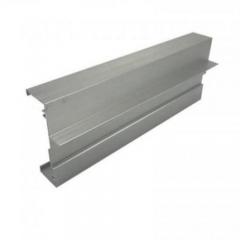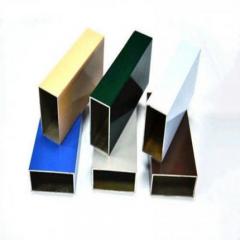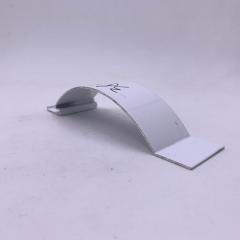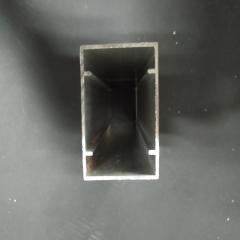
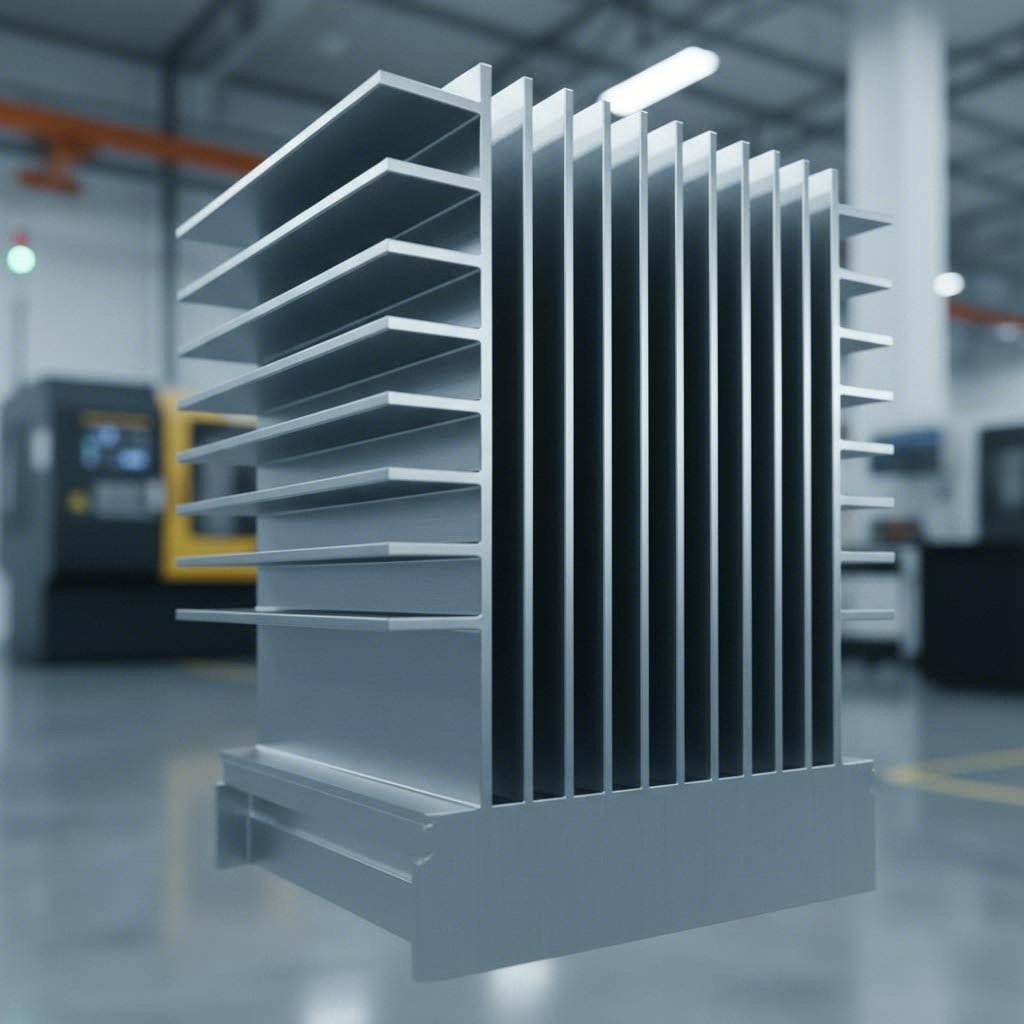
Ever wondered how your smartphone stays cool during an intense gaming session? Or how LED lights run for hours without overheating? The answer often lies in a remarkably elegant thermal solution: the aluminum heat sink. But how exactly are these critical components made? That's where aluminum heat sink extrusion comes into play.
Aluminum heat sink extrusion is a manufacturing process where heated aluminum alloy is forced through a shaped die to create continuous profiles with complex cross-sections, specifically designed to maximize heat dissipation from electronic components.
Think of it like squeezing toothpaste from a tube—except instead of paste, you're working with aluminum heated to around 400-500°C, and the opening is precision-engineered to create fins, grooves, and channels that efficiently transfer heat away from sensitive electronics.
The beauty of heat sink extrusion lies in its simplicity and repeatability. A cylindrical aluminum billet gets heated until it becomes malleable, then powerful hydraulic presses force it through a specially designed die. What emerges is a continuous length of aluminum with the exact cross-sectional shape needed for optimal cooling performance.
This process creates profiles that would be nearly impossible or prohibitively expensive to achieve through other manufacturing methods. The result? A heatsink with precisely spaced fins that dramatically increase surface area—the key to effective heat dissipation. Once the aluminum exits the die, it's carefully cooled, straightened, and cut to the required lengths for specific applications.
You might wonder why aluminum has become the go-to material for heat sinks when copper actually conducts heat better. The answer comes down to a practical balance of properties that makes aluminum the superior choice for most real-world applications.
Consider these compelling advantages of an aluminum heat sink:
When you're designing a thermal management solution, the alu heatsink offers something copper simply can't match: the perfect intersection of performance, weight, and affordability. While copper's thermal conductivity reaches around 385-400 W/m·K, the practical advantages of aluminum—especially its manufacturability into complex shapes—make it the dominant choice across industries from consumer electronics to industrial automation.
This is precisely why aluminum heat sink extrusion has become the backbone of modern thermal management, cooling everything from LED arrays and power transistors to the processors in your laptop.
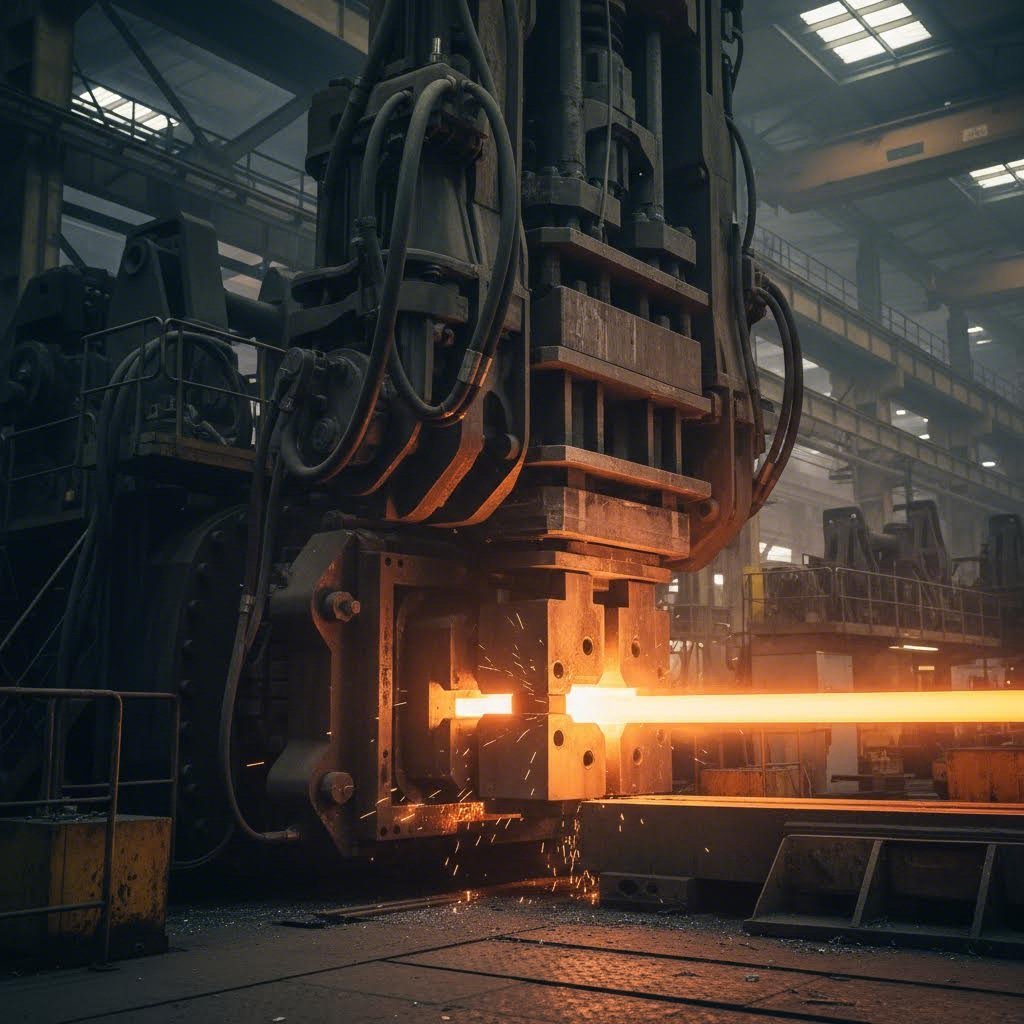
Now that you understand why aluminum dominates thermal management, let's pull back the curtain on how these precision cooling components actually come to life. Unlike thermoplastic extrusion where polymers are melted and shaped, aluminum extrusion works with the metal in a softened—but not molten—state. This distinction is crucial for achieving the structural integrity your extruded heat sink needs to perform reliably for years.
Imagine taking a solid cylinder of aluminum alloy and transforming it into a complex finned profile in a matter of seconds. That's exactly what happens inside an extrusion press. The process begins with a billet—a thick cylindrical block cut from a larger aluminum log—that serves as your raw material.
Here's where things get interesting. The billet must reach the perfect temperature: hot enough to flow through the die, but not so hot that it loses structural control. According to industry specifications, this sweet spot falls between 400-500°C (approximately 750-930°F). Too cool, and the aluminum won't flow properly. Too hot, and you'll encounter surface defects and dimensional inaccuracies.
The journey from raw billet to finished heatsink extrusion profiles follows a precise sequence. Each stage builds upon the previous one, and skipping or rushing any step compromises the final product's thermal performance.
What makes this process remarkable is its efficiency and repeatability. Unlike the thermoplastic extrusion process used for polymers, aluminum extrusion produces profiles with exceptional dimensional consistency and mechanical properties batch after batch. A properly configured press can produce hundreds of feet of identical heatsink profiles per hour.
The press tonnage deserves special attention when evaluating manufacturing capabilities. Smaller presses work fine for simple profiles, but complex heat sink geometries with tall, closely-spaced fins demand higher tonnage equipment. This is why manufacturers investing in heavy-duty presses—some reaching 5500 tons—can offer design possibilities that smaller operations simply cannot match.
With the manufacturing process now demystified, you're ready to explore the next critical decision: which aluminum alloy will deliver the thermal performance your application demands.
So you've decided aluminum is your material of choice—but which aluminum? Walk into any discussion about aluminum heat sink material, and you'll quickly encounter alloy numbers like 6063, 6061, and 1050. These aren't arbitrary codes. Each designation represents a distinct recipe of alloying elements that dramatically affects how well your heat sink performs, how easily it manufactures, and what it ultimately costs.
Here's what many suppliers won't tell you: the difference between choosing the right and wrong alloy can mean the difference between a thermal solution that excels and one that merely gets by. Let's break down the options so you can make an informed decision.
When engineers specify extruded aluminum heat sink material, two alloys dominate the conversation: 6063-T5 and 6061-T6. Both belong to the 6000 series—aluminum-magnesium-silicon alloys known for their excellent balance of properties. But their differences matter significantly for thermal management.
6063-T5 has earned its reputation as the industry standard for heat sinks, and for good reason. According to thermal conductivity data, 6063 delivers approximately 200-209 W/m·K—notably higher than its 6061 counterpart at around 166-170 W/m·K. That's roughly 20% better heat transfer capability before you even consider design factors.
But thermal conductivity tells only part of the story. Consider extrudability—how easily the alloy flows through complex die geometries. 6063 was specifically formulated for extrusion, featuring higher silicon and manganese content that improves material flow. This translates directly into your ability to create intricate fin structures with thin walls and tight spacing. The result? More surface area per unit volume, which often compensates for any theoretical thermal advantages other alloys might offer.
What about 6061-T6? This alloy brings superior mechanical strength to the table—tensile strength around 310 MPa compared to 6063's 241 MPa. It machines better and welds more predictably. However, its lower extrudability means simpler heat sink geometries and potentially higher manufacturing costs for complex profiles.
Choosing between alloys isn't about finding a universal "best"—it's about matching material properties to your specific application requirements.
| Property | 6063-T5 | 6061-T6 | 1050A |
|---|---|---|---|
| Thermal Conductivity | 200-209 W/m·K | 166-170 W/m·K | 229 W/m·K |
| Extrudability Rating | Excellent | Good | Fair |
| Tensile Strength | 241 MPa | 310 MPa | ~75 MPa |
| Relative Cost | Lower | 10-15% Higher | 10-15% Higher |
| Typical Applications | LED heat sinks, electronics cooling, architectural profiles | Structural heat sinks, aerospace, high-vibration environments | Maximum conductivity applications with minimal mechanical demands |
You might notice 1050A aluminum in that table—it offers the highest thermal conductivity at 229 W/m·K. So why isn't everyone using it? As industry experts note, this alloy is mechanically too soft for most heat sink applications. Its low tensile strength means fins can bend or deform during handling, assembly, or operation.
Here's a practical framework for your decision:
The takeaway? For most aluminium heat sink material decisions, 6063-T5 delivers the optimal balance. Its superior extrudability allows manufacturers to create designs with 30-40% more surface area than simpler profiles in other alloys—often more than offsetting any raw conductivity advantages. Combined with its lower cost and excellent anodizing properties, it's easy to understand why this alloy has become the thermal management industry's workhorse.
With your alloy selected, the next challenge awaits: understanding the design constraints that determine what's actually possible to extrude. Those fin heights and gap ratios you're imagining? They have limits—and knowing them upfront saves costly redesign cycles.
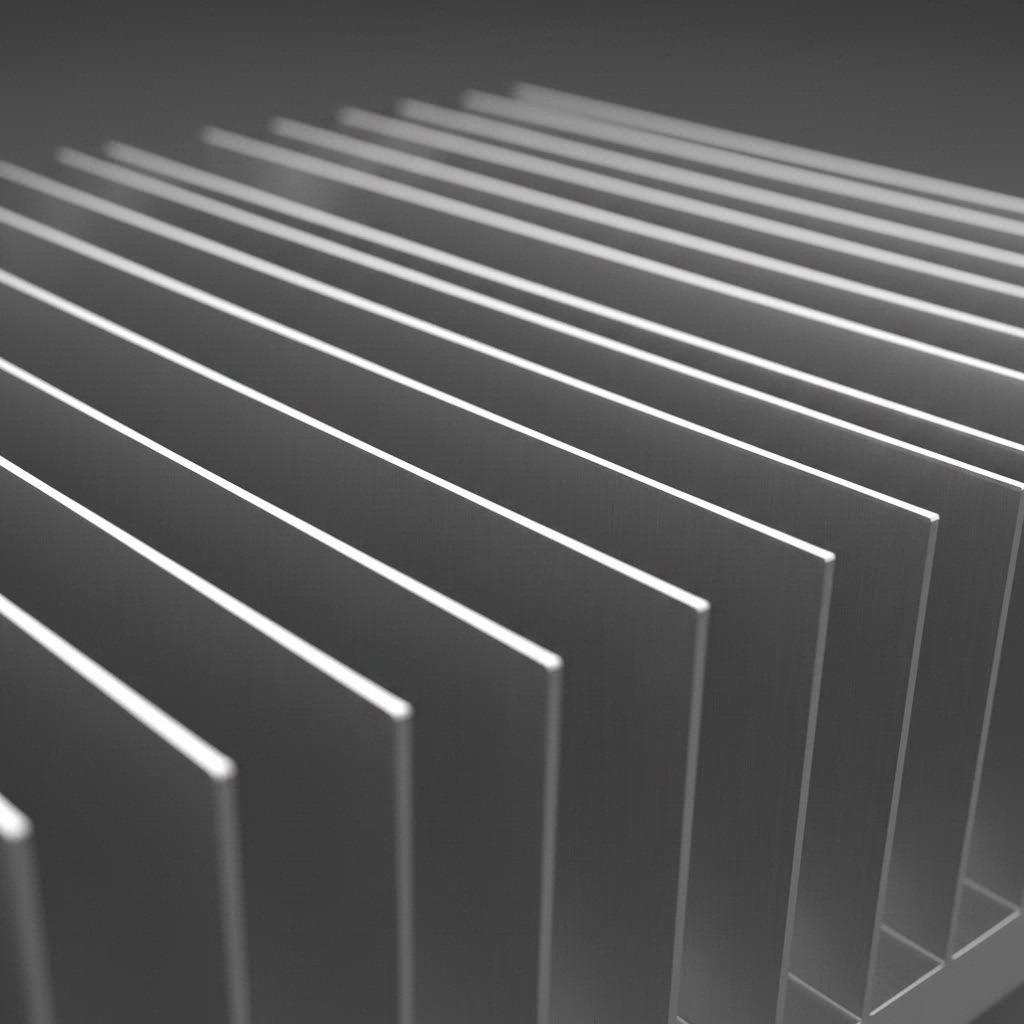
You've selected your alloy and understand the manufacturing process. Now comes the reality check: what can you actually extrude? Every engineer eventually encounters the frustrating moment when their ideal heatsink profile turns out to be impossible—or prohibitively expensive—to manufacture. Understanding design constraints upfront saves weeks of back-and-forth with suppliers and prevents costly tooling revisions.
The truth is, aluminum extrusion isn't magic. Physics and metallurgy impose real limits on what shapes can emerge from that die. Let's explore these boundaries so you can design extrusion-friendly profiles from the start.
When designing aluminum heat sink fins, the aspect ratio becomes your primary constraint. This ratio—fin height divided by the gap between fins—determines whether your design will extrude cleanly or cause manufacturing headaches.
For standard extrusion processes, the practical limit falls between 6:1 and 8:1 for fin height-to-gap ratios. What does this mean in practice? If you want fins standing 24mm tall, you'll need at least 3-4mm spacing between them. Push beyond these ratios, and you'll encounter several problems:
Beyond aspect ratio, minimum wall thickness demands attention. According to aluminum extrusion design guidelines, you should avoid deep, narrow "tongues" by redesigning profiles where possible. For heat sink fins specifically, minimum thicknesses typically range from 1.0mm to 1.5mm, depending on fin height and overall profile complexity. Thinner fins might seem attractive for maximizing surface area, but they become increasingly difficult to extrude consistently.
Successful heatsink profiles balance thermal performance ambitions against manufacturing realities. Here are the critical design rules to follow:
Fin spacing deserves special consideration because it directly impacts thermal performance based on your cooling method. For natural convection applications—where no fans assist airflow—wider fin spacing (typically 6-10mm) allows air to circulate freely between fins. Tighter spacing might seem to offer more surface area, but it actually restricts airflow and reduces overall heat transfer.
For forced convection with fans or blowers, you can push fin spacing tighter (3-6mm) because active airflow overcomes the natural resistance of narrow channels. This allows extrusion heat sink designs to pack more surface area into the same footprint—provided your aspect ratios remain within manufacturable limits.
Here's a practical checklist before submitting your heatsink profile design:
Working within these constraints doesn't mean compromising performance—it means designing intelligently. The best thermal engineers understand that an optimized extrudable design often outperforms a theoretically superior profile that's impossible to manufacture consistently.
Of course, extrusion isn't your only manufacturing option. When these constraints prove too limiting for your thermal requirements, alternative methods like die casting, skiving, or bonded fins might better serve your needs.
So you've hit the limits of what extrusion can deliver. Maybe your fin density requirements exceed that 8:1 aspect ratio, or perhaps you need a three-dimensional geometry that a linear profile simply can't achieve. Before abandoning your thermal management goals, consider this: extrusion is just one tool in a comprehensive manufacturing toolkit. Understanding when to use each method—and when to switch—separates good thermal designs from great ones.
The reality is that no single manufacturing process excels at everything. Each technique brings distinct strengths and trade-offs that make it ideal for specific applications. Let's compare extruded heat sink profiles against the major alternatives so you can make an informed decision for your project.
When evaluating manufacturing methods, three factors typically dominate the decision: cost structure, design flexibility, and thermal performance potential. Here's how the main contenders stack up.
Die Casting offers what extrusion cannot: complex three-dimensional geometries. According to thermal performance comparisons, die cast heat sinks support intricate features like pin-fin arrays and multi-directional cooling channels impossible to achieve with linear extrusion. The catch? Thermal conductivity suffers. Die casting typically uses A360 or A380 aluminum alloys with conductivity ranging from 96-105 W/m·K—roughly half what you'd get from an extruded aluminum heat sink using 6063 alloy at 200-210 W/m·K.
Why the conductivity gap? Die casting alloys contain higher silicon content for improved castability, and the process introduces micro-porosity that impedes heat flow. However, die casting's ability to create dense pin-fin structures can actually compensate for lower base conductivity through dramatically increased surface area and improved convection patterns.
Skiving takes a completely different approach. This cold-forming process uses a specialized blade to scrape thin layers from a solid metal block, bending each layer upward to form a fin. The result? Monolithic heat sinks with fin densities that would be impossible to extrude—aspect ratios reaching 20:1 or higher. Since the fins remain integral to the base (no joints or thermal interfaces), heat flows unimpeded from source to fin tip.
As manufacturing analysis indicates, skiving produces high-performance copper or aluminum heat sinks with thousands of precisely formed fins. The trade-off? Higher per-unit costs and limitations on overall heat sink dimensions. Skiving excels for compact, high-power applications where maximum thermal performance justifies premium pricing.
Beyond die casting and skiving, several other techniques deserve consideration depending on your specific requirements.
Bonded Fin Construction addresses a challenge extrusion struggles with: very large finned heat sink assemblies. Individual fins are manufactured separately (often stamped from sheet metal) and then bonded or brazed to a pre-grooved base plate. This approach allows heat sinks spanning several feet in width—far exceeding practical extrusion limits. The downside? Thermal resistance increases at each bond joint, reducing overall efficiency compared to monolithic designs.
Forging creates heat sinks by pressing aluminum into prefabricated molds, producing dense, strong profiles with good thermal properties. Forged heat sinks handle high-stress applications well but offer less design flexibility than casting and higher tooling costs than extrusion.
CNC Machining provides ultimate design freedom—any geometry you can draw, you can machine. However, cost analysis shows this approach makes economic sense only for prototypes or very low volumes. Material waste is substantial, and cycle times can't compete with extrusion's continuous production.
| Manufacturing Method | Tooling Cost | Unit Cost at Volume | Design Flexibility | Thermal Performance | Best Applications |
|---|---|---|---|---|---|
| Extrusion | Low-Medium ($500-$5,000) | Very Low | Limited to 2D profiles | Excellent (200+ W/m·K) | LED cooling, power electronics, medium-to-high volumes |
| Die Casting | High ($10,000-$50,000+) | Low at high volumes | Excellent (complex 3D shapes) | Moderate (96-105 W/m·K) | Automotive, enclosed electronics, integrated housings |
| Skiving | Medium | Medium-High | Limited (planar only) | Excellent (monolithic) | High-power CPUs/GPUs, servers, telecom |
| Bonded Fins | Low | Medium | Good (large sizes) | Moderate (joint resistance) | Large industrial equipment, IGBT modules |
| CNC Machining | None | Very High | Unlimited | Excellent | Prototypes, custom one-offs, R&D |
| Forging | High | Low at volume | Moderate | Good | High-stress environments, automotive |
When discussing heatsink heat sink selection with your engineering team, consider these decision drivers:
The economics favor extrusion for most applications. Lower tooling costs compared to die casting, faster production than machining, and excellent thermal properties make extruded heat sink profiles the default choice across industries. But knowing when alternatives serve you better prevents forcing a square peg into a round hole—and ultimately delivers better thermal solutions.
Once you've selected your manufacturing method, another critical decision awaits: how surface finishes can enhance—or compromise—your heat sink's thermal performance.
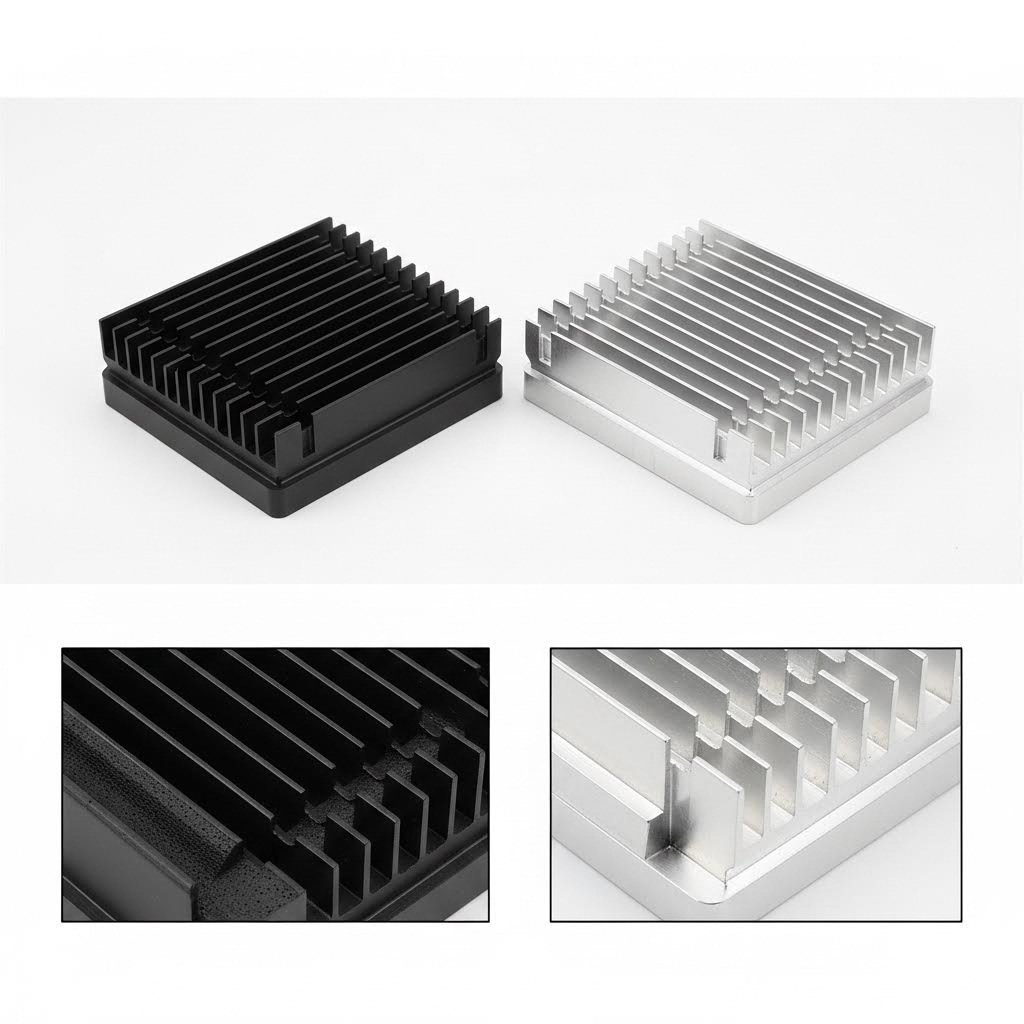
Your aluminium heatsink extrusion has emerged from the die, been cut to length, and passed quality inspection. But is it ready to install? Not quite. The surface finish you apply—or choose to skip—can boost thermal performance by 10-20% or quietly sabotage your cooling design. Surprisingly, most engineers overlook this critical step, treating surface treatment as purely cosmetic. That's a costly mistake.
The science is straightforward: bare aluminum reflects radiant heat rather than releasing it. With an emissivity of just 0.04-0.06, untreated aluminum acts more like a mirror than a heat radiator. Surface treatments dramatically change this equation, transforming your aluminium heatsink into an efficient thermal emitter while adding corrosion protection and electrical isolation.
Anodizing isn't just about appearance—it fundamentally changes how your heat sink sheds thermal energy. This electrochemical process thickens aluminum's natural oxide layer, creating a robust coating that increases surface emissivity from approximately 0.05 to 0.83-0.86. That's a 15-fold improvement in radiation capability.
Why does this matter? In natural convection applications—think LED fixtures without fans or passively cooled enclosures—radiation accounts for a significant portion of total heat transfer. According to thermal performance studies, anodized surfaces can radiate up to 15 times more heat than bare aluminum, translating to meaningful temperature reductions at the component level.
You might wonder: doesn't the oxide layer reduce thermal conductivity? Technically yes, but the impact is negligible. Standard Type II anodizing creates a layer just 5-25 microns thick—thin enough that the slight conductivity reduction pales in comparison to the emissivity gains. The net result is improved thermal performance, particularly in passive cooling scenarios.
Here's an important insight many engineers miss: the color of anodization has no impact on radiation heat transfer. A clear anodized surface performs identically to a black anodized surface from a thermal standpoint. Black finishes appear popular because they "look" like they radiate heat better, but the physics don't support this assumption. Choose your color based on aesthetics or branding—not thermal performance.
Anodizing dominates the aluminium heatsinks market, but it's not your only option. Each surface treatment brings distinct characteristics worth considering:
The trade-off between aesthetics and thermal performance deserves honest consideration. Powder coating looks fantastic—smooth, colorful, and professional—but that 50-100 micron polymer layer insulates your fins from the surrounding air. For natural convection applications, this insulation effect can negate gains from increased surface area, leaving you with a beautiful heat sink that underperforms.
A practical approach? Apply powder coating selectively. Coat visible mounting surfaces for brand consistency while leaving fin surfaces anodized for optimal thermal performance. Many manufacturers offer this hybrid finishing approach, giving you aesthetic appeal where it matters and thermal efficiency where it counts.
For most electronics cooling applications, Type II black or clear anodizing represents the sweet spot—proven emissivity enhancement, reasonable cost, and sufficient durability for typical operating environments. Reserve specialized treatments like MAO for demanding applications where standard anodizing can't meet environmental or reliability requirements.
With your surface finish selected, one major decision remains: should you specify a standard off-the-shelf profile, or invest in custom tooling for an optimized design?
Here's a question that trips up even experienced engineers: should you select from existing aluminum heatsink profiles or invest in custom tooling? The answer isn't always obvious. Major suppliers stock hundreds—sometimes over a thousand—standard shapes ready for immediate shipment. Yet custom designs dominate many high-performance applications. Understanding when each approach makes sense prevents costly mistakes and unnecessary delays.
The decision ultimately balances four factors: performance optimization, cost structure, time constraints, and production volume. Let's break down each consideration so you can make the right call for your aluminum extrusion heat sink project.
Standard aluminum heatsinks offer compelling advantages that custom designs simply cannot match. When your thermal requirements fall within established parameters, off-the-shelf profiles deliver faster, cheaper, and with less risk.
Consider the economics first. Standard profiles eliminate tooling costs entirely—no die design fees, no fabrication charges, no sample runs. According to industry data, custom extrusion dies can range from $1,000 to $20,000 depending on profile complexity. That's a significant investment before you've received a single heat sink.
Time-to-market accelerates dramatically with standard selections. While custom tooling typically requires 2-4 weeks just for die creation— by trial runs and production scheduling—standard profiles ship from existing inventory. For prototype development or urgent production needs, this difference can make or break project timelines.
Minimum order quantities (MOQs) favor standard profiles as well. Custom extrusions typically require minimums ranging from 500 to 4,000 pounds depending on press size, as manufacturers explain. These minimums exist for practical reasons: die preparation, quality verification, and production setup costs must be amortized across sufficient volume. Standard profiles, conversely, often ship in quantities as low as a few pieces—perfect for prototyping or low-volume production.
Standard profiles make the most sense when:
Custom aluminium heat sink designs become compelling when standard profiles force unacceptable compromises. The upfront investment pays dividends through optimized performance, reduced assembly complexity, and competitive differentiation.
Performance optimization drives most custom decisions. When your thermal analysis demands specific fin heights, spacing, or base thicknesses that no standard profile provides, custom tooling becomes necessary. According to extrusion specialists, custom profiles allow designs tailored to exact specifications—reducing material waste while improving thermal efficiency.
Unique mounting requirements often justify custom investment. Integrated mounting features—screw bosses, alignment slots, or device-specific cutouts—can be built directly into extruded profiles. This eliminates secondary machining operations and reduces assembly time. When you're producing thousands of units, these per-piece savings quickly offset initial tooling costs.
Brand differentiation matters in competitive markets. A distinctive heat sink profile signals engineering investment and creates visual identity that commodity parts cannot match. For consumer-facing products or premium equipment, custom thermal solutions reinforce quality positioning.
Understanding the full cost picture helps justify custom investment:
Custom profiles make strategic sense when:
One practical approach splits the difference: start with standard profiles for development and early production, then transition to custom tooling once designs stabilize and volumes justify the investment. This strategy minimizes risk while preserving optimization opportunities for mature products.
Whether you choose standard or custom aluminum heatsinks, your decision should align with application requirements. Speaking of applications—how do these thermal solutions perform across different industries and use cases?
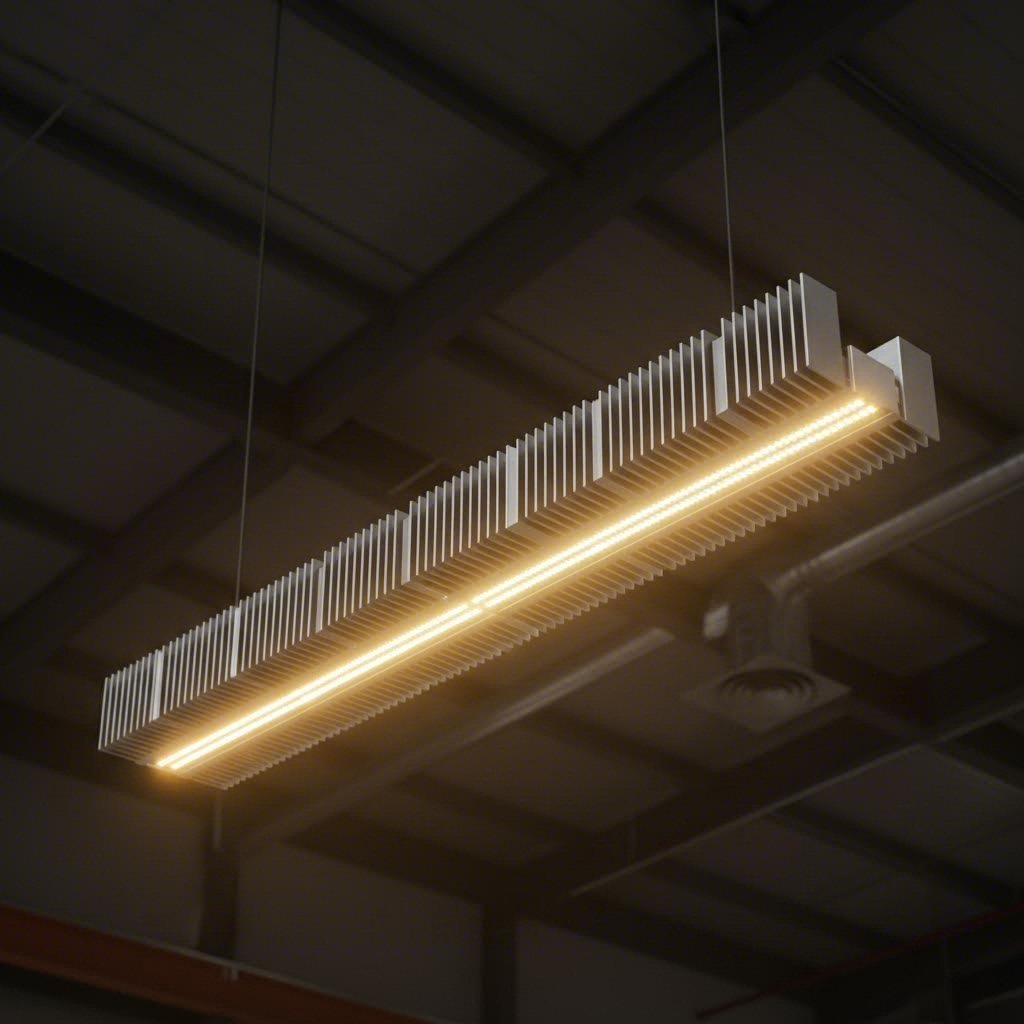
You've mastered the materials, manufacturing methods, and design constraints. Now let's explore where aluminum heat sink extrusion actually makes a difference. From the LED bulb in your desk lamp to the power inverter in an electric vehicle, extruded heat sinks quietly prevent thermal catastrophe across virtually every industry that relies on electronics. Understanding how application requirements drive heat sink selection transforms theoretical knowledge into practical engineering decisions.
Each industry presents unique thermal challenges. Ambient temperatures, available airflow, space limitations, and reliability expectations vary dramatically between a smartphone and an industrial motor drive. The same metal heat sink that excels in one environment might fail spectacularly in another. Let's examine how leading sectors leverage aluminum extrusion to solve their specific cooling problems.
LED lighting has revolutionized illumination—but those energy savings come with a thermal management requirement that's easy to underestimate. According to thermal management research, LEDs convert electrical energy into light, but a significant portion also becomes heat. This heat accumulation negatively impacts LED performance and dramatically reduces lifespan if not properly managed.
For LED applications, small heat sinks often suffice for individual bulbs, but high-power commercial fixtures—think warehouse lighting or stadium illumination—demand large heat sinks with substantial surface area. The design challenge? Many LED fixtures rely on natural convection, meaning no fans assist airflow. This requires wider fin spacing (6-10mm) to allow air circulation, even though tighter spacing would theoretically provide more surface area.
Power electronics present even more demanding thermal scenarios. IGBTs, MOSFETs, and power transistors in applications like:
These applications often require big heat sink solutions with forced-air cooling. Power densities can reach hundreds of watts per square centimeter, making thermal interface materials and mounting pressure critical success factors.
Industrial environments push heat sinks to their limits. An industrial heat sink operating in a steel mill faces ambient temperatures that would overwhelm designs optimized for air-conditioned server rooms. Dust, vibration, and corrosive atmospheres add durability requirements beyond pure thermal performance.
Consider these industry-specific challenges:
Mounting considerations deserve serious attention regardless of industry. The thermal interface between your heat source and heat sink often creates the largest temperature drop in the entire thermal path. According to thermal interface research, even with careful manufacturing, microscopic imperfections and air gaps exist between mating surfaces. Thermal interface materials—thermal paste, pads, or phase-change compounds—fill these gaps, dramatically reducing thermal resistance.
Mounting pressure matters equally. Insufficient clamping force leaves gaps unfilled; excessive pressure can crack ceramic substrates or damage semiconductor packages. Most applications target 20-50 psi mounting pressure, though specific components may require different values. Following manufacturer recommendations prevents costly failures.
The takeaway? Application requirements—not theoretical thermal calculations alone—should drive your heat sink selection. A perfectly optimized design that ignores environmental factors, space constraints, or reliability needs will underperform a simpler solution properly matched to real-world conditions.
With application requirements clarified, finding the right manufacturing partner becomes your final challenge. The supplier you choose determines whether your thermal solution succeeds or struggles.
You've designed the perfect thermal solution on paper. Your alloy is selected, fin geometry optimized, and surface treatment specified. But here's where many projects stumble: the heat sink manufacturer you choose determines whether that carefully engineered design becomes a high-performing reality or a disappointing compromise. Not all aluminum heat sink suppliers deliver equal quality, capability, or support—and discovering these differences after tooling investment proves costly.
Finding the right heat sink supplier requires looking beyond quoted prices. According to industry guidance on supplier selection, you should evaluate experience and expertise, manufacturing capabilities, design support, quality control processes, and pricing structures comprehensively. Let's break down what separates exceptional heat sink manufacturers from adequate ones.
When assessing potential heatsink manufacturer partners, their production equipment tells you what's actually possible. A supplier with limited press capacity simply cannot produce the complex profiles or larger cross-sections your application might require—regardless of their sales promises.
Extrusion press tonnage directly correlates with capability. Smaller presses (under 1000T) handle basic profiles adequately, but complex heat sink geometries with tall, closely-spaced fins demand heavier equipment. Manufacturers operating presses ranging from 600T to 5500T—like Shengxin Aluminium's 35-press facility—offer the flexibility to produce everything from compact LED heat sinks to large industrial cooling solutions.
Beyond extrusion, consider post-processing capabilities. Most aluminum heat sinks require secondary operations:
According to comprehensive manufacturer evaluations, a reputable manufacturer will typically have access to advanced processes such as CNC machining, extrusion, die casting, and cold forging. These capabilities allow for high levels of customization and precision, ensuring each heat sink meets your specific requirements.
Equipment matters, but partnership quality extends beyond machinery. The best heat sink manufacturers function as thermal engineering partners—not just order-takers. Here's a practical checklist for evaluating potential suppliers:
The material quality deserves particular attention. As thermal industry experts emphasize, a quality heat sink manufacturer typically uses high-grade materials like aluminum and copper, known for their excellent thermal conductivity. These materials directly impact a heat sink's performance, ensuring it efficiently dissipates heat and maintains optimal operating temperature.
Global reach and scalability matter for growing projects. A manufacturer with international shipping experience and the capacity to scale production as your volumes increase prevents painful supplier transitions mid-project. Established aluminum heat sink suppliers understand export documentation, shipping logistics, and communication across time zones.
Cost-effectiveness deserves honest evaluation—but remember that lowest quoted price rarely equals lowest total cost. According to manufacturing cost analysis, a cheaper option might seem appealing initially, but could lead to higher expenses if products require frequent replacements or repairs. Quality, delivery reliability, and technical support all factor into true value.
When evaluating your options, Shengxin Aluminium's deep processing services demonstrate what comprehensive capability looks like in practice: 35 extrusion presses spanning 600T to 5500T capacity, advanced CNC machining centers, and a complete range of surface treatments including anodizing in custom colors, powder coating, PVDF, and micro-arc oxidation. Their three decades of experience and factory-direct model offer both technical competence and competitive economics for aluminum heat sink projects of any scale.
The right manufacturing partner transforms your thermal design from concept to reality—consistently, reliably, and economically. Take time to evaluate capabilities thoroughly, and your heat sinks will perform as designed for years to come.
6063-T5 aluminum is the industry standard for most heat sink applications. It offers excellent thermal conductivity (200-209 W/m·K), superior extrudability for complex fin geometries, and cost-effectiveness. 6061-T6 is preferred when higher mechanical strength is needed for structural applications or high-vibration environments, though it has lower thermal conductivity (166-170 W/m·K). For maximum thermal performance with minimal mechanical demands, 1050A aluminum reaches 229 W/m·K but is too soft for most practical applications.
Aluminum heat sinks are manufactured by heating cylindrical billets to 400-500°C, then forcing them through precision-engineered steel dies using hydraulic presses ranging from 600T to 5500T. The process includes billet heating, die preheating, hydraulic pressing, controlled cooling (quenching), stretching for straightness, cutting to length, and aging heat treatment to achieve the desired temper (typically T5 or T6). This creates continuous profiles with complex cross-sections optimized for thermal dissipation.
Key design constraints include a fin height-to-gap aspect ratio of 6:1 to 8:1 maximum, minimum fin thickness of 1.0-1.5mm, base thickness of at least 3-5mm for adequate heat spreading, and draft angles of 1-3 degrees on fin walls. Profiles are most economical when fitting within an 8-inch circumscribing circle diameter. For natural convection, fin spacing should be 6-10mm, while forced convection allows tighter 3-6mm spacing.
Anodizing increases aluminum surface emissivity from approximately 0.05 to 0.83-0.86, enabling up to 15 times more radiant heat transfer compared to bare aluminum. This electrochemical process creates a 5-25 micron oxide layer that significantly improves thermal performance in natural convection applications where radiation accounts for a substantial portion of heat dissipation. Importantly, anodizing color (black, clear, or colored) has no impact on thermal radiation performance.
Custom extrusion makes sense when production volumes exceed 1,000+ units, thermal optimization is critical and standard profiles fall short, integrated mounting features would eliminate secondary machining, or competitive differentiation matters. Custom die costs range from $1,000-$20,000 with lead times of 2-4 weeks. Standard profiles are better for prototyping, low volumes, tight timelines, or when thermal requirements are moderate. Many projects start with standard profiles and transition to custom tooling once designs stabilize.



 serviço on-line
 0086 136 3563 2360
 sales@sxalu.com
 +86 136 3563 2360
 português
 English
 français
 Deutsch
 русский
 español
 العربية
 ไทย
 Việt
 Українська