If you have ever looked at a sheet spec and wondered what 14 gauge or 16 gauge actually means, you are not alone. Aluminum gauge thickness sounds technical, but the idea is simple: gauge is a naming system used to describe sheet thickness. It is a shorthand, not the thickness itself.
Aluminum gauge thickness refers to the standard gauge number assigned to an aluminum sheet. In general, a lower gauge number means a thicker sheet, while a higher gauge number means a thinner one.
When people try to define gauge, the easiest way to say it is this: it is an industry label that must be translated into a real measurement such as inches or millimeters. Sources such as RMFG and MakerVerse both present gauge charts that convert those labels into actual thickness values.
You may also see gage vs gauge. Both spellings appear in industry use, but gauge is the more common form in general writing.
Here is the part that trips people up: the numbering runs backward. A 10 gauge aluminum sheet is thicker than a 20 gauge sheet. Just as important, the scale is not linear. The difference between two neighboring gauge numbers is not always the same amount of thickness, which is why guessing from memory can cause mistakes.
This is where metal gauge thickness gets confusing fast. The same gauge number does not mean the same thickness in every metal. A 16 gauge aluminum sheet is not the same thickness as 16 gauge steel, stainless steel, or galvanized sheet, a point reinforced by All Metals Fabrication.
Key takeaway: gauge is material-specific shorthand, so always pair the gauge number with the metal type and confirm the actual thickness.
Those basics clear up most of the confusion. The practical value comes from reading the chart correctly, because that is where shorthand turns into usable numbers.

A chart is where the shorthand turns into something you can actually order, cut, or draw. At first glance, an aluminum gauge chart can look like any other sheet metal gauge chart, but the key move is simple: find the aluminum entry, then read across to the real thickness.
Each gauge number is only a label. The useful part is the thickness listed beside it in decimal inches and, in many charts, millimeters. For example, 14 gauge aluminum is 0.0641 in, 16 gauge is 0.0508 in, and 18 gauge is 0.0403 in. That is why a gauge size chart should be treated as a lookup tool, not as the spec itself.
Some shops also use common inch language such as “about 1/16 in” or “.040 sheet.” That can be handy in conversation, but it is still shorthand. Many aluminum sizes do not land on a neat fraction, so decimal thickness is the safer reference.
The values below use the aluminum thickness data published by Alfiniti, with millimeter equivalents that align with the aluminum entries shown by UniPunch.
| Gauge | Thickness in | Thickness mm |
|---|---|---|
| 10 | 0.1019 | 2.6 |
| 12 | 0.0808 | 2.1 |
| 14 | 0.0641 | 1.6 |
| 16 | 0.0508 | 1.3 |
| 18 | 0.0403 | 1.0 |
| 20 | 0.0320 | 0.8 |
| 22 | 0.0253 | 0.6 |
| 24 | 0.0201 | 0.5 |
If you need gauge to mm values, use a material-specific chart first, then confirm the unit you need. A generic mm to inches chart is useful for unit checking, but it does not replace an aluminum gauge conversion chart. The metal type still controls the result.
In practice, that means reading the gauge number, pulling the decimal inch value, and then using the listed metric figure if your drawing or PO is in millimeters. A 16 gauge aluminum sheet, for instance, is 0.0508 in and 1.3 mm on the referenced chart. A 22 gauge sheet is 0.0253 in and 0.6 mm. Those rounded metric values are convenient, but the underlying source table should stay consistent across the job.
Gauge shorthand works for quick discussions. Specifications are less forgiving. Buyers, fabricators, and engineers should call out actual thickness whenever fit, forming, interchangeability, or compliance matters. This is especially important when teams move between a gauge conversion chart and a mm to inches chart during quoting and production.
A clean chart prevents guesswork, but one trap still remains: the same gauge number can point to a different thickness the moment the metal changes.
If you open a metal gauge thickness chart and land on the wrong material, the mistake starts before the part is even quoted. Gauge numbers only make sense when they stay tied to the metal they belong to. For aluminum jobs, that means starting with an aluminum-first reference and using other charts only for comparison.
Begin with aluminum, not a generic metal thickness gauge chart. Find the gauge number, read the actual thickness in inches and millimeters, and use that measured value as the real spec. If the project later shifts to steel, stainless, or galvanized sheet, move to that material's own chart instead of assuming the same number carries over.
CustomPartNet explains why these mismatches happen. Steel, stainless, and galvanized sheet commonly follow Manufacturers' Standard Gage, while aluminum typically follows Brown and Sharpe, also called AWG. Different gauge systems lead to different physical thicknesses, even when the label looks identical.
Selected values from STEPCRAFT make the aluminum side easy to read. For example, 14 gauge aluminum thickness is 0.06408 in, or 1.628 mm. The same chart lists 16 gauge aluminum thickness at 0.05082 in, or 1.291 mm. Those are the numbers that belong on drawings, RFQs, and purchase orders.
| Gauge | Aluminum | Steel | Stainless steel | Galvanized steel |
|---|---|---|---|---|
| 10 | 0.1019 in / 2.588 mm | 0.1345 in / 3.416 mm | 0.14062 in / 3.571 mm | 0.1382 in / 3.510 mm |
| 14 | 0.06408 in / 1.628 mm | 0.0747 in / 1.897 mm | 0.07812 in / 1.984 mm | 0.0785 in / 1.9939 mm |
| 16 | 0.05082 in / 1.291 mm | 0.0598 in / 1.518 mm | 0.0625 in / 1.587 mm | 0.0635 in / 1.6129 mm |
| 18 | 0.04030 in / 1.024 mm | 0.0478 in / 1.214 mm | 0.0500 in / 1.270 mm | 0.0516 in / 1.310 mm |
| 20 | 0.03196 in / 0.812 mm | 0.0359 in / 0.911 mm | 0.0375 in / 0.9525 mm | 0.0396 in / 1.005 mm |
The differences are large enough to affect fit, bending, fastener choice, and weight. SendCutSend highlights a simple example: 10 gauge stainless steel measures 0.141 in, while 10 gauge aluminum measures 0.102 in, a 0.033 in gap. Any steel gauge thickness chart or stainless steel gauge reference shows the same pattern. The number alone is never the full specification.
Gauge is not a universal thickness language across metals. Always verify the material and the actual thickness together.
That is why even familiar labels can mislead. Someone may request 14 gauge aluminum thickness, while another person checks a steel chart and ends up with a thicker sheet. The wording sounds close enough to pass in conversation, but the part will not behave the same way. Thickness, though, is only one piece of selection. Alloy and temper can change stiffness, bendability, corrosion response, and finish performance even when the gauge stays the same.
Thickness still does not tell the whole story. Two sheets can share the same gauge and have very different behavior in the real world. That is because aluminum sheet thickness describes size, but alloy and temper help determine how the material bends, resists dents, handles corrosion, machines, welds, and finishes.
A gauge chart can tell you the aluminum sheet metal thickness in inches or millimeters. It cannot tell you whether that sheet will be easy to brake form, hold up near salt air, or stay rigid across a span. Mill Steel highlights the bigger picture: load requirements, fabrication method, corrosion exposure, finishing needs, alloy, and temper all affect selection.
Common grades show why this matters. Mill Steel describes 3003 as a general-purpose alloy with good workability and moderate strength, often used for panels, signs, and HVAC work. 5052 brings higher strength and strong corrosion resistance, which is why it is widely used in marine or exposed environments. 6061 is the structural workhorse, valued for strength and machinability in frames and welded assemblies.
Temper changes the picture again. The Cut2Size guide notes that 3003-H14 is softer and more formable, while 6061-T6 is stronger and stiffer. The alloy comparison from ANSUS adds a practical shop detail: 3003 bends most easily, 5052 sits in the middle, and 6061-T6 usually needs a larger bend radius and shows more springback.
That is why any metal gauge thickness guide should be treated as a starting point, not the final answer. The better question is not just how thick the sheet is, but where it will be used, how it will be formed, and what it must survive. That is where application-based choices start to make much more sense.

Real buying decisions rarely start with a chart alone. They start with a job: a sign that cannot oil-can, a roof panel that has to span cleanly, or a trailer skin that will see road vibration every day. That is where an aluminum sheet metal gauge becomes more than a number. Practical guides from Shengxin Aluminium, Aluminum Roofing, and Metal Offcuts all point in the same direction: thinner sheet metal thicknesses are lighter and easier to form, mid-range options often balance stiffness and workability, and thicker choices are used when span, abuse, or structural demand climbs.
For signs and decorative work, weight, flatness, and finish usually matter as much as strength. The Shengxin guide places weather-resistant signage around 16 or 18 gauge in some examples, with 0.040 in sheets used for lighter signs and 0.063 in or thicker considered for larger or freestanding panels. Metal Offcuts groups 0.5 mm to 1.2 mm with decorative panels and 1.5 mm to 2.0 mm with signage and light fabrication. In plain terms, thinner material is easier to cut, bend, and mount, but larger faces may need more thickness or better support to reduce waviness and dents.
Exterior systems bring different priorities. For roofing panels, the roofing reference notes that .032 and .040 are common aluminum panel thicknesses, while final selection depends on load requirements, building codes, panel span, aesthetics, and cost. Flashing and gutters often use coil or roll material because long lengths reduce seams and improve forming flexibility, a use pattern also described in the Shengxin guide. HVAC parts usually lean toward lighter, formable stock; Shengxin lists 18 gauge among typical HVAC uses. Here, the best choice is less about a single common sheet metal thickness and more about bendability, weather exposure, and whether the part must stay crisp over a span.
Enclosures, trailer skins, and general fabrication sit in the middle ground where rigidity and manufacturability compete. Shengxin describes 14 to 18 gauge as a practical band for enclosures and general fabrication, while also showing thicker stock for more demanding enclosure work. For trailers, its application guide cites 0.040 in as common for enclosed cargo trailer skins, with 0.063 in or thicker used when durability demands rise. That does not make one aluminum sheet gauge universally correct. It means impact risk, frame support, fastener layout, and finish expectations should all be checked before ordering.
| Application | Key stresses | Finish needs | What to verify before choosing a gauge |
|---|---|---|---|
| Signage | Wind load, handling dents, panel waviness | Painted, powder coated, or anodized appearance | Panel size, mounting method, indoor or outdoor exposure |
| Decorative panels | Light impact, flatness, forming details | Brushed, mirror, anodized, or other visual finishes | Surface quality, substrate support, protective film needs |
| Roofing | Span, uplift, weather, occasional foot traffic | Weather-resistant architectural finish | Panel profile, roof slope, code requirements, support spacing |
| Flashing and gutters | Forming, water flow, thermal movement | Corrosion-resistant finish for visible edges | Coil or sheet format, seam design, installation length |
| HVAC components | Vibration, light impact, shop forming | Mill or coated finish depending on visibility | Bend complexity, environment, attachment points |
| Enclosures | Rigidity, hardware loads, cutouts | Durable cosmetic finish if customer-facing | Door openings, fasteners, bend radius, internal supports |
| Trailer skins | Road vibration, dents, weather, fastening loads | Painted, anodized, or tread-style finish by use | Frame spacing, impact exposure, sheet size, joining method |
| General fabrication | Varies by part geometry and service load | Match finish to environment and appearance goals | Actual thickness, alloy, temper, and fabrication process |
The right application choice can still go sideways in the shop if nominal size, bend limits, or sheet availability were assumed instead of checked.
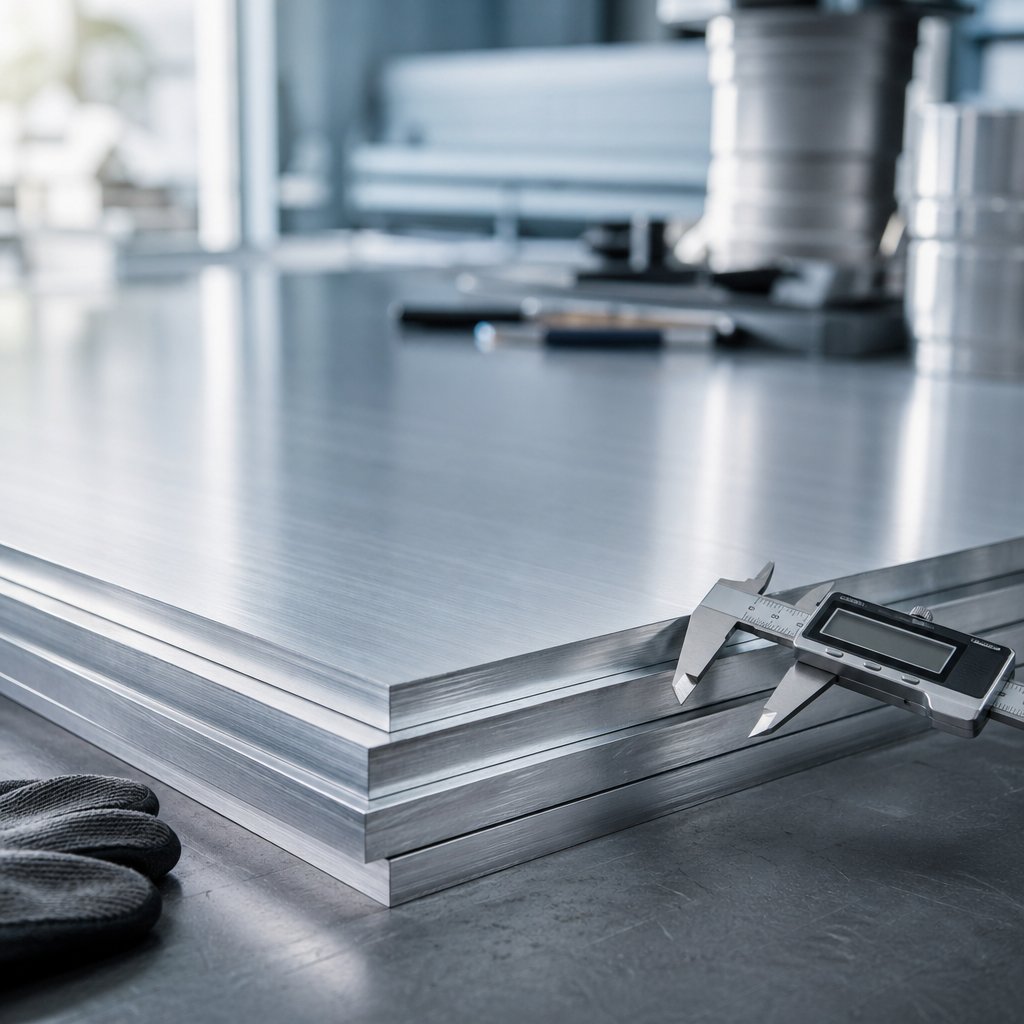
The chart may look settled, but the shop floor rarely is. A sheet metal gauge thickness chart gives you a nominal starting point for aluminum, not a promise that every incoming sheet or finished part will measure exactly the same after forming and finishing. That is why experienced buyers and fabricators treat gauge as shorthand, then check actual thickness, tolerance, and process fit before release.
Gauge converts to a nominal decimal thickness. Production material, however, is made within allowable variation. A simple example from Protocase shows a 2 mm sheet that can vary by plus or minus 0.1 mm and still be in spec. That sounds small until the part has mating hardware, tight bends, or stacked tolerances in an assembly.
This is where people mix up terms. A sheet metal thickness gauge or sheet metal gauge table helps you select stock. The drawing, PO, and inspection plan should still carry the actual thickness and any required tolerance. A metal thickness gauge is useful for quick comparison, but measured thickness is what determines fit.
Bending turns a flat number into real material behavior. Guidance from meviy notes that softer materials such as aluminum commonly start with an inside bend radius about equal to sheet thickness, while harder materials often need more room. The same source also warns that bends placed too close to edges can tear material, and holes too close to bend lines can distort during forming.
For practical DFM, meviy suggests keeping bends at least two times the sheet thickness from edges, and keeping holes about two times the thickness plus the bend radius away from bends as a general guideline. Protocase adds another reality check: tight bends and complex features make exact dimensions harder to hold, and thinner sheets are more prone to warping. Springback complicates things further because the part relaxes slightly after the brake cycle, so the finished angle may not match the tooling angle one-to-one.
Even a correct gauge can be the wrong fabrication choice. Thicker stock usually needs a larger bend radius and can push brake capacity, while thinner stock may form easily but show more waviness or handling damage. Finish matters too. Protocase notes that powder coat can add about 0.003 in, or 0.08 mm, and meviy points out that coatings such as anodizing or plating may crack if the bend radius is too tight. Those details affect hardware fit, flange clearance, and final appearance.
| Stage | What to check | Why it matters |
|---|---|---|
| Design stage | Material-specific gauge, nominal inches or mm, alloy, temper | Prevents ordering the right gauge number in the wrong real thickness |
| Design stage | Bend radius, hole placement, edge distance, finish on bends | Reduces cracking, distortion, and rework during brake forming |
| Shop stage | Incoming thickness, tolerance band, flatness, coating buildup | Explains why caliper readings may differ from shorthand spec language |
| Shop stage | Brake sequence, edge condition, fastener fit, stock format | Confirms the part is actually buildable, not just theoretically correct |
That is the deeper lesson behind sheet metal gauge thickness: a chart tells you what the sheet is called, while fabrication tells you whether the design is workable. When a flat part needs extra bends, thicker stock, or repeated workarounds just to gain stiffness or clean edges, the material may be right but the format may not be.

Sometimes the real problem is not the aluminum gauge. A metal sheet may be easy to order and form, yet still need extra bends, trims, or brackets just to gain stiffness, cleaner edges, or a more finished appearance. When that starts happening, thickness is only part of the decision.
Flat stock remains a strong choice for simple panels, covers, and blanks. But a design based on .040 aluminum sheet can become inefficient if it depends on added reinforcement or multiple joined pieces. In those cases, standard sheet sizes and sheet metal dimensions do not always deliver the cleanest result for architectural or equipment-facing parts.
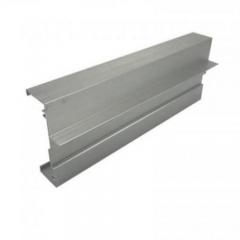
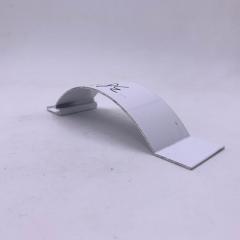
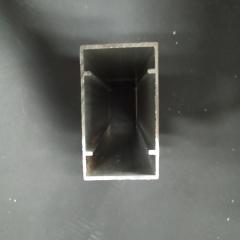
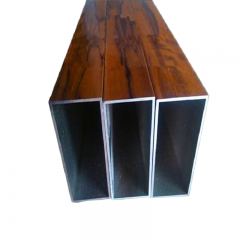
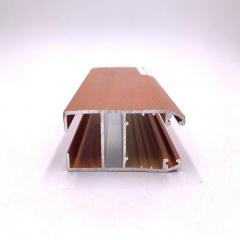
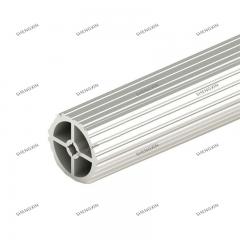
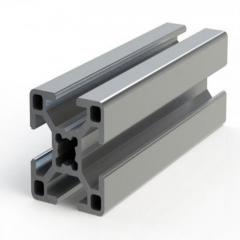
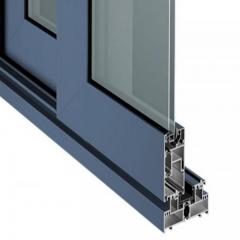
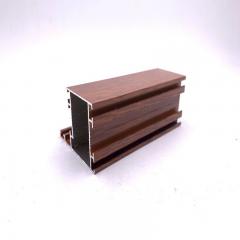
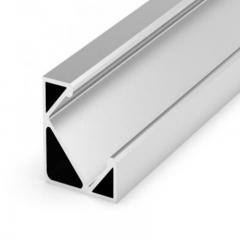
Silver City Aluminum notes that custom profiles can reduce secondary operations and may save time and money in the right application. The same source highlights uses such as entry doors, walkway covers, curtain walls, storefronts, wall panels, cabinetry, fixtures, and commercial displays. For projects that begin with an aluminum gauge callout but need more built-in function, Shengxin Aluminium offers custom extrusion profiles with anodized and other finish options for building facades and custom machinery parts.
| Option | Features | Pricing notes | Design-fit rating |
|---|---|---|---|
| Shengxin custom extrusion profiles | Custom shapes, anodizing, multiple finishes, architectural and industrial use | Custom-profile route that can add value when it replaces secondary operations | High for complex, finish-critical parts |
| Flat aluminum sheet | Best for simple panels and bent parts, including common .040 aluminum sheet applications | Works well when geometry is straightforward and extra joining is limited | Medium to high for simple parts |
| Multi-piece sheet assemblies | Useful when a profile is not required, but built from several cut and formed parts | Pricing needs to account for added assembly and finishing steps | Medium for moderate complexity |
A capable supplier should be able to discuss profile design, finishing, and application together. Silver City highlights in-house finishing options such as anodized, painted, and powder-coated surfaces, while Shengxin similarly emphasizes finish variety and corrosion-resistant durability. That matters when appearance is visible and the profile itself becomes part of the final system, not just raw material.
Once the conversation shifts from sheet thickness to geometry, finish, and assembly efficiency, the specification is moving beyond a simple size callout. That is where a clear decision workflow becomes valuable, because the final order needs more than a gauge number.
When thickness, shape, and finish all affect the outcome, a simple decision path keeps small spec errors from turning into expensive rework. A gauge number is useful shorthand, but the order should be built around the job the part must actually do.
Before release, compare the drawing, PO, and shop notes against the same gauge chart. If one document says 16 gauge and another says 0.0508 in, those should point to the same aluminum entry. A gauge and thickness chart is helpful for planning, but the safest final callout includes:
Gauge is the starting point. The real specification is material, alloy, temper, and actual thickness together.
If a flat sheet still needs extra bends or reinforcement to perform, the better answer may be a profile instead of a heavier gauge. For that kind of project, Shengxin Aluminium offers custom extrusion profiles with anodized and other finish options that suit facades, trim systems, and machinery components. For straightforward parts, keep using a material-specific gauge sizes chart and order by verified thickness. For shape-driven parts, move beyond the gauge chart and specify the geometry that solves the problem directly.
Aluminum gauge thickness is a trade shorthand used to identify how thick an aluminum sheet is. The gauge number is not a direct unit of measure, so it should be converted to decimal inches or millimeters before ordering, designing, or fabricating a part. In practical terms, a gauge callout is only fully useful when it is tied to aluminum as the material and, when accuracy matters, backed up by the actual thickness value.
The gauge system comes from older sheet metal sizing methods, so it does not follow a simple modern counting pattern. That is why smaller gauge numbers usually indicate thicker aluminum, while larger numbers usually indicate thinner sheet. The spacing between gauges is also uneven, which means you cannot safely estimate thickness by intuition alone. A chart is the reliable way to convert the label into a real measurement.
No. A matching gauge number does not guarantee a matching thickness across metals. Aluminum, steel, stainless steel, and galvanized sheet can all use different gauge references, so a 14 gauge aluminum sheet will not necessarily match 14 gauge steel or stainless in actual thickness. That difference can change weight, bend behavior, hardware fit, and panel rigidity, so the material type and the real thickness should always be checked together.
Gauge works well for quick conversations, but actual thickness is the safer choice for drawings, purchase orders, and inspection requirements. Calling out the material, alloy, temper, and thickness in inches or millimeters reduces mistakes caused by rounding, cross-metal mix-ups, or supplier interpretation. This is especially important when a part needs tight fit, predictable bending, coating clearance, or compatibility with fasteners and mating components.
Flat sheet is often the most efficient option for simple panels, covers, and bent parts. A custom extrusion can be the better route when the design needs built-in stiffness, cleaner edges, integrated attachment features, or a more refined finished appearance without adding multiple secondary pieces. For architectural and industrial work, suppliers such as Shengxin Aluminium offer custom extrusion profiles with anodized and other finish options, which can help when durability, geometry, and surface quality matter as much as sheet thickness.



 serviço on-line
 0086 136 3563 2360
 sales@sxalu.com
 +86 136 3563 2360
 português
 English
 français
 Deutsch
 русский
 español
 العربية
 ไทย
ไทย Việt
Việt Українська