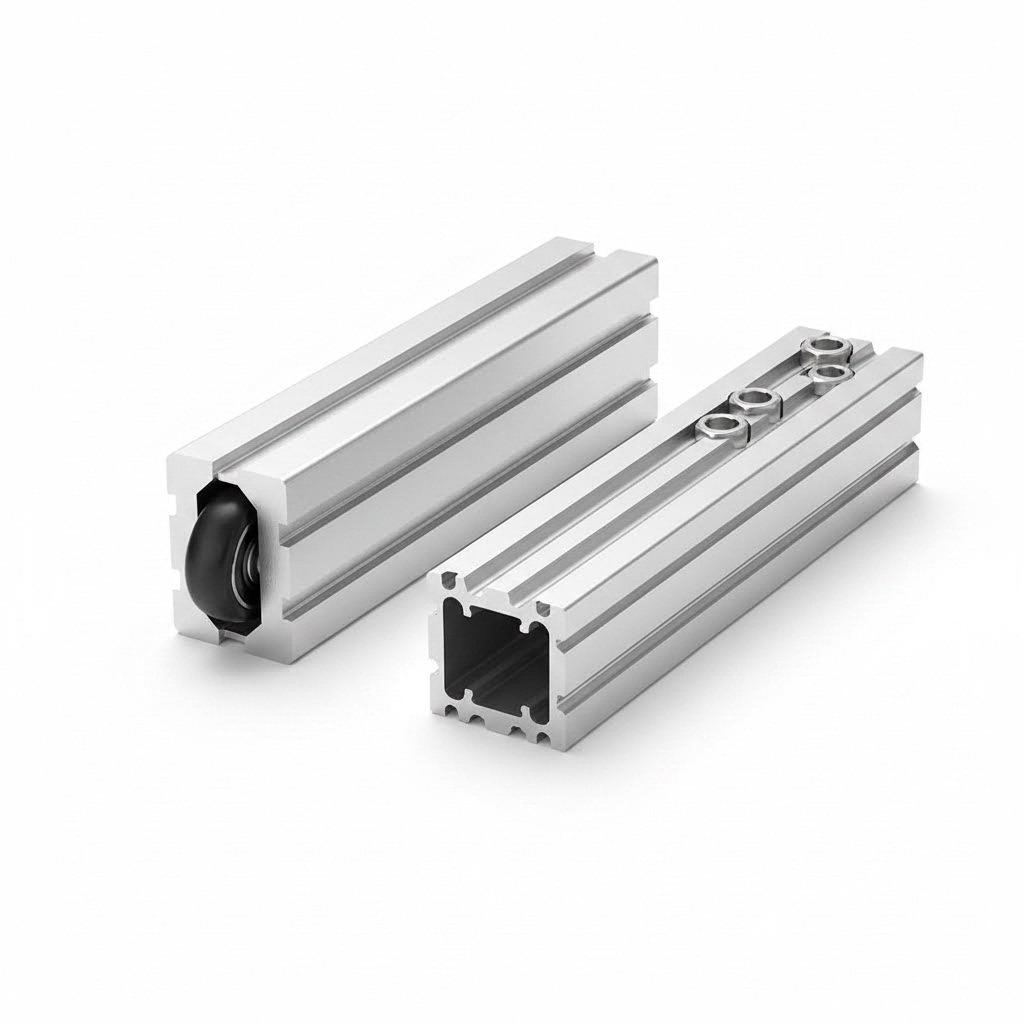
You've sketched out your next build - maybe it's a custom 3D printer, a sturdy workbench, or an automated pick-and-place system. You know aluminum extrusion is the way to go for that perfect blend of strength, modularity, and clean aesthetics. But then you hit that inevitable crossroads: should you go with V slot or T slot profiles?
If you've ever stood in front of stacks of extruded aluminum wondering which groove geometry actually matters for your project, you're not alone. This decision trips up makers, engineers, and DIY builders every single day.
Here's the thing - choosing the wrong profile isn't just a minor inconvenience. It can mean hardware that doesn't fit, motion systems that bind or wobble, and structures that can't handle the loads you need. Imagine building an entire CNC frame only to discover your linear motion setup requires completely different extrusions. That's wasted time, wasted money, and a whole lot of frustration.
The v slot vs t slot decision ultimately comes down to one core question: does your project need integrated linear motion capability, or is pure structural strength your priority? T-slots excel at rigid, heavy-duty assemblies with their vast ecosystem of compatible hardware. V slot profiles, with their angled grooves, double as both structural members and guide rails for wheel-based motion systems.
The right extrusion choice doesn't just affect assembly - it determines whether your project achieves precision movement, handles required loads, and remains easy to modify as your needs evolve.
This guide delivers exactly what you need to make a confident decision. You'll discover a ranked breakdown of the best applications for each slot type, from CNC machines to industrial enclosures. We'll walk through the key differences in geometry, hardware compatibility, and load-bearing characteristics. Most importantly, you'll get a clear decision framework that matches your specific project requirements to the ideal profile.
Whether you're comparing aluminum extrusion v slot options for a robotics platform or evaluating t slot vs v slot for a machine guard system, the answers are here. Let's cut through the confusion and get you building with the right extrusion from the start.
Before diving into specific use cases, you might be wondering how we determined which slot type works best for different applications. Rather than relying on manufacturer claims or theoretical specs alone, our evaluation focuses on what actually matters when you're building real projects.
Every builder has different priorities. Some need rock-solid rigidity for heavy machinery. Others want smooth linear motion without buying separate rail systems. To fairly compare v slot extruded aluminum against extruded t slot profiles, we developed a multi-factor evaluation system rooted in practical builder needs.
Here are the six criteria we used to rank applications for each slot type:
When comparing vs t slot and v slot options, we weighted these criteria based on typical project requirements. For motion-focused applications like CNC routers, linear motion capability ranked highest. For industrial frameworks and enclosures, structural strength and hardware compatibility took priority.
This isn't about declaring one slot type universally superior. Instead, our rankings reflect real-world performance considerations - the kind of insights you'd gain from building dozens of projects with both profile types. The goal is simple: help you match the right extrusion to your specific build without the trial-and-error headaches.
With this framework in mind, let's explore where each slot type truly excels, starting with V-slot's dominance in CNC and 3D printer applications.
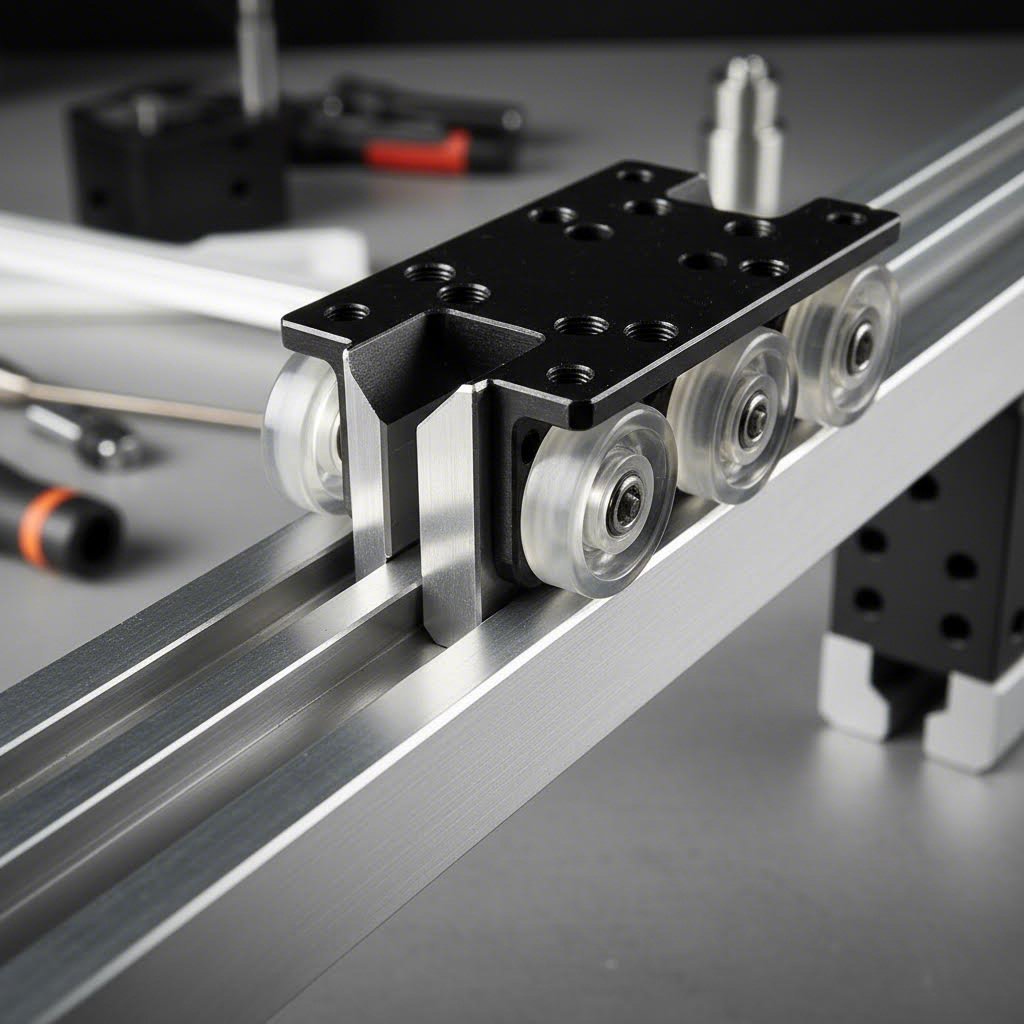
Imagine building a CNC router or 3D printer where the frame itself becomes your linear motion system. No separate rails to mount. No complex alignment procedures. Just wheels rolling smoothly along angled grooves carved directly into your aluminum extrusion. That's exactly what vslot profiles deliver - and it's why they've become the go-to choice for makers building motion-based machines.
The secret lies in that distinctive V-shaped groove running along each face of the profile. Unlike traditional T-slot channels designed purely for hardware insertion, a v slot rail features a 45-degree angled groove that serves double duty. Standard polycarbonate or delrin wheels with matching V-groove bearings ride directly on this surface, creating a simple yet effective linear motion system.
For hobbyist CNC machines and desktop 3D printers, this integrated approach eliminates a significant chunk of the build's complexity. You're not sourcing separate linear rails, precision-ground rods, or expensive bearing blocks. The extrusion handles both structural support and guided movement in one component. Projects like the popular OpenBuilds machines, numerous Creality printer upgrades, and countless DIY laser cutters rely on this exact principle.
When you're working with v slotted aluminum insert wheels, the geometry naturally centers the carriage on the rail. The opposing angled surfaces create self-aligning contact points that resist lateral play. This means your X, Y, and Z axes maintain consistent positioning without the micro-adjustments that plague bushing-based systems.
So what makes wheel-based motion on V-slot profiles so attractive for builders? It comes down to several practical benefits that show up the moment you start assembling your machine:
The global linear motion systems market continues expanding rapidly, with projections showing growth from $18.6 billion in 2022 to over $30 billion by 2030. Advancements in materials science are pushing V-wheel systems further than ever - hardened coatings and low-friction polymer inserts now deliver durability that rivals more expensive alternatives for light to medium-duty applications.
| Specification | V-Slot Wheel System | Traditional Linear Rails |
|---|---|---|
| Typical Load Capacity | Light to medium duty | Medium to heavy duty |
| Precision Tolerance | ±0.05 - 0.1 mm | ±0.02 mm or better |
| Initial Cost | Low (integrated system) | Higher (separate components) |
| Assembly Complexity | Simple - wheels mount to plate | Complex - requires precise alignment |
| Noise Level | Very quiet | Moderate (steel contact) |
| Maintenance Interval | Every 6-12 months | Every 12-24 months |
| Best Applications | 3D printers, hobby CNC, laser cutters | Industrial CNC, high-precision machinery |
For most hobby-level and semi-professional CNC machines and 3D printers, V-slot delivers the perfect balance of performance, cost, and simplicity. However, when your project demands heavy-duty structural framing without built-in motion requirements, T-slot profiles offer distinct advantages worth exploring.
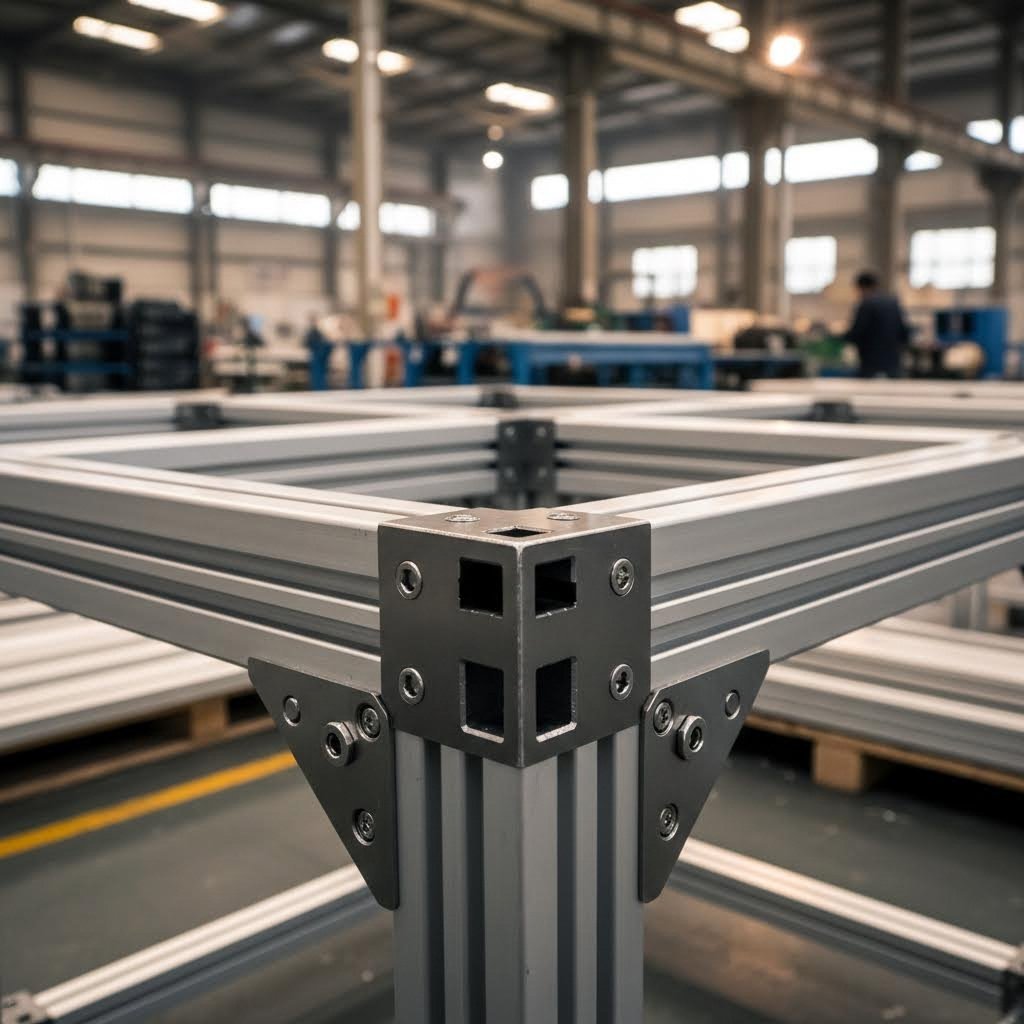
When your project demands rock-solid rigidity, universal hardware compatibility, and the flexibility to mount just about anything, T-slot aluminum extrusion steps up as the industry standard. These profiles have dominated manufacturing floors, research labs, and distribution centers for decades - and there's a good reason they remain the backbone of industrial automation framing.
Think about what happens inside a modern production facility. Robot arms need stable bases. Conveyors require sturdy support structures. Safety enclosures must withstand accidental impacts. In every case, extruded aluminum t profiles provide the structural foundation that keeps everything running smoothly. As one industry analysis notes, aluminum T-slot extrusions literally appear everywhere in today's manufacturing facilities, laboratories, and distribution centers.
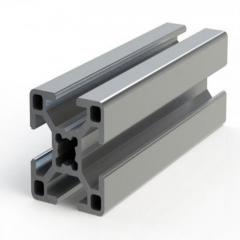
What makes a t slot bar so effective for heavy-duty applications? It starts with the cross-sectional geometry. The T-shaped channel creates a robust mounting surface while maintaining the profile's structural integrity. Unlike V-grooves optimized for wheel contact, T-slots maximize the surface area available for hardware insertion - giving you stronger, more secure connections.
Consider the demands placed on an industrial workbench. Workers lean on it. Heavy tools get dropped on it. Fixtures clamp parts with significant force. The frame needs to absorb all this stress without flexing or shifting. T-slot extrusions deliver this performance while weighing roughly half as much as equivalent welded steel frames. That weight advantage translates into lower shipping costs, easier installation, and reduced energy consumption when moving or reconfiguring frames.
The 2 purpose of using T-slots becomes clear when you examine real-world applications. First, they serve as the primary structural assembly system - connecting profiles into rigid frameworks using corner brackets, joining plates, and gussets. Second, they function as universal accessory mounting channels - allowing you to attach sensors, tools, panels, cable management, and countless other components anywhere along the extrusion's length.
Here's where T-slot truly shines: the sheer variety of compatible hardware available. Because T-slot dimensions have been standardized across manufacturers for years, you gain access to an enormous ecosystem of connectors and accessories. This compatibility extends across different systems, meaning parts from various suppliers often work interchangeably.
Common T-slot hardware types include:
This extensive accessory selection means you can build almost anything without custom fabrication. Need a sensor mounted at a specific location? Slide a T-nut into position and bolt it down. Want to add a shelf to your workbench later? The mounting points already exist along every extrusion face. This flexibility proves invaluable as projects evolve and requirements change.
T-slot aluminum framing makes particular sense when you need frequent reconfiguration, universal hardware compatibility, or the proven reliability that comes with decades of industrial use. But what happens when your project requires both structural capability and motion integration? V-slot's dual-purpose design opens up interesting possibilities for robotics and automation builds.
What if your project needs to move and stay rigid at the same time? That's exactly the challenge facing robotics builders, automation enthusiasts, and makers designing compact mechanical systems. You need structural framing to hold everything together, but you also need smooth linear motion for precise positioning. With aluminium v slot extrusion, you get both capabilities built into a single profile.
This dual-purpose nature makes v channel aluminum incredibly popular among the maker community. Instead of building a frame and then bolting separate rail systems onto it, you construct a framework where the rails are the frame. The result? Cleaner designs, fewer parts to source, and projects that come together faster.
The maker movement has embraced V-slot profiles for good reason. When you're prototyping a new robot arm, building a custom automation cell, or designing a one-off specialized machine, flexibility matters more than following established industrial conventions. V-slot delivers that flexibility without sacrificing quality.
Consider the range of projects where this aluminum slot profile excels:
The 20 Series V-Slot Linear Rail has become particularly popular in these applications. Constructed from 6063-T5 aluminum alloy, these profiles offer exceptional strength while remaining easy to cut and drill with standard shop tools. The modular design means you can join sections together to create longer assemblies, scaling your project as needed.
Here's where the engineering elegance really shows. The V-shaped groove isn't just a mounting channel - it's a precision guide surface. When you attach a gantry plate with V-wheels, those wheels nestle into opposing grooves and create a stable, self-centering carriage. The same extrusion that forms your machine's skeleton also guides every moving axis.
This approach shines in space-constrained builds. Imagine designing a compact slide-and-pan system for timelapse photography. Using separate structural framing plus linear rails would double your footprint and weight. With V-slot, one builder created an entire motorized camera slider system where the aluminum V-slot profile serves as both the structural base and the sliding rail. Four wheels attached to the housing fit into the V-slots, ensuring movement only in the desired direction - and the system even works upside down.
For robotics platforms, this integration translates into real advantages. A gantry-style robot built on V-slot extrusion uses fewer unique parts than one combining T-slot frames with bolt-on rails. Fewer parts means simpler assembly, easier troubleshooting, and less weight to move. When you're pushing a robotic arm through rapid pick-and-place cycles, every gram of reduced mass improves speed and reduces motor strain.
The V-slot approach works beautifully when your project demands both structure and motion in a compact package. But what about builds focused primarily on containment, safety, and modular reconfiguration? That's where T-slot's extensive ecosystem and standardized dimensions provide distinct advantages for enclosures and guard systems.
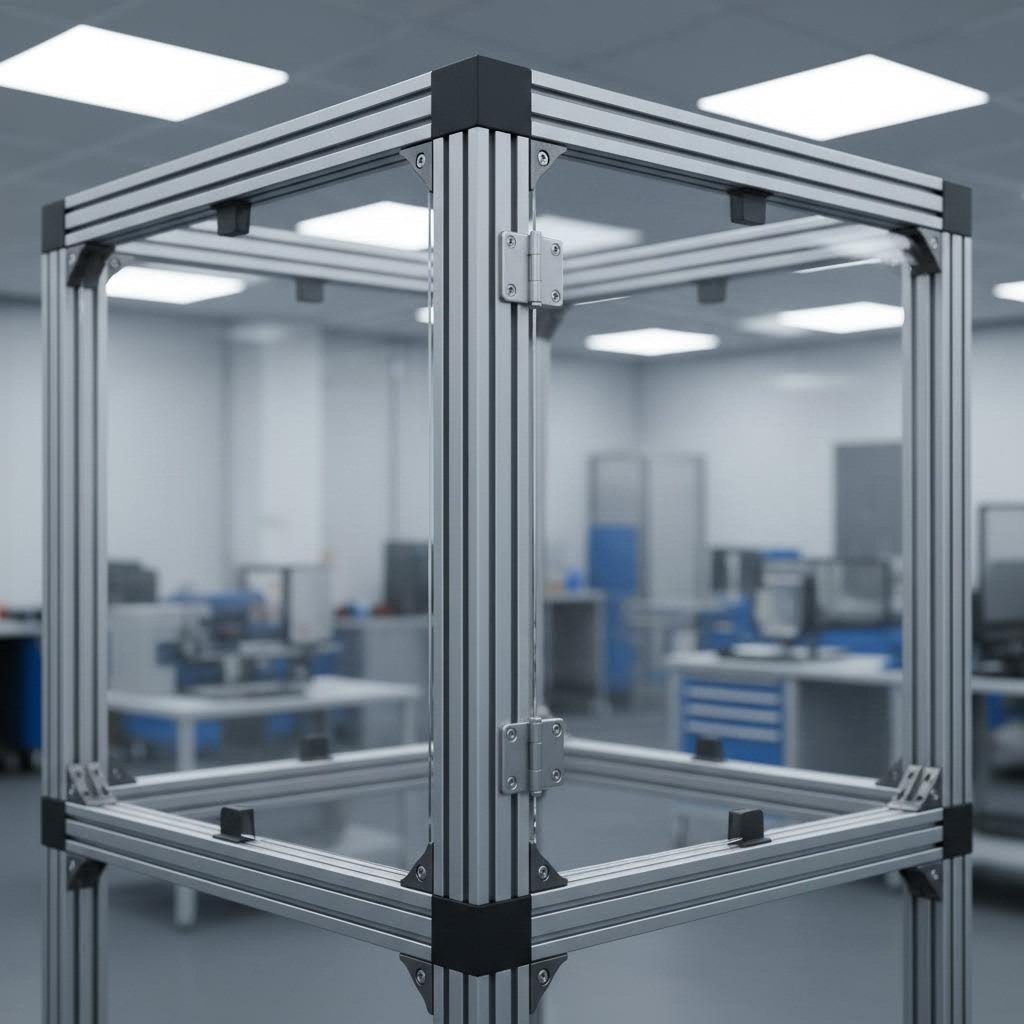
Picture this: you've just installed a new robotic welding cell, and OSHA compliance requires proper machine guarding before production can begin. Or maybe you're redesigning your workshop layout and need workstations that can adapt as projects change. In both scenarios, aluminum t channel extrusion delivers exactly what you need - a flexible framing system built for containment, safety, and endless reconfiguration.
T-slot aluminum framing has become the dominant choice for machine guarding and safety enclosures across manufacturing industries. The reasoning is straightforward: these systems allow you to improve operator safety and compliance with custom machine guarding engineered to fit your specific equipment, process, and facility layout. You're not locked into predetermined sizes or configurations - you build what your application actually requires.
Why does t slot aluminum framing dominate the safety enclosure market? It comes down to how easily these profiles integrate with protective components. A properly designed t slot enclosure frame combines profiles, protective guarding panels, connectors and fasteners, plus accessories like handles, hinges, and floor-to-frame anchors into a cohesive system.
The T-shaped channel accepts standard T-nuts at any position along the extrusion's length. This means mounting points exist everywhere - you're never limited by pre-drilled holes or fixed bracket locations. Need to add a door interlock switch? Slide in a T-nut and bolt it down. Want to relocate an access panel? Loosen four bolts, shift the hardware, and retighten. This adjustability proves invaluable as safety requirements evolve or equipment gets modified.
Common applications for modular t slot system enclosures include:
Here's what truly sets T-slot apart for enclosure applications: standardized dimensions that ensure compatibility across manufacturers. When you purchase a 40x40mm T-slot profile, the slot width, depth, and spacing follow established conventions. This standardization means brackets from supplier A work with extrusions from supplier B - you're not locked into a single vendor's ecosystem.
This interoperability matters enormously for long-term flexibility. Manufacturing environments change constantly. Production lines get reconfigured. New equipment arrives. Safety regulations update. With a modular t slot system, you disassemble existing frames and rebuild them in new configurations without scrapping materials. As one industry resource notes, T-slotted aluminum extrusions can be assembled and disassembled easily, saving time and costs when reconstructing enclosures in different areas.
The accessory ecosystem amplifies this modularity. Panel retaining clips, magnetic door catches, adjustable hinges, window frames, and cable entry grommets - all designed specifically for T-slot channels. You're building with a system, not improvising connections between incompatible parts. For facilities that need to respond quickly to changing requirements, this ready availability of purpose-built components dramatically reduces project timelines.
For projects where containment, safety compliance, and future adaptability take priority, T-slot framing delivers unmatched value. But how do these two slot types actually compare when you line up their specifications side by side? A detailed comparison reveals exactly where each profile type excels - and where compromises might be necessary.
You've seen how each slot type performs in its ideal applications. Now let's put them head-to-head with the kind of detailed specification comparison that actually helps you make decisions. When you're standing at your workbench planning a build, these are the numbers and characteristics that matter.
The v slot t slot comparison comes down to geometry, compatibility, and intended function. While both profile types share the same aluminum alloy heritage (typically 6063-T5 or 6061-T6), their groove designs create fundamentally different capabilities. Understanding these differences eliminates guesswork and prevents costly mid-project discoveries.
This comprehensive breakdown covers every specification you need when evaluating aluminum extrusion slot types for your project. Whether you're sourcing materials for a single prototype or planning a larger production build, these details reveal exactly where each profile excels.
| Specification | V-Slot Profile | T-Slot Profile |
|---|---|---|
| Groove Geometry | V-shaped channel with 90-degree angled walls | T-shaped channel with flat bottom and squared shoulders |
| Slot Width (Common) | 6mm, 8mm | 6mm, 8mm, 10mm |
| Slot Depth | Shallower - optimized for wheel contact | Deeper - maximizes T-nut clamping surface |
| Profile Sizes Available | 20x20, 20x40, 20x60, 20x80, 40x40, 40x80mm | 20x20, 30x30, 40x40, 45x45, 60x60, 80x80mm and larger |
| Maximum Stock Length | Typically 1-3 meters (maker channels) | Up to 6 meters standard (industrial supply) |
| Hardware Compatibility | V-wheels, gantry plates, specialized V-slot brackets, some T-nuts with adapters | Universal T-nuts, T-bolts, corner brackets, gussets, joining plates, extensive accessory ecosystem |
| Linear Motion Capability | Integrated - V-wheels ride directly on groove faces | Requires separate linear rails or bearing systems |
| Typical Load Capacity | Light to medium duty (motion optimized) | Medium to heavy duty (structure optimized) |
| Rigidity per Weight | Good - optimized for motion applications | Higher - thicker walls in comparable sizes |
| Common Finishes | Clear anodized, black anodized (reduces glare) | Clear anodized, black anodized, powder coated, PVDF for outdoor |
| Primary Applications | 3D printers, CNC machines, laser cutters, camera sliders, robotics | Workbenches, machine guards, enclosures, conveyor frames, industrial structures |
| Availability | Strong in maker/hobbyist channels | Broadest industrial supply worldwide |
| Cost Comparison | Lower total cost when motion is required | Lower profile cost, but motion adds expense |
When examining v slot vs t slot differences, the distinction starts at the groove itself. The V-slot's angled channel walls create precision contact surfaces for rolling wheels. T-slot's squared shoulders maximize the clamping area where T-nut heads bear against the aluminum. Neither design is superior - they're optimized for different jobs.
Here's what the extrusion profile comparison reveals about each type's strengths:
According to industry specifications, both profile families share common series designations (2020, 3030, 4040, 4545, 6060) with slot 6, 8, or 10mm determining nut and bolt compatibility. However, V-wheels specifically require V-slot tracks to function - you cannot reliably run V-wheels on T-slot profiles because the geometry simply doesn't match.
Here's something many builders overlook: you don't have to choose just one profile type for your entire project. Some of the best-performing machines combine V-slot motion axes with T-slot structural bases. This hybrid strategy plays to each profile's strengths while minimizing their limitations.
Consider a typical gantry-style CNC router. The X and Y axes need smooth linear motion for accurate cutting paths - V-slot with V-wheels handles this beautifully. But the machine base requires maximum rigidity to resist cutting forces and vibration. That's where heavier T-slot profiles excel. By mixing both types, you get integrated motion where you need it and industrial strength where it matters most.
When should you consider a hybrid build?
The practical challenge with hybrid builds involves connection points. Flat gantry plates and angle brackets can bridge between profile types when hole patterns align. For more complex intersections, custom plates machined with appropriate mounting holes solve compatibility issues cleanly. Most builders find that planning connection points early in the design phase eliminates integration headaches later.
One important consideration: maintain consistent slot families where profiles connect. If your T-slot base uses slot 8 hardware, choose V-slot profiles that also accept slot 8 components. This keeps your T-nut and bolt inventory simple while ensuring structural connections remain strong throughout the hybrid frame.
Understanding how each profile type performs - and when to combine them - eliminates most selection confusion. But even experienced builders sometimes make avoidable mistakes when choosing between these extrusion types. Knowing what to watch for saves both time and money.
Even after understanding the differences between V-slot and T-slot profiles, builders still make costly errors that derail projects. Maybe you've been there - halfway through assembly when you realize your extrusions can't handle the loads, or discovering that none of your carefully selected hardware actually fits. These aren't rookie mistakes; experienced engineers and seasoned makers fall into these traps too.
The good news? Most selection errors follow predictable patterns. Once you know what to watch for, you can sidestep problems that waste both time and money. This aluminum extrusion selection guide covers the pitfalls we see most often - and exactly how to avoid them.
Choosing aluminum extrusion profile types seems straightforward until something goes wrong mid-build. Here are the most common errors that send builders back to the drawing board:
Beyond individual mistakes, a systematic approach to choosing aluminum extrusion profile types prevents most problems before they start. These extrusion slot selection tips keep projects on track:
Start with function, not familiarity. It's tempting to use whatever profile type you've worked with before. But each project deserves fresh analysis. Ask yourself: Does this build require integrated linear motion? What are the maximum static and dynamic loads? How much deflection can I tolerate? Your answers point toward the right profile type regardless of past preferences.
Calculate total project cost, not just profile cost. V-slot extrusions sometimes cost slightly more per meter than equivalent T-slot profiles. But if your application needs linear motion, V-slot eliminates separate rail systems, bearing blocks, and the labor to install them. Conversely, if you only need structural framing with extensive accessory mounting, T-slot's broader hardware ecosystem may reduce total costs despite similar profile pricing.
Plan for future modifications. Manufacturing environments change. Projects evolve. When choosing between profile types, consider what happens when requirements shift. T-slot's standardized dimensions ensure long-term hardware availability and cross-manufacturer compatibility. V-slot's motion capability can be repurposed across different machine designs. Building with adaptability in mind protects your investment.
When premium profiles justify the investment: Not all extrusions are created equal. Tighter dimensional tolerances, superior surface finishes, and verified mechanical properties cost more - but they matter for precision applications. If your CNC machine requires positioning accuracy within 0.05mm, economy-grade extrusions with loose tolerances will frustrate you endlessly. For heavy industrial duty, profiles from manufacturers with documented load testing provide confidence that budget alternatives cannot match.
The right selection process takes time upfront but eliminates expensive mid-project corrections. Whether you're building a desktop 3D printer or an industrial automation cell, matching profile type to application requirements - while avoiding these common pitfalls - sets your project up for success from the first cut.
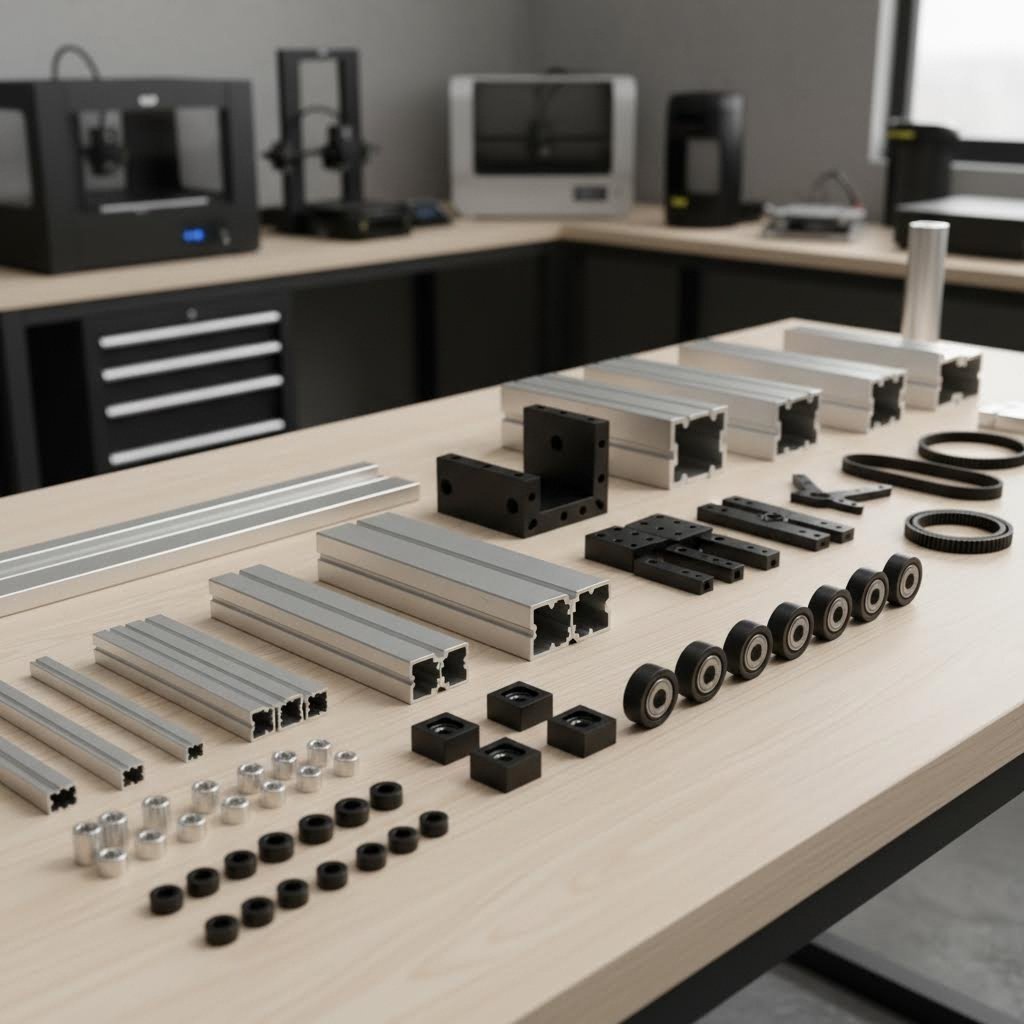
You've made it through the technical specifications, application rankings, and common pitfalls. Now it's time to bring everything together into a clear decision framework you can actually use. Whether you're sketching out your first build or refining plans for a complex automation system, this section gives you actionable guidance to match your project type with the right extrusion choice.
Forget the guesswork. This decision matrix translates your specific application directly into a recommended slot type - complete with the reasoning behind each recommendation. Find your project category and you'll know exactly which direction to go.
| Project Type | Recommended Slot | Why This Choice Works |
|---|---|---|
| Desktop 3D Printer | V-Slot | Integrated linear motion eliminates separate rails; V-wheels provide smooth, quiet operation ideal for home workshops |
| Hobby CNC Router | V-Slot | Cost-effective motion capability with simplified assembly; adequate rigidity for wood, plastic, and soft metal cutting |
| Industrial CNC Machine | Hybrid (Both) | T-slot base frame handles heavy cutting forces; V-slot or precision rails on motion axes for positioning accuracy |
| Heavy-Duty Workbench | T-Slot | Maximum structural rigidity; extensive hardware ecosystem for mounting vises, fixtures, and accessories anywhere |
| Machine Safety Enclosure | T-Slot | Standardized dimensions ensure panel compatibility; easy reconfiguration as equipment changes |
| Robotics Platform | V-Slot | Dual-purpose structure and motion reduces part count; lightweight design improves dynamic performance |
| Camera Slider/Motion Rig | V-Slot | Smooth wheel-based motion creates cinematic movement; compact profile suits portable equipment |
| Laser Cutter Frame | V-Slot | Integrated motion keeps gantry simple; black anodized finish reduces laser reflection |
| Conveyor System Structure | T-Slot | Heavy load capacity along spans; universal mounting for sensors, guides, and control hardware |
| Modular Furniture/Shelving | T-Slot | Easy assembly and reconfiguration without tools; broad accessory selection for customization |
| Pick-and-Place System | Hybrid (Both) | V-slot provides precise cartesian motion; T-slot base offers robust accessory mounting |
| Automated Testing Fixture | Hybrid (Both) | T-slot frame anchors equipment securely; V-slot motion stages position probes accurately |
Still weighing your options? Here's the simplified decision logic that cuts through the complexity:
Choose V-Slot when:
Choose T-Slot when:
Choose a Hybrid approach when:
The right extrusion choice matches your primary application requirement - motion capability for V-slot, structural versatility for T-slot - while your secondary requirements guide profile size and finish selection.
Having the right decision framework only helps if you can source quality materials. Whether you need standard profiles or custom solutions beyond off-the-shelf options, your supplier relationship matters as much as your slot type selection.
For standard builds, quality t slot profiles and V-slot extrusions are available through numerous industrial suppliers and maker-focused retailers. When evaluating where to buy v slot extrusion or T-slot profiles, consider dimensional tolerance consistency, surface finish quality, and whether cut-to-length services meet your precision requirements.
But what happens when standard profiles don't fit your application? Maybe you need a custom cross-section that combines features from both slot types. Perhaps your project demands specific alloy properties, unusual lengths, or specialized surface treatments. That's where partnering with a capable custom aluminum extrusion supplier becomes essential.
For builders requiring custom solutions, Shengxin Aluminium offers end-to-end support from initial die development through mass production. With over 30 years of aluminum extrusion experience, their facility houses 35 extrusion presses ranging from 600T to 5500T capacity - covering everything from intricate small profiles to heavy structural sections.
What sets a quality aluminum extrusion manufacturer apart for custom work?
Whether you're sourcing standard V-slot for a 3D printer upgrade or developing custom T-slot profiles for a specialized industrial application, matching your supplier's capabilities to your project requirements completes the selection process. The right extrusion type, properly sized and professionally finished, transforms your design from concept into a build that performs exactly as intended.
Now you have everything needed to move forward confidently: a clear understanding of when each slot type excels, a decision matrix matching project types to recommendations, awareness of common pitfalls to avoid, and guidance on sourcing quality materials. Your next aluminum extrusion project starts with the right foundation.
T-slot profiles feature T-shaped grooves with flat bottoms optimized for secure hardware mounting using T-nuts and brackets. V-slot profiles have 45-degree angled grooves designed to accommodate V-wheels for integrated linear motion. While T-slots excel at rigid structural assemblies with universal hardware compatibility, V-slots serve dual purposes as both structural members and guide rails for wheel-based motion systems in CNC machines and 3D printers.
T-slot aluminum is primarily used for building heavy-duty structural frameworks, workbenches, machine enclosures, safety guards, and modular furniture systems. Its standardized T-shaped channels accept universal hardware like T-nuts, corner brackets, and joining plates, making it ideal for applications requiring frequent reconfiguration, extensive accessory mounting, and maximum structural rigidity. Common applications include robot cell perimeters, conveyor frames, and industrial workstations.
T-slot aluminum offers excellent strength-to-weight performance, weighing roughly half as much as equivalent welded steel frames while providing comparable structural integrity for most applications. While standard mild steel has higher tensile strength (approximately 55,000 psi vs. 37,700 psi for aluminum), aluminum extrusions achieve a superior strength-to-weight ratio. This makes T-slot aluminum ideal for applications where reduced weight, corrosion resistance, and easy assembly matter more than maximum absolute strength.
Compatibility depends on slot dimensions rather than slot type. If both profiles share the same slot width (6mm, 8mm, or 10mm), many T-nuts and brackets work interchangeably. However, V-slot's angled groove walls may prevent some T-slot hardware from seating properly. For reliable connections, verify slot dimensions match before ordering hardware, and consider sourcing profiles and hardware from the same supplier to ensure compatibility.
Choose V-slot when your project requires integrated linear motion capability, such as 3D printers, CNC routers, laser cutters, or robotics platforms where wheels can ride directly on the profile. Select T-slot when structural rigidity and extensive hardware compatibility are priorities, such as workbenches, safety enclosures, or conveyor systems. For complex builds like industrial CNC machines, consider a hybrid approach using V-slot for motion axes and T-slot for the structural base frame.



 serviço on-line
 0086 136 3563 2360
 sales@sxalu.com
 +86 136 3563 2360
 português
 English
 français
 Deutsch
 русский
 español
 العربية
 ไทย
ไทย Việt
Việt Українська