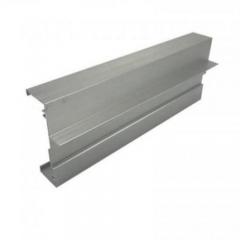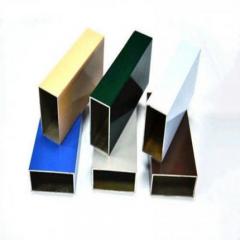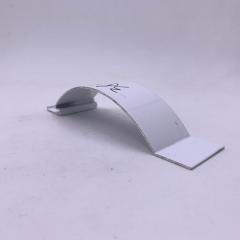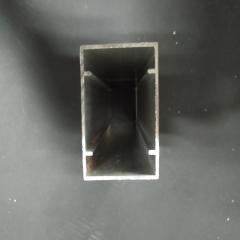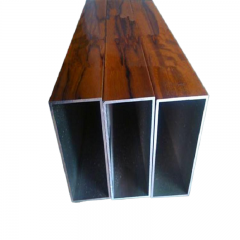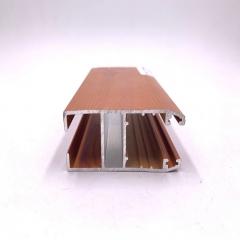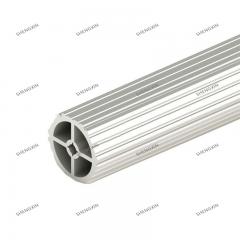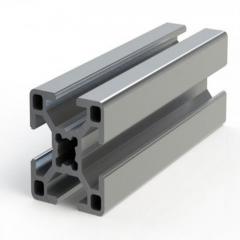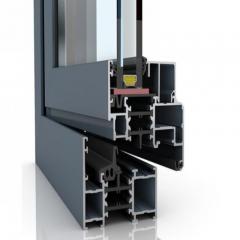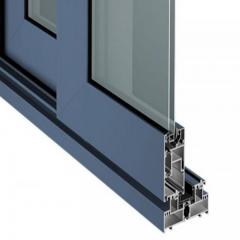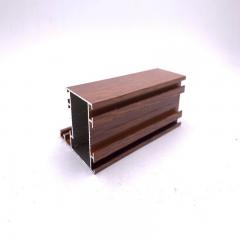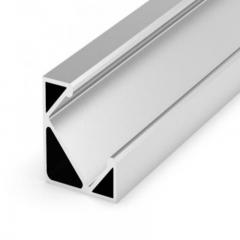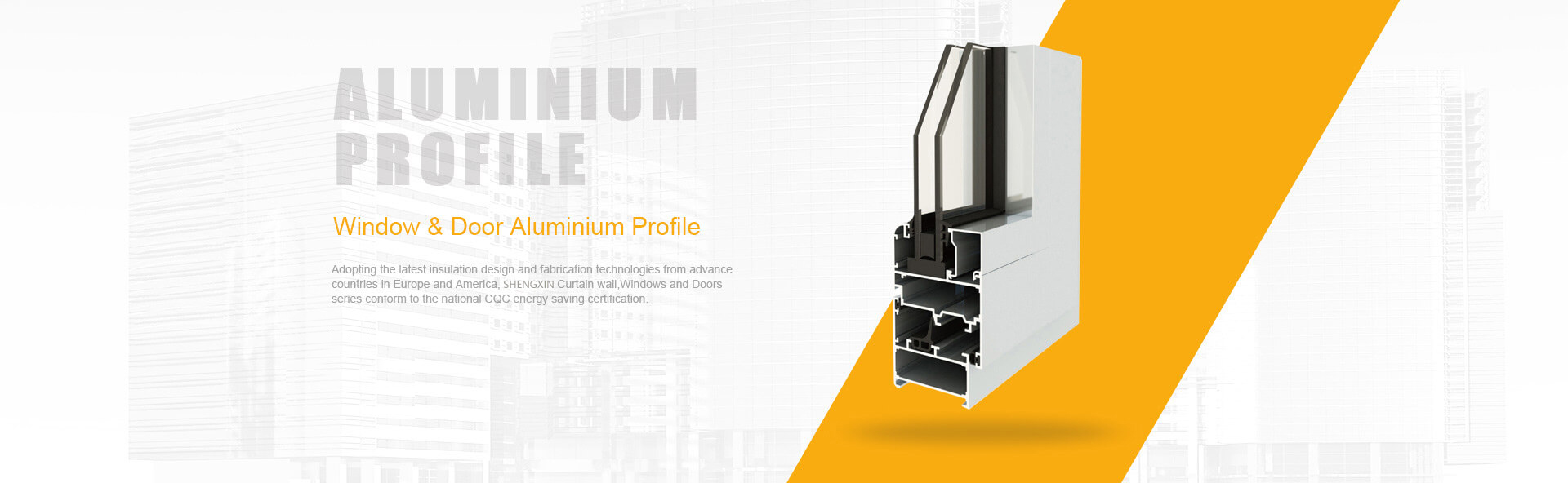
Ever wondered how those sleek, perfectly uniform aluminum frames on modern cabinet doors are made? The answer lies in a fascinating manufacturing process called aluminum cabinet door extrusion. Think of it like a high-tech pasta maker for metal. Solid aluminum billets are heated to around 900°F until they become malleable, then forced through a precision-engineered steel die under immense pressure. What emerges is a continuous profile with the exact cross-sectional shape needed for cabinet door frames.
This manufacturing method has revolutionized modern cabinetry by enabling designers to create frames that are simultaneously lightweight, durable, and dimensionally consistent. Whether you're building kitchen cabinets, display cases, or custom furniture, understanding this fundamental process helps you make smarter decisions about materials and suppliers.
You might be asking yourself, "Why not just cast aluminum or machine it from solid blocks?" Great question. Each method has its place, but aluminum extrusion offers distinct advantages for cabinet door applications.
Casting involves pouring molten metal into molds. While this works well for complex three-dimensional shapes, it often produces parts with internal porosity and surface imperfections. These tiny air pockets weaken the material and create finishing challenges. For cabinet doors that need consistent appearance and structural integrity, casting falls short.
Machining, on the other hand, starts with solid aluminum stock and cuts away material to create the desired shape. This subtractive process wastes significant raw material and becomes prohibitively expensive for long, linear profiles like door frames. Imagine the cost of machining a six-foot cabinet door frame from a solid block!
Aluminum door extrusion solves both problems elegantly. The process produces virtually zero waste since the material flows continuously through the die. You'll also notice that extruded profiles maintain exceptional consistency from the first inch to the last, whether you're producing ten feet or ten thousand feet of profile. This makes aluminum extrusion case applications ideal for projects requiring multiple matching components, such as an aluminum extrusion slider system for cabinet doors.
Here's where things get interesting. The dimensional accuracy of aluminum extrusion comes down to physics and engineering precision working together.
When heated aluminum flows through the die opening, it takes on the exact inverse shape of that opening. The die itself is machined to tolerances measured in thousandths of an inch. Because the metal flows uniformly under consistent pressure and temperature, every section of the extruded profile mirrors this precision.
Extrusion produces superior dimensional consistency because the process creates a continuous, uninterrupted grain structure aligned along the profile's length. Unlike casting, which can have random grain orientation, or machining, which cuts across grain boundaries, extrusion maintains material integrity while delivering repeatable accuracy within standard tolerances of ±0.012 inches for most wall dimensions.
This grain alignment isn't just about dimensions. It also contributes to the profile's strength and surface finish quality. The aligned grain structure means extruded aluminum resists bending and twisting better than cast alternatives of the same thickness.
Throughout this guide, you'll discover the technical specifications that matter most, learn how to select the right profile for your project, and understand what separates quality suppliers from the rest. We'll cover alloy selection, surface treatments, installation techniques, and the real-world applications where aluminum extrusion truly shines. Consider this your comprehensive resource for making informed decisions about aluminum cabinet door extrusion.
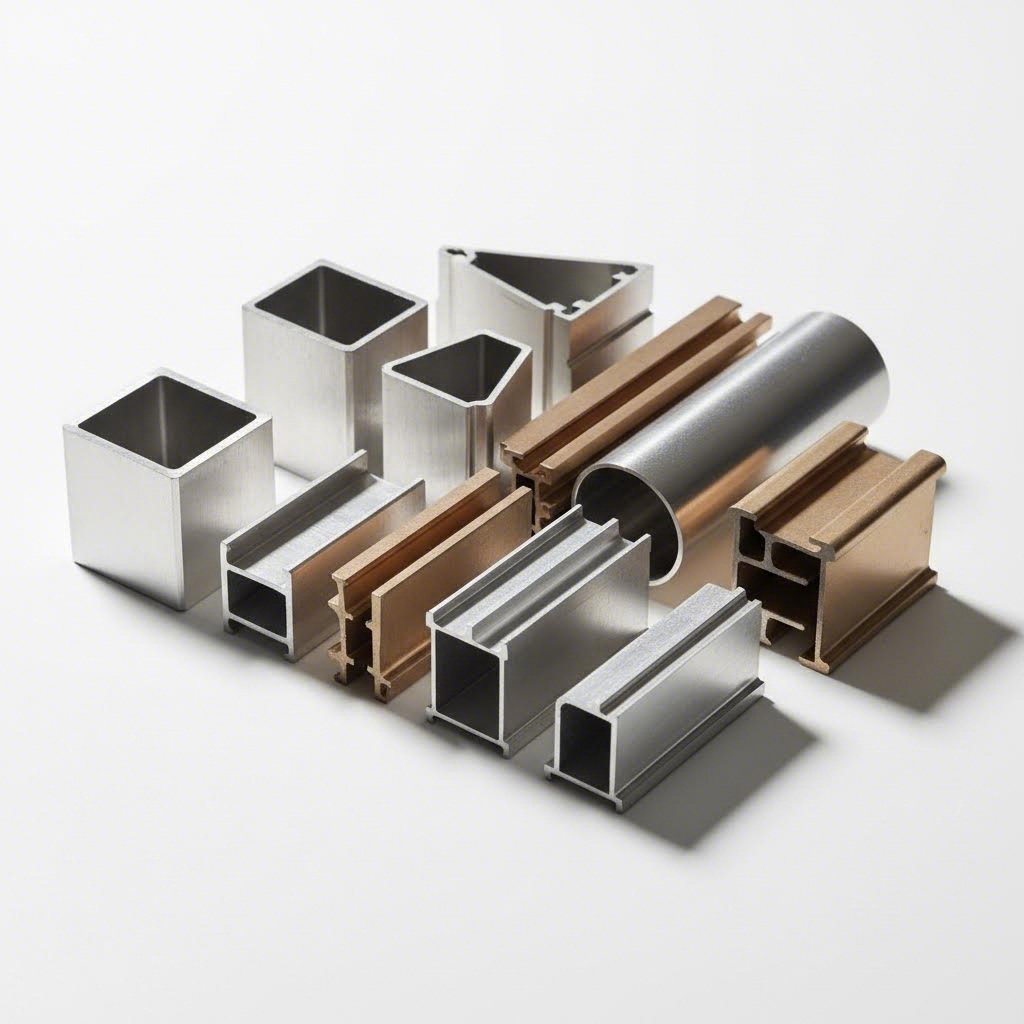
Now that you understand how aluminum extrusions are formed, let's dive into the specifications that actually determine performance. This is where most suppliers keep things vague, but the technical details matter enormously when you're investing in cabinet door frames that need to last decades.
The aluminum alloy you choose affects everything from how easily the profile extrudes to how it looks after finishing. Wall thicknesses and dimensional tolerances determine whether your doors hang straight and close properly. Getting these specifications right from the start saves headaches during installation and ensures long-term satisfaction.
Not all aluminum is created equal. The 6000-series alloys dominate cabinet door applications because they combine the Al-Mg-Si system, offering good strength, excellent corrosion resistance, and the ability to be heat-treated for enhanced properties. But which specific alloy should you choose?
6063 aluminum stands as the industry standard for architectural and cabinet applications, and for good reason. According to Wellste's comprehensive alloy comparison, 6063 offers excellent formability, superior surface finish quality, and outstanding corrosion resistance. When you need an aluminum extrusion bar with a flawless anodized finish, 6063 delivers consistently smooth surfaces that take color beautifully.
What makes 6063 particularly suited for cabinet doors? Its chemical composition includes 0.45-0.9% magnesium and 0.2-0.6% silicon, creating an alloy that flows smoothly through extrusion dies. This excellent extrudability means manufacturers can produce complex profile shapes, including miniature extrusions for ultra-slim frame designs, without surface defects or dimensional inconsistencies.
6061 aluminum offers higher strength, with a tensile strength of approximately 310 MPa in the T6 temper compared to 6063's 270 MPa. However, this increased strength comes with tradeoffs. The alloy contains copper (around 0.25%), which slightly reduces corrosion resistance and makes the surface finish less smooth after anodizing. For cabinet doors that won't bear heavy loads, the extra strength rarely justifies the finish quality compromise.
6005 aluminum sits between these two options as a medium-strength structural alloy. With yield strength around 260 MPa and good weldability, it works well for modular cabinet systems requiring welded joints. However, it's more difficult to extrude than 6063, limiting profile complexity.
| Alloy Type | Strength Rating (Tensile/Yield MPa) | Surface Finish Quality | Best Applications | Extrudability |
|---|---|---|---|---|
| 6063-T6 | 270/240 | Excellent - smooth, ideal for anodizing | Cabinet frames, architectural profiles, decorative trim | Excellent - best for thin, complex shapes |
| 6061-T6 | 310/276 | Good - slight surface roughness | Heavy-duty frames, structural components, load-bearing applications | Moderate - not as smooth as 6063 |
| 6005-T6 | 310/260 | Good - suitable for most finishes | Structural extrusions, welded assemblies, transportation | Fair - manageable for structural profiles |
For most aluminum profile extrusions used in cabinet doors, 6063 remains the clear winner. Its thermal conductivity of 200 W/m·K also exceeds 6061's 170 W/m·K, meaning it dissipates heat better during powder coating and other thermal finishing processes.
Sounds complex? It doesn't have to be. Dimensional tolerances simply describe how much variation is acceptable in your extruded aluminum sections. Understanding these standards helps you specify exactly what you need and evaluate whether a supplier can deliver.
The Aluminum Extruders Council references tolerance tables published in Aluminum Standards & Data by The Aluminum Association. These tables establish both industry standard and precision tolerances for various profile dimensions.
For cabinet door applications, you'll want to focus on several key measurements:
When reviewing an extruded aluminum shapes catalog, pay attention to the wall thicknesses offered. Typical cabinet door profiles range from 1.0mm to 2.0mm wall thickness, with thinner walls suitable for lighter glass panels and thicker walls necessary for heavier inserts or larger door spans.
Many extruders can achieve tighter tolerances than standard tables indicate, but this requires discussion during the quoting process. If your project demands exceptional precision, communicate this early. Some applications, like high-end display cases with minimal frame visibility, justify the additional cost of precision tolerances.
With your alloy and dimensional requirements clearly defined, you're ready to explore the specific profile types available for different cabinet door designs.
Imagine walking into a showroom and seeing two cabinet displays side by side. One features bold, architectural frames that make a statement. The other appears almost frameless, with glass panels seemingly floating in space. Both use aluminum frame extrusions, yet they create completely different visual experiences. The secret? Profile selection.
Choosing the right profile type for your aluminum frame cabinet doors goes far beyond aesthetics. The profile you select determines how much weight your door can support, what glass thickness works best, and whether installation will be straightforward or challenging. Let's break down the major profile categories so you can match the right extrusion to your specific project needs.
When you want the focus on what's inside the cabinet rather than the frame itself, ultra-slim profiles deliver. These aluminum panel extrusions typically feature frame widths between 15mm and 25mm, creating a barely-there border that maximizes the visible glass or panel area.
According to Alumhome's product specifications, modern ultra-slim designs use 1.8mm aerospace-grade aluminum frames that are approximately 30% thicker than industry alternatives at 1.4mm. This additional material thickness compensates for the narrow frame width, maintaining structural integrity without sacrificing the minimalist aesthetic.
What makes ultra-slim profiles work? The key characteristics include:
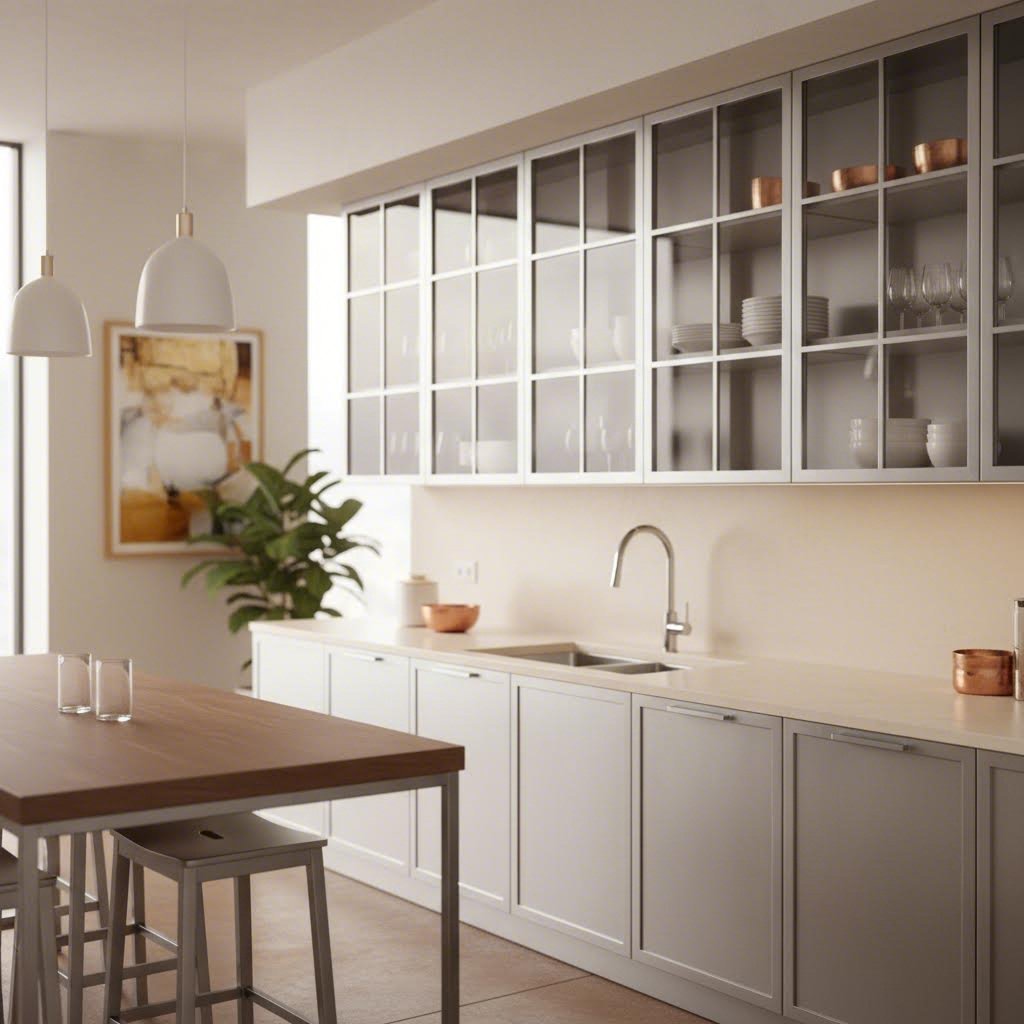
When should you choose ultra-slim profiles? They excel in residential applications where visual elegance takes priority. Think kitchen upper cabinets showcasing glassware, bedroom wardrobes with glass fronts, or living room display cases for collectibles. The slim design keeps spaces feeling open and uncluttered.
However, ultra-slim isn't always the right choice. Larger commercial display cases, heavy glass panels exceeding 5mm thickness, or doors wider than 600mm typically require more substantial framing. An aluminum track extrusion with greater depth provides the structural support these applications demand.
Standard frame profiles, typically ranging from 30mm to 50mm in width, represent the workhorse category of aluminum extrusions for panels. These profiles balance visual presence with practical functionality, making them suitable for the broadest range of cabinet door applications.
The additional frame width compared to ultra-slim options provides several advantages:
Standard frames shine in transitional kitchen designs where, as noted by Decor Cabinets, black aluminum frame doors are becoming the next must-have accent. The moderate frame width provides enough visual definition to create contrast with painted cabinetry while maintaining a contemporary feel.
Beyond frame width, you'll need to decide whether you want your aluminum frame to be a design feature or disappear entirely. This choice fundamentally shapes your cabinet's character.
Visible frame systems celebrate the aluminum border as an intentional design element. The frame creates definition and rhythm within the cabinet layout, almost like window mullions in architecture. Characteristics of visible frame systems include:
Hidden frame systems (also called concealed or inset frames) tuck the aluminum structure behind the cabinet face or use specialized profiles that minimize visible metal. When you want glass panels to appear as though they're floating within the cabinet opening, hidden frames deliver that effect.
The choice often depends on your design intent. Visible frames work when you want the aluminum to participate in the design conversation. Hidden frames work when you want the contents to take center stage. Neither is inherently better; they simply serve different aesthetic goals.
Beyond the standard rectangular profiles, specialty shapes add distinctive character to cabinet door projects. Beveled edge profiles feature angled cuts along the frame's outer edge, catching light differently and creating subtle shadow effects that add depth.
These specialty aluminum frame extrusions work particularly well for:
Some manufacturers also offer profiles with integrated LED lighting channels, wire management grooves, or acoustic dampening features. These functional additions expand what's possible with aluminum cabinet door frames beyond simple structural support.
With so many options available, how do you narrow down the right choice? Start by answering these key questions:
For residential projects:
For commercial projects:
For different insert materials:
Remember that profile selection also affects your surface treatment options. Ultra-slim profiles with thin walls may limit certain finishes due to thermal constraints during powder coating. Understanding these interdependencies helps you specify a complete system rather than discovering incompatibilities later.
You've narrowed down your profile type, but here's a question that deserves honest exploration: Is aluminum actually the best material for your cabinet door frames? Suppliers naturally promote their products, but you deserve a transparent comparison before committing to any material.
The truth is, each frame material serves different needs, budgets, and environments. Understanding where aluminium extrusions genuinely outperform alternatives, and where they don't, helps you make decisions you won't regret five years down the road. Let's examine how aluminum stacks up against wood, steel, PVC, and MDF across the factors that actually matter.
| Material Type | Weight (Relative) | Moisture Resistance | Cost Range | Finish Options | Lifespan | Best Use Cases |
|---|---|---|---|---|---|---|
| Aluminum Extrusion | Light (1x baseline) | Excellent - corrosion resistant | $$ - $$$ | Anodizing, powder coating, PVDF, custom colors | 25-50+ years | Kitchens, bathrooms, commercial displays, humid environments |
| Solid Wood | Heavy (2.5-3x) | Poor - prone to warping | $$$ - $$$$ | Stain, paint, natural finish, unlimited wood species | 15-30 years (varies with care) | Traditional kitchens, low-humidity areas, custom furniture |
| Steel | Heavy (3x) | Good with coating - can rust | $$$ - $$$$ | Powder coating, galvanizing, stainless finish | 20-40 years | Industrial settings, commercial kitchens, heavy-duty applications |
| PVC | Light (0.8x) | Excellent - waterproof | $ - $$ | Limited colors, laminate wraps, wood-look films | 10-15 years | Budget projects, rental properties, utility cabinets |
| MDF | Heavy (2x) | Poor - swells with moisture | $ | Paint, thermofoil, laminate | 8-15 years | Painted cabinet doors, dry environments only |
When you're hanging cabinet doors on hinges that open hundreds of times per year, weight matters more than you might expect. Heavy doors stress hinges, require beefier hardware, and create that sluggish feel that cheapens the user experience.
Extruded aluminum cabinets offer a remarkable advantage here. Aluminum weighs roughly one-third as much as steel and significantly less than solid wood frames of equivalent strength. According to Creative Design Studios' modular kitchen analysis, aluminum is a lightweight yet sturdy material that maintains structural integrity without the burden of excess mass.
What does this mean practically? Metal frame cabinet doors in aluminum require smaller hinges, put less strain on cabinet boxes, and feel crisp and responsive when opening. Larger doors become feasible without sagging concerns. For wall-mounted upper cabinets especially, every ounce saved reduces the load on mounting hardware.
Solid wood brings traditional appeal but comes with weight penalties. Oak, maple, and other hardwoods commonly used for cabinet doors frames can be 2.5 to 3 times heavier than equivalent aluminum profiles. This extra weight demands robust hinges and may limit door sizes before sagging becomes problematic.
Steel delivers unmatched strength for heavy-duty applications but weighs roughly three times what aluminum does. Unless you're building commercial kitchen equipment or industrial storage, steel's weight typically creates more problems than it solves for standard cabinet doors.
PVC actually weighs slightly less than aluminum, but here's the tradeoff: it lacks structural rigidity. PVC frames flex under load, requiring thicker profiles to achieve adequate stiffness. Those thicker profiles eat into your design options and create bulkier aesthetics.
Here's where honest comparison becomes critical, because this is exactly where some materials fail spectacularly while others prove their worth.
Picture your kitchen environment for a moment. Steam rises from pots. Humidity spikes when the dishwasher runs. Water splashes near the sink. Temperature fluctuates between cooking sessions. Now imagine your bathroom: constant humidity, direct water exposure, condensation on surfaces. These environments punish certain materials relentlessly.
Why aluminum excels in moisture-prone spaces:
Solid wood tells a different story. As Woodsmiths' material comparison notes, timber doors can be affected by humidity changes, which might cause slight movement over time. Steam from cooking can affect finishes if they're not properly sealed. In bathrooms especially, wood frames around mirrors and vanity cabinets frequently show warping, finish failure, or even structural damage within a few years.
MDF presents perhaps the most dramatic moisture failure. According to Kitchen Cabinet Kings' material guide, MDF is prone to scratches and dents, and particle board is more prone to moisture damage and can expand, warp, and discolor. Once water penetrates MDF's surface, the material swells irreversibly. You've likely seen this in older kitchens: cabinet doors with bubbled edges or bases swollen from floor-level humidity.
PVC offers genuinely excellent moisture resistance, comparable to aluminum. It won't absorb water or swell. However, PVC has other durability concerns. The material can become brittle over time, especially with temperature cycling. Surface finishes may yellow with UV exposure. For long-term applications, aluminum's lifespan of 25-50+ years significantly outpaces PVC's typical 10-15 year service life.
Steel resists moisture well when properly coated, but any coating damage exposes the metal to rust. In humid environments, even minor scratches can develop into corrosion problems. Stainless steel eliminates this concern but at significantly higher cost.
Durability means little if the material can't achieve your design vision. How do these materials compare for visual customization?
Aluminum extrusion furniture and cabinet applications benefit from remarkably diverse finish options. Anodizing creates integral color that won't chip or peel, available in natural silver, bronze, black, and custom hues. Powder coating opens virtually unlimited color possibilities with textures ranging from smooth gloss to matte or even textured finishes. These treatments don't just look good; they enhance durability simultaneously.
Wood offers unmatched organic warmth and natural variation. Each piece tells a unique story through grain patterns. However, achieving consistent color across multiple cabinet doors requires careful wood selection and skilled finishing. Wood also limits you to paint or stain; you can't achieve metallic or high-gloss lacquer looks without significant effort.
For applications like a plexiglass aluminum frame display case, aluminum's clean lines complement transparent materials beautifully. The precise geometry of extruded profiles creates sharp shadow lines and consistent reveals that are difficult to achieve with other materials.
Budget constraints are real, and environmental responsibility matters to many buyers. Here's an honest assessment:
Cost reality: MDF and PVC offer the lowest upfront costs. Solid wood and steel typically command premium prices. Aluminum sits in the middle to upper-middle range, but lifecycle costs tell a different story. Aluminum's 25-50+ year lifespan means you're unlikely to replace it during a typical homeownership period. MDF or PVC replacements every 10-15 years add up quickly.
Environmental perspective: As Woodsmiths notes, aluminum has a more complex environmental profile. It's highly recyclable (and most aluminum products contain significant recycled content), but producing new aluminum is energy-intensive. The good news? Aluminum doors last so long that their environmental impact is spread over many years. Wood from sustainable sources offers renewable credentials, while PVC raises end-of-life disposal concerns.
For budget-conscious projects in dry environments, MDF or plywood with quality veneer can make sense. But for kitchens, bathrooms, or any space where moisture exposure is likely, aluminium extrusions deliver value that cheaper alternatives simply cannot match.
Now that you understand how aluminum compares to alternative materials, the next step is exploring the surface treatments that make these frames both beautiful and durable.
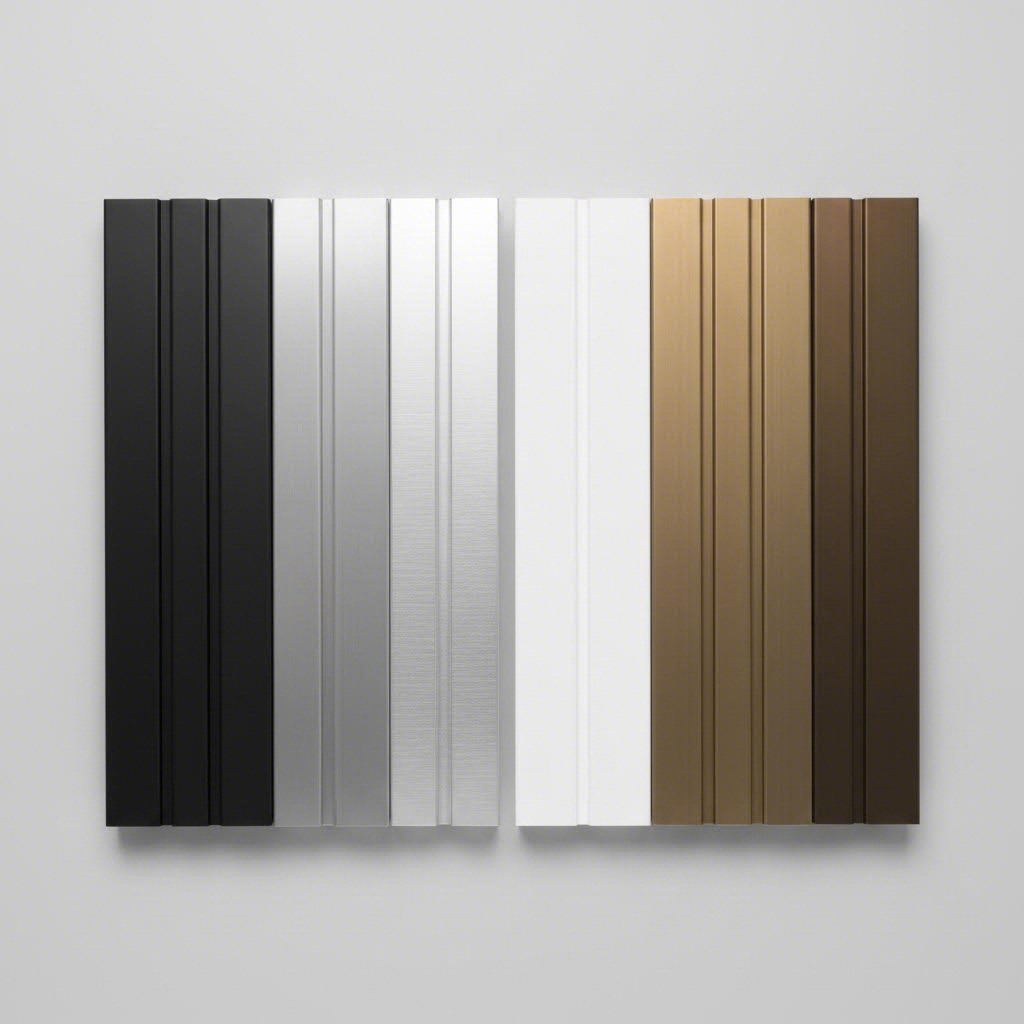
You've selected your alloy, chosen your profile type, and confirmed aluminum beats the alternatives for your application. Now comes the question that transforms raw extrusions into finished products: What surface treatment will protect and beautify your cabinet door frames for years to come?
This is where many buyers get overwhelmed. Suppliers throw around terms like anodizing, powder coating, and PVDF without explaining what these treatments actually do or why one might suit your project better than another. The reality? Each surface treatment offers distinct advantages for different environments, aesthetics, and budgets. Understanding these differences helps you specify exactly what you need rather than simply accepting whatever a supplier recommends.
Think of anodizing as aluminum's natural defense mechanism, supercharged through electrochemistry. Unlike paint or coating that sits on top of the surface, anodizing transforms the aluminum itself into a harder, more durable material.
According to Light Metals Coloring, the anodizing process submerges aluminum in an electrolyte bath while applying electric current. This produces a porous oxide layer capable of absorbing dyes. The result? A super-hard protective layer that's fully integrated with the metal rather than simply adhered to it.
What does this mean for your aluminum extrusion trim? The anodized layer becomes part of the aluminum structure, so it cannot chip, peel, or flake like paint. This integral bond makes anodized finishes exceptionally durable for high-touch applications like cabinet door frames.
Anodizing types vary by thickness and purpose:
For most aluminum cabinet door extrusion applications, Type II anodizing delivers the optimal balance of appearance and protection. The porous coating absorbs dyes beautifully, enabling colors ranging from subtle champagne and bronze tones to bold blacks, blues, and reds.
Benefits of anodized finishes:
Limitations to consider:
When you want a white aluminum profile or other light color with a distinctive metallic sheen, anodizing delivers that characteristic look no other treatment can replicate. The aluminum's natural luster shows through, creating depth that painted finishes lack.
Need a specific Pantone color match? Want a textured finish that hides fingerprints? Powder coating opens design possibilities that anodizing simply cannot achieve.
As explained by Minh Dung Holdings, powder coating uses dry powder charged electrostatically and sprayed onto grounded aluminum parts. The powder is then baked, melting and flowing into a smooth, durable, adherent finish. This process creates a thick protective layer with excellent coverage, even on complex profile geometries.
Benefits of powder coating:
Limitations to consider:
For interior cabinet applications, powder coating represents an excellent value proposition. The finish resists kitchen grease, cleaning chemicals, and daily handling while offering any color your design requires. Many aluminum shapes catalog options come standard with powder coat finishes precisely because of this versatility.
When projects face extreme conditions, PVDF (Polyvinylidene Fluoride) coating, often known by the trade name Kynar 500, steps up as the premium solution. Architects consider PVDF the gold standard for exterior applications due to its exceptional resilience.
Unlike powder coating, PVDF is a liquid paint system applied in controlled factory conditions. The fluoropolymer chemistry creates a finish with remarkable properties:
Benefits of PVDF coating:
Limitations to consider:
For interior cabinet doors, PVDF may exceed requirements. However, for cabinets in commercial spaces with large windows, sunrooms, or outdoor kitchen applications, PVDF's UV stability justifies the premium.
Beyond the three major treatment categories, specialized processes serve niche applications. Micro-arc oxidation (MAO), also called plasma electrolytic oxidation, creates ceramic-like surface layers with extreme hardness and wear resistance. This treatment suits aluminium extrusion trim in high-wear commercial environments but comes at premium cost.
Other specialty treatments include:
The right surface treatment ultimately depends on your specific environment, aesthetic goals, and budget. Interior kitchen cabinets in moderate climates? Powder coating delivers excellent value. High-end residential projects demanding that distinctive metallic character? Anodizing creates lasting impressions. Commercial installations facing harsh conditions? PVDF protects your investment for decades.
With your surface treatment selected, the next challenge is ensuring proper installation. Even the finest aluminum cabinet door extrusion means little if assembly goes wrong.
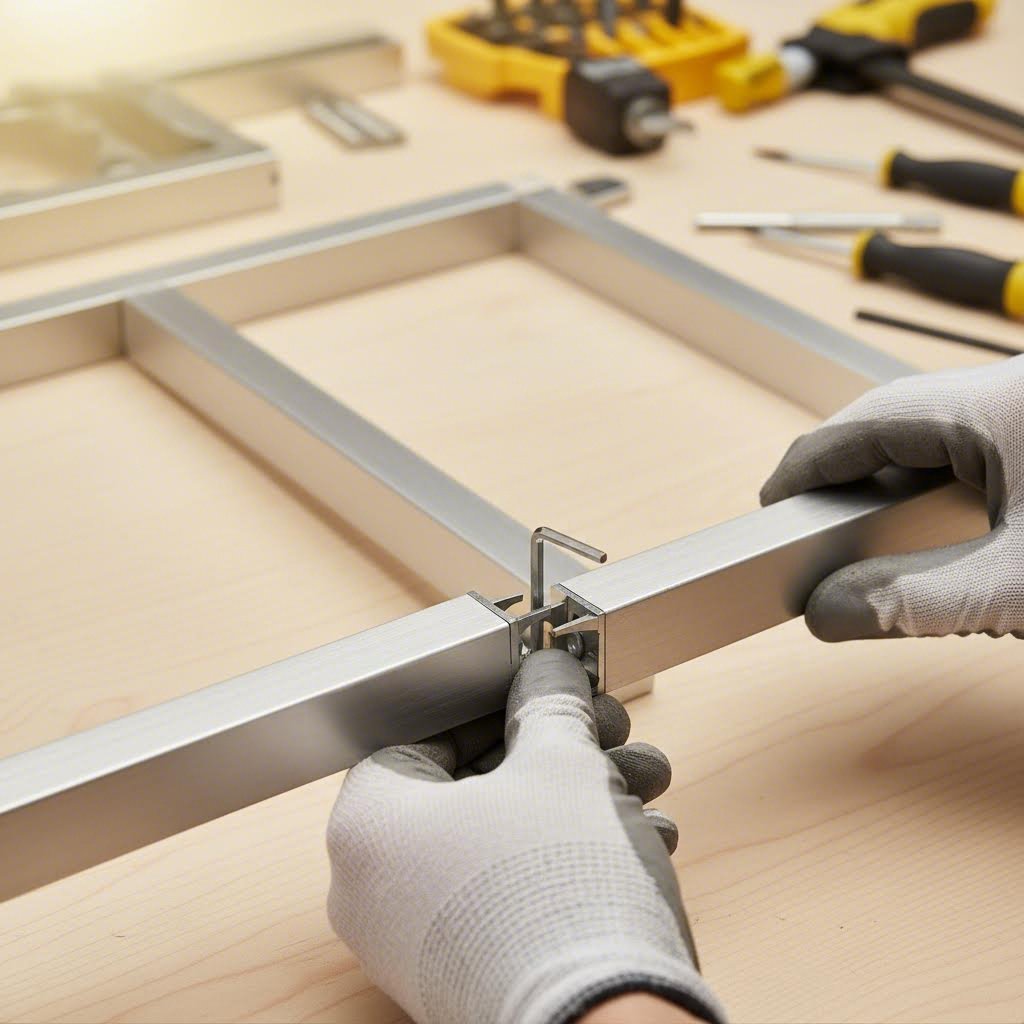
You've selected the perfect profile, chosen an ideal finish, and your aluminum extrusion assembly components have arrived. Now what? This is precisely where many projects go sideways. Suppliers ship beautiful profiles but rarely explain how to transform those raw materials into flawless cabinet doors.
The difference between professional-looking results and frustrating failures often comes down to technique rather than tools. Whether you're a DIY enthusiast tackling your first project or a cabinet maker refining your process, mastering these fundamentals will save hours of rework and deliver the clean, precise results your aluminum cabinet door extrusion deserves.
Every successful extrusion frame starts with accurate measurements. Sounds obvious, right? Yet measurement errors cause more cabinet door failures than any other single factor. Here's how professionals approach the measuring process:
With measurements confirmed, cutting becomes the critical next step. The right tool makes all the difference for extruded aluminum door frame components.
Miter saw method (recommended for most projects):
For angled cuts required in some designs, miter saws excel. They handle 45-degree and 90-degree joints with precision, essential for corners that will remain visible in the finished door.
How you join corners determines both the strength and appearance of your finished cabinet door. Several methods exist, each suited to different profile types and project requirements.
Common corner joint approaches:
According to Anglelock's assembly guide, keeping certain brackets and profiles loose initially leaves you the option of inserting profiles later in the process. This sequencing matters more than many beginners realize.
Step-by-step corner assembly sequence:
With your frame assembled and squared, it's time to install the insert material. Whether you're working with glass, acrylic, or solid panels, proper technique prevents damage and ensures secure retention.
Even experienced installers encounter issues. Here's how to address the most frequent problems:
Visible gaps at corners:
Frame alignment problems:
Finish damage prevention:
Professional tip: When assembling T-slot style aluminum framing, adjusting one component often forces another part out of place. Having a second person to hold components during tightening dramatically improves final alignment quality.
Mastering these installation techniques transforms aluminum cabinet door extrusion from raw material into professional-quality finished products. With your assembly skills refined, the next step is understanding how to select the right profile specifications for your specific project requirements.
You've mastered the fundamentals, compared materials, and learned proper assembly techniques. Now comes the decision that ties everything together: which specific profile should you order for your cabinet door project? This is where many buyers stumble, overwhelmed by catalog options or unsure what questions to ask suppliers.
Whether you're a DIY enthusiast building your first aluminum framed cabinet doors or a professional specifier sourcing for a commercial installation, the selection process follows the same logic. Match your project requirements to available profiles, gather the right specifications before ordering, and know when standard options work versus when custom extrusions become necessary.
Think of profile selection like solving a puzzle. Your door dimensions, insert material, mounting method, and aesthetic goals each eliminate certain options while pointing toward others. Start by answering these fundamental questions:
Door size and weight considerations:
Larger doors create greater demands on frame profiles. A 300mm wide upper cabinet door behaves very differently than a 900mm pantry door. According to WB-Aluminum's cabinet door guide, aluminum is significantly lighter than traditional materials like wood, making it easier to handle and install while reducing strain on cabinet hinges.
Insert material compatibility:
Your aluminum profile for cabinet doors must accommodate whatever you're framing. Profile channel depths vary, and mismatches create installation headaches or failed assemblies.
Mounting method requirements:
How will your doors attach to cabinets? This seemingly simple question affects profile selection significantly.
Here's a question suppliers rarely answer honestly: Do you actually need custom extrusions, or are you paying premium prices for something a catalog profile could handle?
Standard catalog profiles make sense when:
As noted by Hugh Aluminum's selection guide, custom aluminum extrusions allow for the creation of intricate shapes and designs for specific projects, but they're cost-effective primarily for large-scale production.
Custom profiles become necessary when:
The custom versus standard decision often comes down to volume. According to ALLWIN's B2B extrusion guide, custom aluminum extrusion enables creation of complex geometries that reduce assembly steps and improve integration with other components. However, die development represents a significant upfront investment that only pays off across sufficient production quantities.
Before contacting any supplier for an aluminium cabinet door project, gather these specifications. Having this information ready streamlines the quoting process and prevents costly misunderstandings:
For professional specifiers, add these considerations:
Armed with this information, you're prepared to evaluate suppliers effectively. The next step? Understanding how custom manufacturing works and what capabilities distinguish quality aluminum extrusion cabinet producers from the rest.
So you've determined that standard catalog profiles won't cut it for your project. Maybe you need a unique groove depth, a proprietary frame proportion, or integration with specialized hardware. Whatever the reason, you're now entering the world of custom aluminum extrusion cabinets manufacturing. This is where supplier relationships become genuinely strategic rather than transactional.
Understanding what happens behind the scenes at an extrusion facility helps you set realistic expectations, ask smarter questions, and ultimately get better results. Let's pull back the curtain on the custom manufacturing process that suppliers rarely explain in detail.
Every custom aluminum profile begins with a die, a precision-machined steel disc that shapes molten aluminum as it's forced through under immense pressure. Think of the die as a cookie cutter, except it costs significantly more and determines whether your project succeeds or fails.
According to Star Extruded Shapes' manufacturing overview, the extrusion process begins with designing the desired profile shape and dimensions using specialized design software such as AutoCAD or SolidWorks. These digital models allow for faster and more precise quoting, streamlined prototyping, and reduced time to market.
The die development sequence typically follows these stages:
Tooling lead times generally run 2-4 weeks for straightforward profiles, extending longer for complex geometries. This timeline occurs before any production extrusion begins, so factor die development into your project schedule from the start.
Die cost considerations:
The good news? Die costs for aluminum extrusion are typically much lower than tooling for alternative manufacturing methods like die-casting or stamping. Once your die exists, it can produce thousands of linear meters of profile before requiring replacement.
Here's a truth suppliers sometimes downplay: minimum order quantities (MOQs) exist for legitimate technical and economic reasons, not simply to extract larger orders from customers.
When you order an aluminum extrusion kit for a custom project, the supplier must set up the press, install and heat the die, configure cooling systems, and prepare downstream equipment. These setup activities consume time and resources regardless of whether you're ordering 50 meters or 5,000 meters of profile.
Factors influencing MOQ requirements:
Lead times for custom item extruded aluminium profiles involve multiple sequential phases:
| Phase | Typical Duration | Key Variables |
|---|---|---|
| Tooling development | 2-4 weeks | Profile complexity, die corrections needed |
| Extrusion production | 1-3 weeks | Order quantity, press scheduling |
| Surface treatment | 1-2 weeks | Finish type, color matching requirements |
| Fabrication (if needed) | 1-2 weeks | Cutting, drilling, bending complexity |
| Shipping | 1-4 weeks | Destination, freight method |
Total lead times commonly range from 6-12 weeks for custom projects. Planning accordingly prevents schedule pressures that lead to quality compromises or expediting fees.
Not all extrusion suppliers are created equal. The capabilities that matter most depend on your specific project requirements, but certain factors reliably distinguish high-quality manufacturers from marginal operators.
Press capacity and range:
Extrusion presses are rated by tonnage, which determines the maximum size and complexity of profiles they can produce. A supplier with diverse press capacity can handle projects ranging from delicate extruded aluminum housing components to substantial architectural profiles.
For cabinet door applications, presses in the 600T to 2,500T range typically handle most requirements. However, suppliers with broader press ranges, say 600T to 5,500T, demonstrate manufacturing depth that provides flexibility as your projects evolve.
For example, Shengxin Aluminium operates 35 extrusion presses ranging from 600T to 5,500T, representing the kind of comprehensive capability that supports diverse project requirements. This range enables production of everything from delicate trim profiles to heavy structural sections within a single facility.
CNC machining and fabrication:
Raw extrusions rarely go directly to customers. Most projects require secondary operations: cutting to length, drilling mounting holes, milling slots, or bending profiles. Suppliers with in-house CNC machining centers deliver several advantages:
According to Ya Ji Aluminum's supplier selection guide, beyond extrusion, full-service suppliers deliver in-house surface finishing, CNC machining, cutting-to-length, and even welding. These value-added services reduce your coordination costs and improve turnaround times.
Shengxin's facility exemplifies this integrated approach, housing state-of-the-art CNC machining centers capable of precise cutting, drilling, and bending operations that transform raw extrusions into installation-ready components.
Surface treatment options:
A supplier's finishing capabilities directly affect your design possibilities. Evaluate whether they offer:
Manufacturers offering end-to-end support from die development through surface treatment and final fabrication provide the quality control advantages of integrated production. This continuity matters particularly for aluminum enclosure extrusion projects and extruded aluminum enclosures where fit and finish must be impeccable.
How do you know the profiles you receive actually meet specifications? Robust quality control separates reliable suppliers from those who ship problems.
Key quality indicators to verify:
Ask potential suppliers about their quality management certifications. ISO 9001 certification indicates documented quality processes. For automotive applications, IATF 16949 provides additional assurance. These certifications verify that suppliers follow established procedures and maintain traceability throughout production.
When evaluating extrusion suppliers, look beyond pricing to assess total capability. A manufacturer offering comprehensive services from die development through final fabrication delivers consistency and accountability that fragmented supply chains cannot match.
With a clear understanding of the custom manufacturing process and supplier evaluation criteria, you're equipped to make informed sourcing decisions. The next consideration? Understanding how aluminum cabinet door extrusions serve different market applications, from residential kitchens to commercial installations.
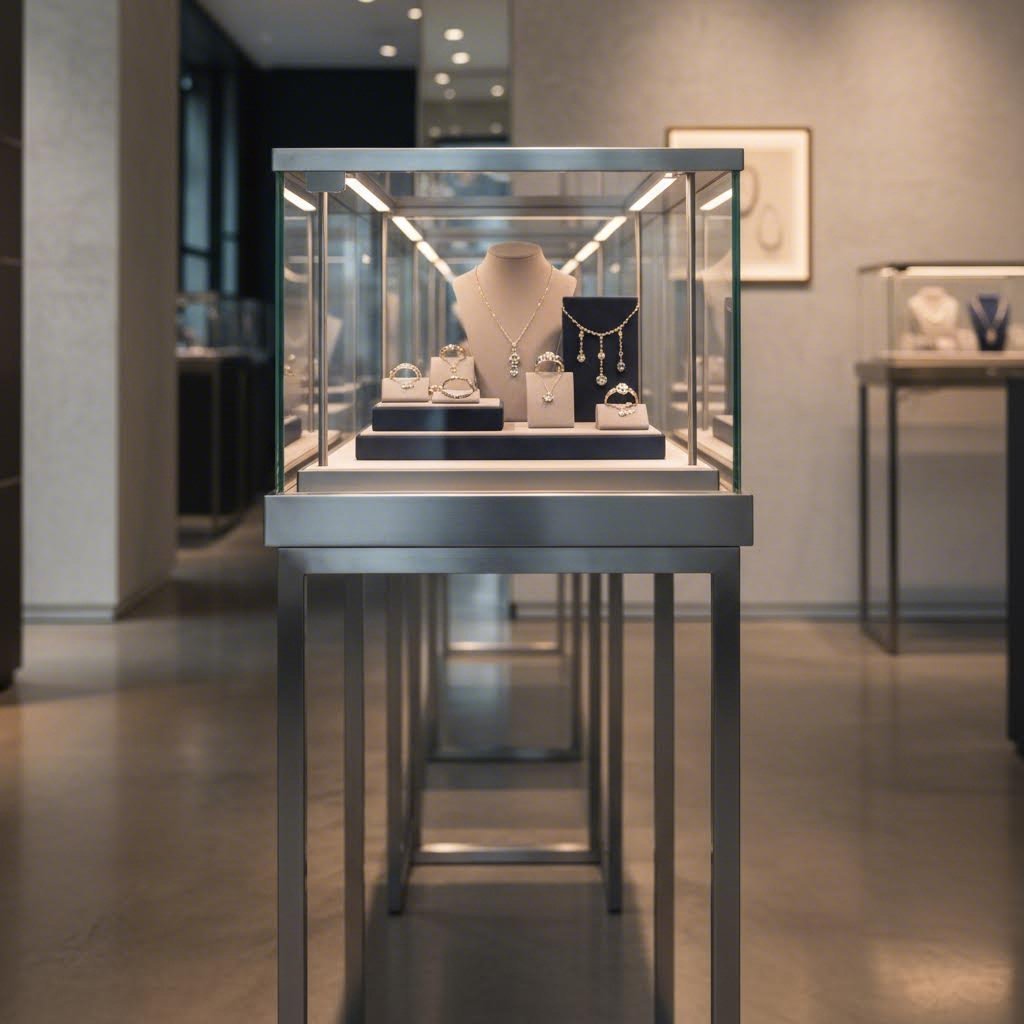
Where do aluminum cabinet door extrusions actually end up? The answer spans far more territory than most people realize. From the kitchen you cook breakfast in to the glass showcase displaying luxury watches at your local jewelry store, these versatile profiles serve remarkably diverse applications. Understanding how requirements differ across market segments helps you specify the right solution for your specific project.
The beauty of aluminum extrusion lies in its adaptability. The same fundamental manufacturing process that produces sleek residential cabinet frames also creates durable commercial display cases and institutional storage systems. However, each application brings unique demands that influence profile selection, finish choices, and performance expectations.
Home environments represent the largest market for aluminum frame cabinet doors, and for good reason. Modern homeowners increasingly favor the clean lines, durability, and moisture resistance that aluminum delivers in spaces where traditional materials struggle.
In kitchen settings, aluminum cabinet door extrusions typically serve upper cabinet applications where glass inserts showcase dishware, glassware, or decorative items. According to Aluminum Systems' product overview, the spectrum of applications includes kitchens, bathrooms, office furniture, closets, and entertainment centers. The anodized finish provides a durable, non-toxic, UV and moisture resistant surface that withstands years of daily use.
Key residential kitchen applications include:
Bathroom applications demand even more from frame materials. Steam from showers, humidity fluctuations, and direct water exposure create conditions that destroy wood and MDF within years. Aluminum's inherent corrosion resistance makes it ideal for vanity cabinets, medicine cabinets, and linen storage in high-humidity environments.
What do residential projects typically require? Ultra-slim to standard profile widths (15-40mm), premium anodized or powder coat finishes in neutrals and metallics, and compatibility with concealed European-style hinges. Production lead times of 1-2 weeks meet most renovation schedules without rushing.
Step into any retail environment and you'll find aluminum extrusions working overtime. From jewelry cases to museum vitrines, commercial applications push these profiles into demanding service conditions that residential projects rarely approach.
Retail display cases, often called glass show cases in the industry, require frames that combine visual appeal with security and durability. As Extrude-A-Trim notes, aluminum extrusions give you the strength, flexibility, and style to create customizable and durable setups for everything from retail kiosks and museum exhibits to sign frames and tradeshow booths.
Commercial retail applications include:
The tradeshow and exhibit industry represents another significant application segment. Portability matters enormously here. According to Extrude-A-Trim's analysis, aluminum's lightweight characteristic makes displays easier and cheaper to move around, especially for temporary tradeshow booths. The material's 100% recyclability also aligns with corporate sustainability initiatives.
Office furniture applications continue expanding as workplace designers embrace modern aesthetics. Aluminum frames appear in credenzas, storage walls, and reception area display cabinets. These installations often specify aluminium window extrusions or window extrusion profiles adapted for interior cabinetry, leveraging the same precision and finish quality developed for architectural glazing systems.
Healthcare, hospitality, and institutional environments present unique requirements that standard residential or retail solutions may not address.
Healthcare settings demand:
Hospitality installations prioritize:
Educational facilities, laboratories, and commercial kitchens each bring additional considerations. Fire ratings, chemical resistance, and compliance with specific building codes may dictate profile and finish selections beyond purely aesthetic factors.
How do requirements actually differ across these market segments? The following comparison highlights key distinctions that influence specification decisions:
| Application Type | Typical Profile Style | Common Finishes | Special Requirements | Key Considerations |
|---|---|---|---|---|
| Residential Kitchen | Ultra-slim to standard (15-40mm) | Anodized silver, black, bronze; powder coat whites and grays | Concealed hinge compatibility, moisture resistance | Aesthetic integration with existing cabinetry, easy DIY installation |
| Residential Bathroom | Standard frames (25-40mm) | Anodized finishes, chrome-look powder coat | Maximum moisture and humidity resistance | Corrosion performance, compatibility with bathroom hardware finishes |
| Retail Display Cases | Standard to heavy-duty (30-50mm) | Premium anodized, custom powder coat to brand colors | Security glazing accommodation, lighting integration | Visual merchandising impact, durability for customer interaction |
| Office Furniture | Ultra-slim to standard (20-35mm) | Anodized metallics, matte powder coats | Modular system compatibility, cable management | Coordination with workstation systems, professional appearance |
| Healthcare Facilities | Standard frames with radius corners (30-45mm) | Antimicrobial powder coat, light neutral colors | Infection control compliance, cleanability | Chemical resistance, impact durability, code compliance |
| Hospitality/Hotels | Custom profiles, often concealed frames | PVDF or premium powder coat, custom colors | Acoustic dampening, fire rating compliance | Design distinction, brand alignment, long-term durability |
| Museum/Exhibition | Precision ultra-slim (15-25mm) | Conservation-grade anodizing, matte finishes | Climate control sealing, UV-filtering glass accommodation | Artifact protection, minimal visual interference, security |
Interestingly, many commercial and architectural cabinet applications draw on aluminum window extrusion profiles originally developed for glazing systems. These profiles offer several advantages when adapted for cabinet use:
When specifying for commercial projects, don't overlook the potential of aluminium window extrusions as a starting point. The same precision engineering that keeps weather out of buildings can secure and display valuable merchandise or sensitive materials.
Understanding these diverse applications helps you communicate more effectively with suppliers and specify solutions truly matched to your project's demands. Whether you're designing a residential renovation or outfitting a commercial space, aluminum cabinet door extrusions offer the flexibility to meet your exact requirements.
You've now explored the complete landscape of aluminum cabinet door extrusion, from fundamental manufacturing processes to supplier evaluation and real-world applications. That's a lot of ground to cover. But knowledge without action remains theoretical. Let's distill everything into the critical decisions that will determine your project's success.
Whether you're renovating a kitchen, specifying commercial display cases, or sourcing aluminum extrusions for sale to your own customers, the principles remain consistent. Smart specification prevents costly mistakes. Thorough supplier evaluation protects your investment. And understanding your true requirements separates projects that exceed expectations from those that merely get by.
When you're ready to move forward, focus your attention on these make-or-break factors:
The most critical insight from this entire guide: successful aluminum cabinet door projects begin with thorough specification, not supplier selection. Define exactly what you need before requesting quotes, and you'll receive accurate pricing, realistic lead times, and profiles that actually fit your application.
Where do you go from here? Your path forward depends on your current project stage:
If you're still in the design phase:
If you're ready to source:
If you're comparing suppliers:
For readers seeking professional-grade custom extrusions, finding a manufacturer with comprehensive capabilities streamlines the entire process. Shengxin Aluminium exemplifies what to look for in a full-service partner: over 30 years of industry experience, 35 extrusion presses spanning 600T to 5500T capacity, and complete surface treatment options including anodizing in custom colors like champagne and rose gold, powder coating, PVDF, and micro-arc oxidation. Their integrated CNC machining centers handle precise cutting, drilling, and bending, providing end-to-end support from die development through mass production at factory-direct pricing.
Whether you're sourcing through distributors like CRL U.S. Aluminum for standard architectural profiles or working directly with manufacturers for custom solutions, the knowledge you've gained positions you to make confident decisions. You now understand what questions to ask, what specifications matter most, and how to evaluate whether a supplier can truly deliver what your project demands.
Aluminum cabinet door extrusion offers remarkable versatility, durability, and design flexibility. Armed with the insights from this guide, you're equipped to transform that potential into exceptional results for your specific application.
Aluminum cabinet door extrusion is a manufacturing process where heated aluminum billets are forced through precision steel dies to create continuous profile shapes for cabinet door frames. The aluminum is heated to approximately 900°F until malleable, then pushed through the die under immense pressure. This creates dimensionally consistent profiles with aligned grain structures, delivering superior strength and surface finish quality compared to casting or machining methods.
6063-T6 aluminum is the industry standard for cabinet door applications. It offers excellent extrudability, superior surface finish quality ideal for anodizing, and outstanding corrosion resistance. With a chemical composition of 0.45-0.9% magnesium and 0.2-0.6% silicon, 6063 flows smoothly through dies to produce complex profiles without defects. For heavy-duty applications requiring extra strength, 6061-T6 provides higher tensile strength at 310 MPa but with slightly reduced surface finish quality.
Choose anodizing when you want an integral metallic finish that cannot chip or peel, excellent UV stability, and enhanced corrosion resistance. Anodizing transforms the aluminum surface itself, creating a durable oxide layer. Select powder coating when you need unlimited color options, custom color matching, textured finishes, or cost-effective solutions for standard colors. Powder coating applies a thicker protective layer (2-4 mils) with excellent impact resistance, though it sits on the surface rather than integrating with the metal.
Custom aluminum extrusion lead times typically range from 6-12 weeks total, including 2-4 weeks for die development, 1-3 weeks for extrusion production, 1-2 weeks for surface treatment, and additional time for fabrication and shipping. Minimum order quantities depend on press size, profile complexity, and supplier requirements. Setup costs remain constant regardless of order size, so larger quantities reduce per-unit costs. Suppliers like Shengxin Aluminium with 35 presses ranging from 600T to 5,500T can accommodate diverse volume requirements.
Aluminum outperforms wood and MDF in moisture-prone environments like kitchens and bathrooms. It naturally forms a protective oxide layer resisting corrosion, won't swell, warp, or delaminate from humidity, and maintains dimensional stability across temperature changes. Aluminum weighs one-third of steel and less than wood frames of equivalent strength, reducing hinge stress. With a lifespan of 25-50+ years compared to MDF's 8-15 years, aluminum provides superior long-term value despite higher initial costs.



 serviço on-line
 0086 136 3563 2360
 sales@sxalu.com
 +86 136 3563 2360
 português
 English
 français
 Deutsch
 русский
 español
 العربية
 ไทย
 Việt
 Українська