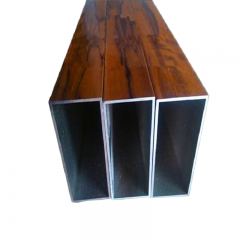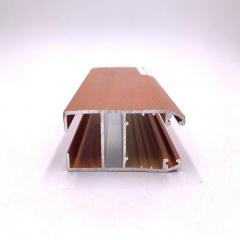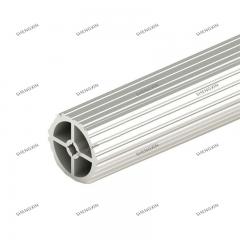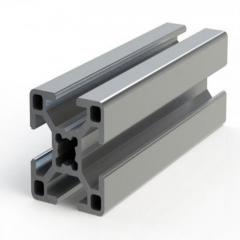
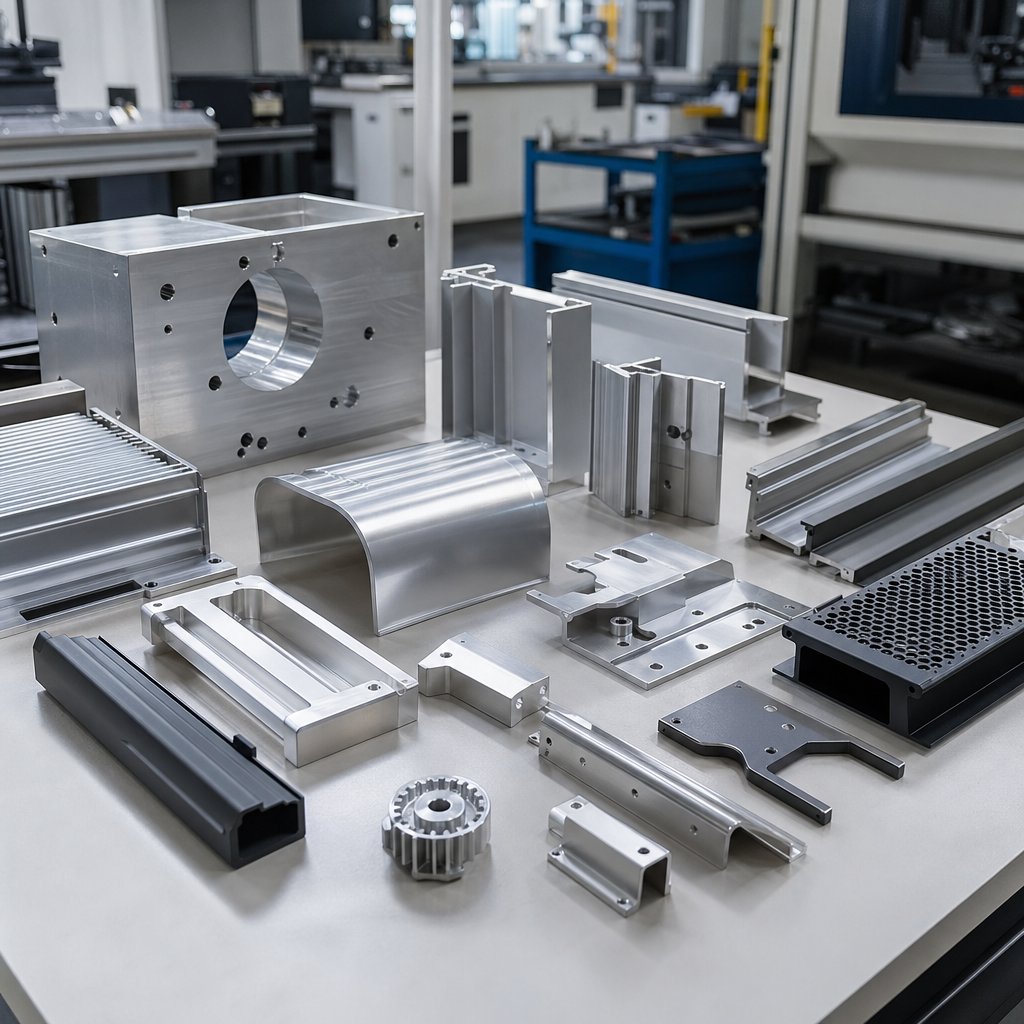
If you are asking what is surface treatment of aluminium, think of it as any controlled process that changes, prepares, or protects the outer layer of the metal. In real production, aluminium surface treatment includes far more than adding paint. It can involve anodizing, chemical conversion, brushing, polishing, blasting, priming, or coating, depending on what the part needs to do.
Aluminium surface treatment is the broad term for processes that clean, convert, texture, or coat aluminium so it performs better in use or in downstream manufacturing. Some methods build a layer, some transform the surface itself, and some do both.
A simple distinction helps. A treatment changes or prepares the surface. A finish describes the final appearance or functional result. A coating usually means an added layer such as paint, lacquer, or powder coat. That is why surface treatment of aluminium is broader than coating alone. Anodizing, for example, thickens the oxide layer tied to the base metal rather than just covering it.
Aluminium naturally forms a thin oxide film, but Daiwa KK notes that untreated surfaces can still scratch easily and may not provide enough protection in demanding service conditions. Manufacturers usually choose a surface treatment for aluminium to improve one or more of these goals:
Here is where selection gets practical. Some finishes look excellent but reduce electrical conductivity. Some durable treatments raise cost, extend lead time, or add slight dimensional change. Thin chemical layers may preserve fit and conductivity better, yet they will not deliver the same wear performance as thicker oxide or organic films. Those tradeoffs are why the best answer is rarely one process in isolation. The field becomes much easier to compare when these methods are sorted into a few clear treatment families.
That tradeoff between protection, appearance, and conductivity makes a lot more sense when the options are grouped by purpose. A useful framework, reflected in Total Materia and AL Circle, is to sort surface treatment and finishing of aluminium into four families: electrochemical treatments, chemical conversion treatments, mechanical finishing, and organic coatings. Instead of reading one long list of processes, you can compare what each family is designed to do.
These processes use electricity and an electrolyte to change the aluminium surface itself. Anodizing is the best-known example. It builds a controlled oxide layer that improves corrosion resistance, raises surface hardness, and can support clear or colored finishes. Hard anodized surfaces are often chosen where wear matters. The tradeoff is that electrochemical films can reduce electrical conductivity and may affect tight dimensions, especially on precision features.
This family fits visible parts, housings, profiles, and components that need a durable oxide layer. It is not the best fit when conductive contact surfaces or extremely tight post-finish tolerances are critical.
Chemical conversion and related chemical surface treatment aluminium processes alter the surface through chemistry rather than heavy film build. Common uses include mild corrosion protection, paint adhesion, and pretreatment before later coating. Because the layer is thin, these treatments usually have much less dimensional impact than thicker oxide or organic films. They are often selected when conductivity needs to be retained better than anodizing or powder coating would allow.
The limitation is simple: they are usually more functional than decorative, and they do not deliver the same wear resistance as a thicker anodic layer.
Mechanical finishing includes brushing, polishing, blasting, and similar texture-changing steps. These methods control reflectivity, grain, and surface feel. They can hide minor marks or prepare the part for bonding or coating, but on their own they usually provide limited corrosion protection.
Organic coatings include powder coating, painting, lacquer, and other applied films. These are chosen when color range, surface coverage, and weathering performance matter most. They can create a uniform finished look, but they add film thickness, cover conductive metal, and may complicate repair or masking on critical features.
| Treatment family | Main purpose | Strengths | Limitations | Conductivity effect | Dimensional sensitivity | Common applications |
|---|---|---|---|---|---|---|
| Electrochemical | Build protective oxide layers | Good corrosion resistance, higher hardness, decorative options | Can reduce conductivity, less forgiving on tight fits | Usually reduced | Moderate | Profiles, enclosures, visible industrial parts |
| Chemical conversion | Prepare surface and add light protection | Good paint base, low build, better conductivity retention | Lower wear resistance, limited decorative value | Often better retained | Low | Paint-ready parts, conductive assemblies, tight-tolerance components |
| Mechanical finishing | Control texture and appearance | Improves visual consistency, useful for prep work | Limited standalone protection | Usually retained unless by coating | Low to moderate | Trim, housings, cosmetic parts, pre-coating prep |
| Organic coatings | Add color and barrier protection | Wide color range, good coverage, outdoor durability | Adds thickness, hides metal surface, can be harder to repair neatly | Usually reduced or blocked | Moderate to high | Outdoor products, architectural parts, equipment covers |
These aluminium surface treatment methods look clear on paper. Shop-floor results are less forgiving. The family matters, but preparation before the finish often decides whether the chosen method performs as intended.
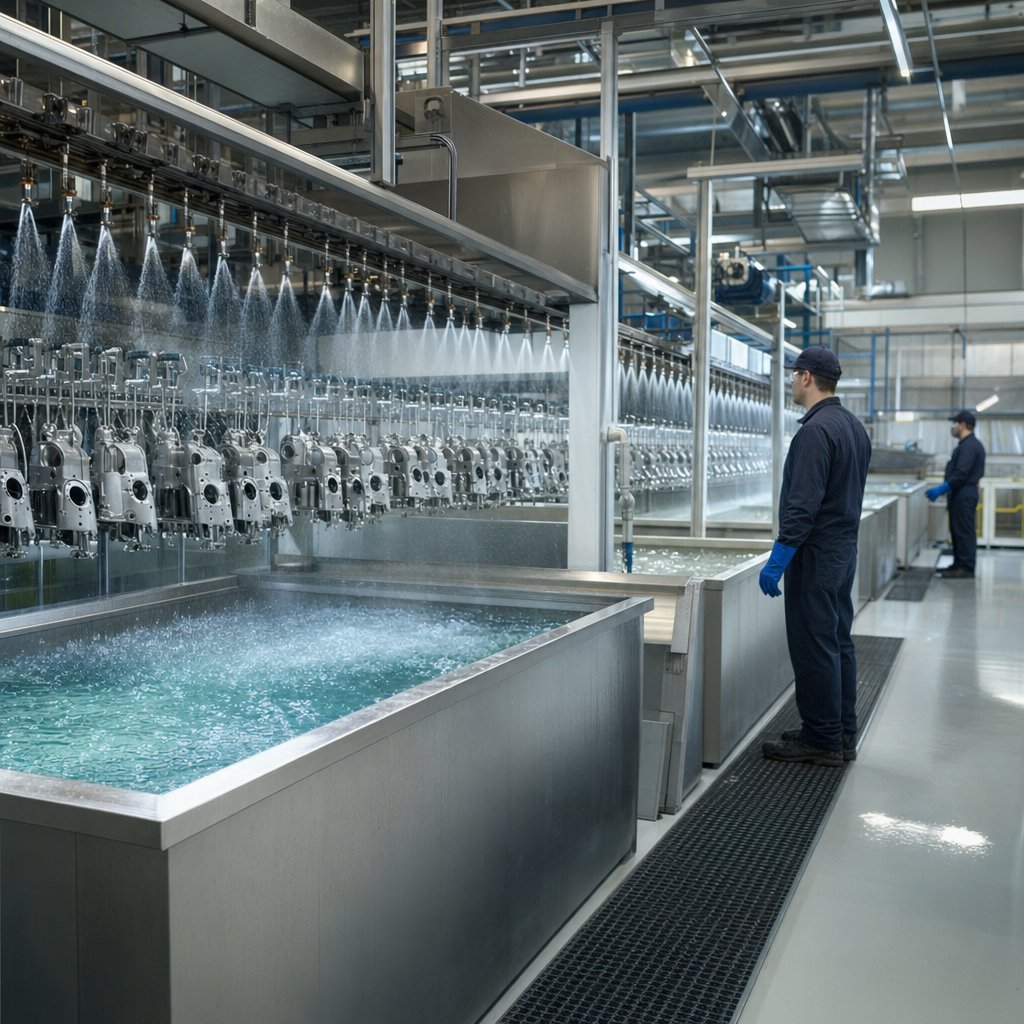
A finish specification looks decisive on paper, but shop results are often set much earlier. The surface treatment process for aluminium succeeds or fails in pretreatment, where oils, natural oxide, smut, and handling marks are removed before the final finish is applied. In day-to-day surface treatment aluminium work, prep usually decides the outcome. If that foundation is uneven, the part may show weak adhesion, blotchy color, staining, or disappointing corrosion life.
Aluminium rapidly forms a thin oxide in air, and that surface responds differently depending on alloy, extrusion history, machining, blasting, and storage conditions. Hydro notes that microstructural differences can change etch rates and oxidation, which is why hidden streaks or roughness may become more visible after finishing. In the Bonnell Aluminum anodizing sequence, cleaning, rinsing, etching, desmutting, anodizing, and sealing are treated as linked controls, not isolated steps. Finishing & Coating also shows why deoxidizing goes beyond simple desmutting: the wrong chemistry can damage tight-tolerance parts, while cast or blasted surfaces may need stronger prep than smooth machined ones.
The aluminium surface treatment process is not just a list of tanks. It is a chain of dependencies. That is why two parts with the same nominal finish can perform very differently, and why the most useful comparison often starts with anodizing and conversion coatings, where pretreatment choices show up fast in both appearance and function.
For many engineering teams, the key aluminium corrosion surface treatment choice is not about color first. It is about whether the part needs a thick, durable oxide or a thin, conductive chemical film. Both routes improve protection, but they solve different problems. Many aluminium surface treatment corrosion issues start when a finish is selected for appearance alone, while conductivity, wear, or tolerance limits are left until too late.
Anodizing is an electrochemical process that turns the aluminium surface into a corrosion-resistant oxide layer bonded to the metal itself, as outlined by Zintilon and Valence. Standard anodizing, often associated with Type II sulfuric acid anodizing, is widely used when a part needs a solid balance of corrosion resistance, cleaner appearance, and decorative consistency. Data from Zintilon places typical anodized thickness at about 0.0002 to 0.001 inches. Hard anodizing, or Type III, creates a thicker and harder oxide layer and is favored where abrasion and wear are more severe, a distinction emphasized by Valence.
The tradeoff is just as important as the benefit. Anodized surfaces are electrically insulating, so they are a poor fit for contact areas that must remain conductive. Film build can also matter on tight bores, threads, and mating faces. In aluminium alloy surface treatment work, pretreatment still shapes the result, especially when visual uniformity or sealing quality matters.
Chemical conversion coatings, often called chemical film or chromate conversion coating, form through chemistry rather than electrical current. The layer is far thinner, with Zintilon describing chemical film as only a few micrometres. That low build makes it useful when corrosion protection, paint adhesion, and minimal dimensional change all matter at once. It also preserves conductivity far better than anodizing.
Guidance summarized by Omega Research shows why this route appears so often in electronics and painted assemblies. MIL-DTL-5541 Class 3 is intended for aluminium parts that need corrosion protection with low electrical resistance. The same source distinguishes Type I hexavalent systems from Type II trivalent or other non-hexavalent formulations. Type II is often preferred where environmental compliance is a priority. Limits remain clear, though. Conversion coatings are not wear coatings, decorative choice is limited, and Omega Research notes that poor prep, including iron-based abrasives or harsh alkaline etching, can cause pitting or uneven adhesion.
| Method | Corrosion protection | Wear resistance | Dimensional effect | Appearance range | Conductivity retention | Common use cases |
|---|---|---|---|---|---|---|
| Standard anodizing, often Type II | Strong for general service | Better than bare aluminium | Moderate | Clear or dyed decorative finishes | Low, surface is insulating | Visible parts, housings, architectural and consumer components |
| Hard anodizing, Type III | Very strong | Highest of the three | Higher than standard anodizing | More function-led than decorative | Very low, strong insulating behavior | High-wear aerospace, automotive, medical, and industrial parts |
| Chemical conversion coating | Good, with performance varying by system and control | Low to moderate | Low | Limited, usually clear or iridescent tones | High relative to anodizing | Paint pretreatment, conductive assemblies, electronics, tolerance-sensitive parts |
That is why the best finish is rarely the thickest one. If the part must conduct, fit precisely, or act as a strong paint base, chemical conversion may outperform a thicker anodic layer in service. If wear, decorative consistency, and long-term barrier protection dominate, anodizing usually leads. Plenty of projects, though, care even more about full color coverage, texture, and outdoor visual stability than either of these two families can deliver on their own.
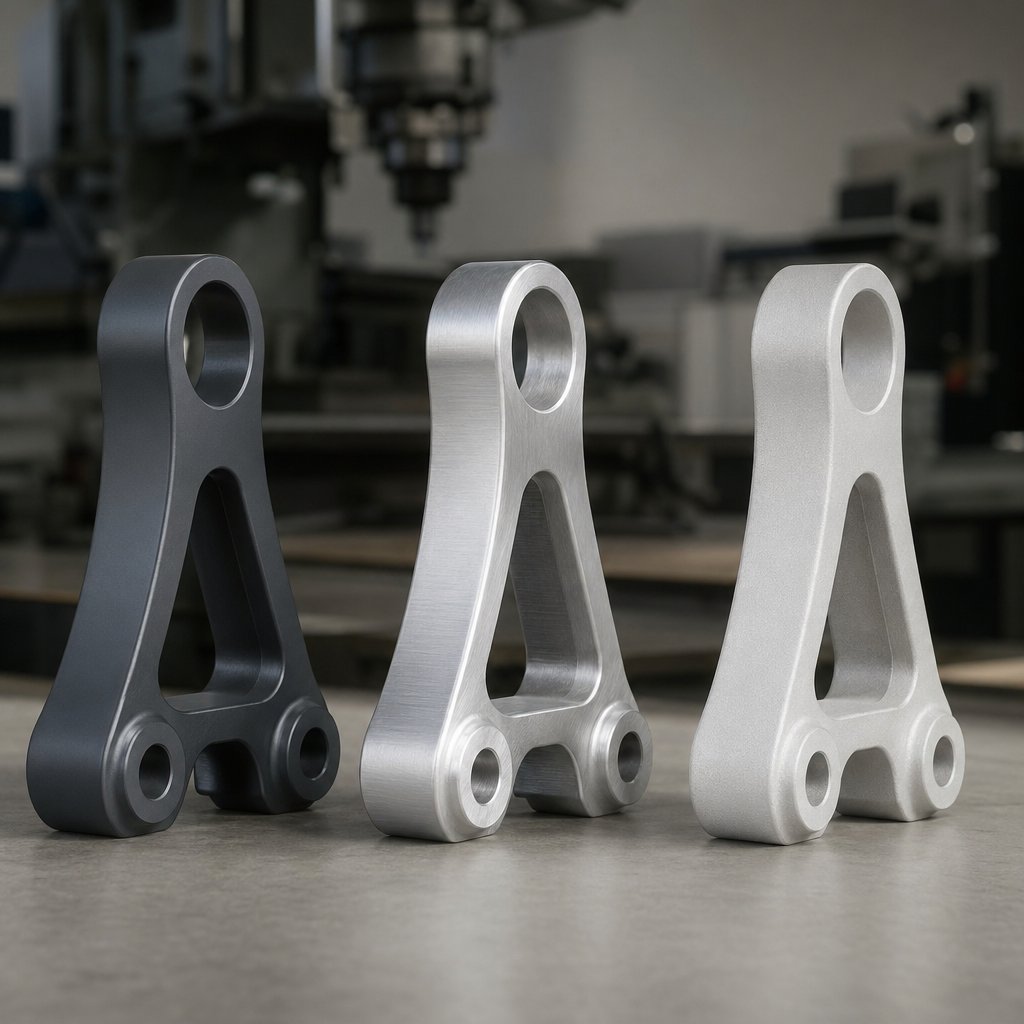
The picture changes when the part needs full color, a controlled texture, or a premium metallic look. In this part of aluminium finish surface treatment, the surface is judged by what users see and touch just as much as by corrosion data. Organic coatings create a barrier film over the metal. Mechanical methods reshape the metal itself. That difference is why powder coating and paint can protect bare aluminium outdoors, while brushing, polishing, and blasting often need sealing, anodizing, or another follow-up step for longer service.
SendCutSend and TiRapid both describe powder coating as an electrostatically applied dry finish that is heat-cured into a thicker, more uniform film than typical liquid paint. That makes it a strong choice for outdoor equipment, architectural parts, and consumer products where color, edge coverage, and weathering matter.
Liquid painting still has a place. The same comparison notes that paint offers broader color freedom and finer detailing, but the coating is usually thinner and less uniform. For low-volume parts, graphics, touch-up work, or designs that need frequent color changes, paint can be the more flexible route.
Brushing, polishing, and bead blasting do something coatings cannot. They keep the metal visible while changing grain, reflectivity, and surface feel. TiRapid notes that brushing creates a directional satin texture that can hide fingerprints and light scratches, polishing can produce a mirror-like surface with better cleanability, and bead blasting creates a uniform matte finish while improving adhesion for later anodizing or paint.
| Method | UV stability | Repairability | Masking complexity | Finish uniformity | Typical fit |
|---|---|---|---|---|---|
| Powder coating | High | Moderate | Moderate to high | High | Outdoor colored parts |
| Liquid painting | Moderate to high, system dependent | High for touch-up | Moderate | Moderate | Detailed color work, small batches |
| Brushing or polishing | Low alone | Surface can be reworked | Low | Operator dependent | Decorative metallic surfaces |
| Bead blasting | Low alone | Can be reblasted | Low to moderate | Good when controlled | Matte texture, pretreatment |
A few options sit outside the normal shortlist. An aluminium plasma surface treatment is usually chosen to clean and activate a surface for bonding, not to create a decorative final layer. In an MDPI study on AA 5052-H32 joined to glass fiber-reinforced thermoplastic, nitrogen plasma improved bonding strength by 25 percent after chemical pretreatment, but the wettability benefit weakened with time. That is useful when adhesion is the real goal. In the same way, an aluminium metal composite surface treatment solution is often an interface strategy for hybrid laminates and bonded assemblies, not a default replacement for powder coating, painting, or anodizing.
That is why appearance-led finishes should never be picked on looks alone. A glossy outdoor enclosure, a brushed electronics housing, and a blasted paint-ready bracket all ask for different compromises in durability, conductivity, maintenance, and film build. Those tradeoffs become much easier to handle when the finish is matched to the service environment, the alloy, and the part features that cannot be changed later.
A finish decision gets much clearer when you stop asking which process is best in general and start asking which failure matters most. For the surface treatment of aluminium and its alloys, that change in thinking saves time, cost, and rework. A marine bracket, a colored facade profile, a grounded electronics housing, and a sliding machine part may all be aluminium, but they do not need the same surface.
The first filter is exposure. Keronite notes that aluminium forms a natural oxide layer, but that protection is limited in alkaline environments and especially in acidic ones. The same source also highlights that 2xxx and 7xxx series alloys are more susceptible to galvanic corrosion because of their copper and zinc content. So the surface treatment of aluminium alloys should begin with the service environment and alloy family, not with color preference alone.
AL Circle points out that anodizing and powder coating are common choices for outdoor or harsh use, while chemical conversion coatings are often chosen when parts need paint adhesion, bonding support, or tight dimensional control. That means your first ranking should usually look like this:
If the part will live outdoors, corrosion and weathering may outrank nearly everything else. If it sits inside a grounded assembly, conductivity can move to the top of the list very quickly.
This is where tradeoffs stop being theoretical. Light Metals Coloring describes anodizing as a strong option for corrosion and wear resistance, while powder coating stands out for bold color and UV resistance. Those benefits come with a practical penalty: thicker anodic and organic films can interfere with electrical contact and can matter on threads, bores, and close-fitting faces.
So if a part must conduct electricity, ground reliably, or keep metal-to-metal contact, conversion coating often makes more sense than anodizing or powder coating. If the part is highly visible and outdoor color stability matters more than hardness, powder coating may be the stronger fit. If wear from friction is the main risk, hard anodizing usually moves up the shortlist.
| Method | Corrosion protection | Hardness | Wear resistance | Coating build | Dimensional impact | Appearance range | Outdoor suitability | UV stability | Conductivity | Repairability |
|---|---|---|---|---|---|---|---|---|---|---|
| Standard anodizing | High | Improved | Good | Moderate | Moderate | Clear or dyed | High | Generally good | Low | Limited |
| Hard anodizing | High | High | High | Higher | Higher | Function-led, limited decorative range | High | Generally good | Very low | Limited |
| Chemical conversion coating | Mild to moderate | Low | Low | Very low | Low | Limited | Moderate, often as a pretreatment | Not a main advantage | High retention | Moderate |
| Powder coating | High barrier protection | Surface film, not a hard oxide | Good | Moderate to high | Moderate to high | Very wide | High | High | Low | Moderate |
| Liquid painting | Moderate to high, system dependent | Low | Moderate | Moderate | Moderate | Very wide | Moderate to high | Variable | Low | Usually easier than powder coat |
| Mechanical finishing alone | Low | Low | Low to moderate | Minimal | Low | Texture-driven metallic look | Low unless by another finish | Not the key issue | Usually retained | Often reworkable |
Not every requirement deserves equal weight. In the surface treatment and finishing of aluminium and its alloys, the best decisions usually come from naming one or two non-negotiables first.
That checklist narrows the field fast, but application still changes the answer. A finish that makes sense for an architectural extrusion may be wrong for a heat sink, a cast housing, or a marine component. Those differences are where treatment selection becomes much more specific, and much more useful.
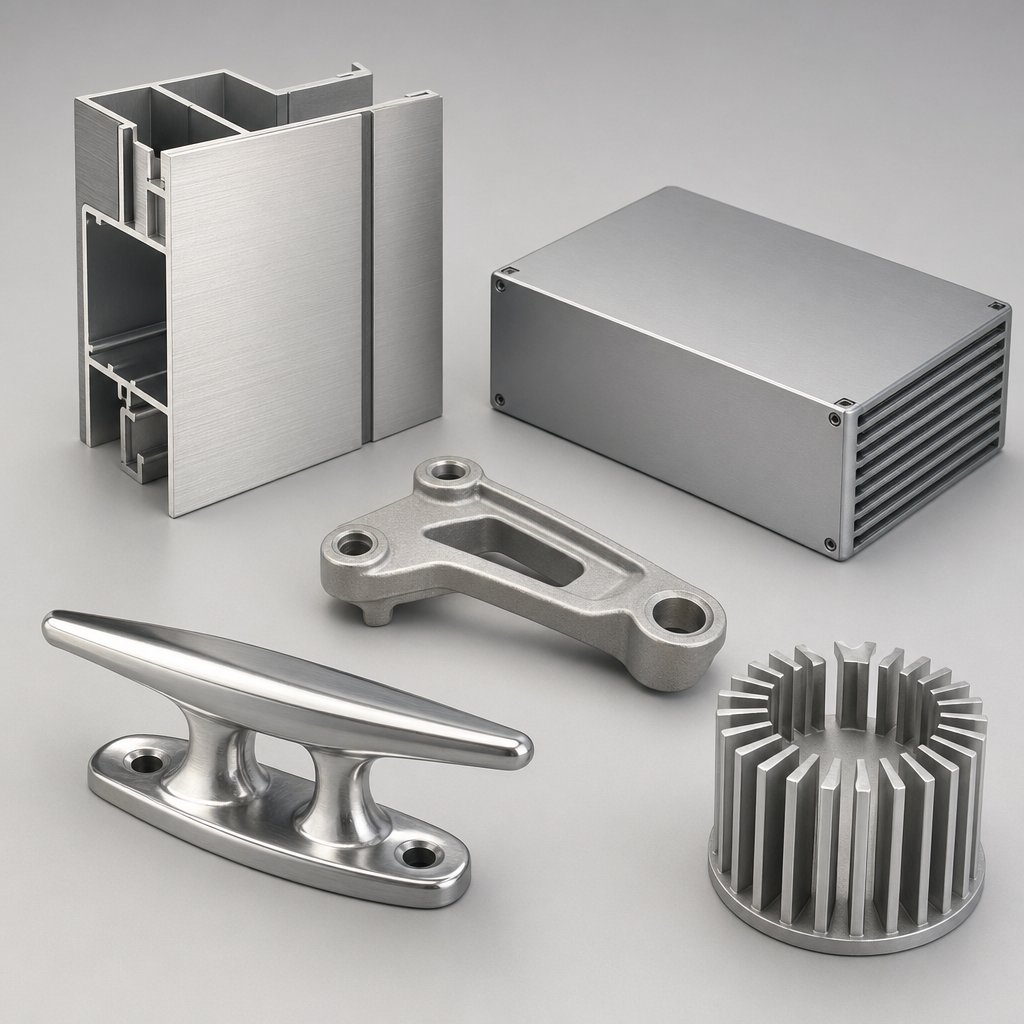
A finish shortlist can look sensible until the part gets a real job. A facade profile, an electronics housing, a marine bracket, and a heat sink may all be aluminium, but they do not reward the same surface choice. Application-based selection makes the earlier tradeoffs more practical, because corrosion, conductivity, heat flow, appearance, and geometry rarely matter in equal measure.
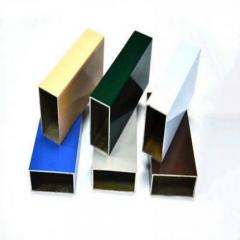
In architecture and general outdoor use, the priorities usually center on weather resistance, color retention, and a clean, consistent look across visible lengths. A coating guide highlights anodizing, powder coating, and PVDF as common choices for building aluminium because they help protect against sun, rain, and harsh exposure while supporting different design goals. In simple terms, anodizing fits projects that want a metallic appearance, while powder coating and PVDF are often stronger candidates when full color coverage and long-term exterior presentation matter more.
Industrial equipment often shifts the balance. Corrosion still matters, but so do abrasion, cleanability, and whether contact points must stay functional. That is why some equipment parts favor anodizing for harder oxide performance, while others use conversion pretreatments under paint or powder so critical surfaces are easier to manage.
| Application | Likely priorities | Often suitable treatment families | Caution points |
|---|---|---|---|
| Architecture and facade profiles | Outdoor durability, color stability, uniform appearance | Anodizing, powder coating, PVDF | Long visible sections make shade variation and masking defects easier to notice |
| Industrial equipment | Wear, corrosion control, easy cleaning | Anodizing, powder coating, conversion plus paint | Threads, grounding points, and high-contact zones may need special treatment |
| Electronics and enclosures | Conductivity, appearance, heat control | Conversion coatings, anodizing, selective coating strategies | Thicker films can insulate contact areas |
| Automotive parts | Corrosion resistance, cost, appearance, mixed functional zones | Powder coating, anodizing, conversion pretreatments | One part may contain both cosmetic and conductive requirements |
| Aerospace-related components | Low build, corrosion control, process discipline | Anodizing, conversion coatings | Tolerance and conductivity needs should be checked before specifying thicker films |
| Marine and general outdoor exposure | Salt, water, UV resistance | Powder coating, PVDF, anodizing | Edge damage and coating breaks become weak points quickly |
| Consumer products | Touch feel, scratch resistance, color, visual finish | Anodizing, powder coating, brushing or polishing with follow-up protection | Mechanical finishes alone may not provide enough corrosion protection |
Electronics make finish selection more nuanced than it first appears. Anodized housings can deliver good wear resistance and a clean decorative look, but thinner chemical films are often preferred where conductivity still matters. The same guide notes that alodine, or chromate conversion coating, is widely used in aircraft, automotive, military, and electronics applications because it supports corrosion protection and paint adhesion while preserving conductivity better than thicker coating systems.
Surface treatment techniques for aluminium extrusion heatsink parts deserve a separate note. An MDPI study on anodized Al 20XX alloys found bare aluminium emissivity at 0.217, while anodized samples measured above 0.9, and the tin-sulfuric condition lowered LED temperature by about 10 percent versus bare aluminium. That does not mean every heat sink should be anodized the same way, but it does show that heat dissipation is not only a raw-metal story. Oxide structure and emissivity can change performance in meaningful ways.
Marine and road-exposed automotive parts usually push barrier protection higher on the list. Water, salt, and grime reward finishes that keep the environment away from the substrate, so powder coating, PVDF, and anodizing are commonly reviewed for exposed surfaces. Where later painting, electrical continuity, or minimal dimensional change matters, thinner pretreatments may still be the better engineering fit.
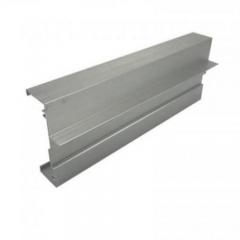
Part form matters before pretreatment even starts. The Matara overview describes extrusion as a process used to create long profiles with complex cross-sections, while casting produces complex shapes in molds. That difference changes finishing logic. Aluminium profile surface treatments for extrusions often focus on appearance uniformity along long lengths, edge coverage, and how channels, fins, or snap features behave during finishing. A cast aluminium surface treatment review usually puts more attention on shape complexity, surface accessibility, and whether the finish can perform consistently across a molded part.
Extruded sections used for frames, architectural members, or heat sinks often need finishing plans that respect profile geometry. Deep channels, narrow fins, and contact faces can make masking and inspection more important than the finish label alone. Machined parts bring their own challenge, because local cutting marks or tool patterns may become more visible after anodizing or blasting. That is why application fit and process capability always travel together. A treatment can be right on paper and still disappoint if the processor cannot control prep, masking, sealing, and inspection on the actual part geometry.
By this point, the pattern is hard to miss. A finish choice can be technically correct and still fail in production if extrusion, machining, pretreatment, coating, and inspection are handled by a weak supplier chain. For aluminium surface treatments, partner selection is part of the engineering decision, not just a purchasing step.
The value of one-roof processing is practical. PTSMAKE highlights that integrated extrusion, machining, finishing, and assembly simplify the supply chain, reduce handling damage between vendors, and keep quality control closer to the full part history. That matters when thickness, color, flatness, and dimensional fit all have to agree on the same part.
Send drawings, finish callouts, critical surface notes, and acceptance criteria early. A capable partner will respond with questions about tolerances, surface class, inspection points, and lot control. That is usually the clearest sign that the finish will be managed as a process, not treated as the last cosmetic step.
Aluminium surface treatment is the full group of processes used to prepare, modify, or protect the outer layer of aluminium. That can include cleaning, etching, anodizing, conversion coating, blasting, brushing, painting, or powder coating. The key point is that treatment is broader than coating alone. Some methods change the metal surface itself, while others add a protective or decorative layer on top.
When electrical contact must be maintained, thin chemical conversion coatings are usually the first option to review because they protect the surface while preserving conductivity better than thicker finishes. Mechanical textures can also leave metal exposed, but they do not provide much standalone protection. In contrast, anodizing and most organic coatings tend to insulate the surface, so contact areas often need special masking or a different finish strategy.
Neither is better in every case. Anodizing is often chosen when you want a metallic look, stronger surface hardness, and a finish that is bonded into the aluminium surface. Powder coating is often preferred when broad color choice, full coverage, and strong outdoor visual durability matter most. The right choice depends on what matters more for the part: wear resistance and metal appearance, or color flexibility and barrier protection.
Pretreatment sets the foundation for almost everything that happens next. If oil, oxide residue, machining marks, or smut are not controlled early, the final finish may show poor adhesion, patchy appearance, staining, or weaker corrosion performance. Cleaning, rinsing, etching, and deoxidizing are not just support steps. They directly affect how consistently the final surface forms, especially when alloy type and prior machining differ from part to part.
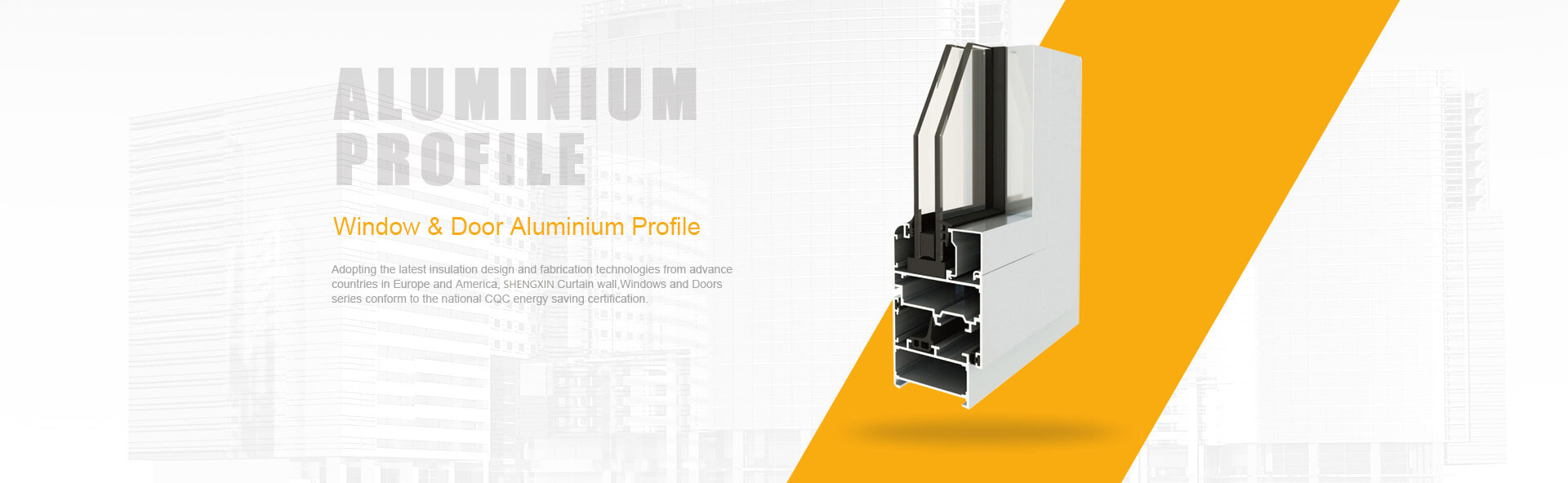
Start by checking whether the supplier can control the whole chain, not just the final finish. Ask about alloy experience, pretreatment control, masking methods, inspection tools, finish consistency, and how they protect tight-tolerance or cosmetic surfaces. Integrated capability can reduce risk because fewer handoffs usually mean better traceability. For example, a provider such as Shengxin Aluminium combines extrusion, CNC machining, anodizing, and powder coating in-house, which can be useful when profile production and finishing quality need to stay aligned.



 serviço on-line
 0086 136 3563 2360
 sales@sxalu.com
 +86 136 3563 2360
 português
 English
 français
 Deutsch
 русский
 español
 العربية
 ไทย
ไทย Việt
Việt Українська