Ask a simple question like how is aluminum made, and many people picture only one dramatic extraction step. The real answer is wider. Aluminium processing covers the full industrial route from raw source to finished component. For primary metal, that path begins with bauxite, an ore found in topsoil in many tropical and subtropical regions, then moves through refining, smelting, casting, and shaping. If you have searched aluminium vs aluminum, the spelling may change, but the industrial chain people mean is the same.
Aluminium processing is the complete set of steps that turns bauxite or scrap into usable aluminium products.
The Aluminum Association describes primary production as a sequence in which bauxite is chemically converted to alumina and then smelted into pure aluminum metal. The International Aluminium Institute presents the same core flow as mining, refining, and smelting. In everyday manufacturing, though, that is only the middle of the story. Metal still has to be cast and formed into something useful.
Each step changes both the material and its purpose. Ore is not alumina. Alumina is not metal. Freshly smelted metal is not automatically a finished product either. It may become ingot, billet, slab, sheet, profile, or a machined part depending on the route that follows.
| Stage | Input | Transformation | Output | Why the stage matters |
|---|---|---|---|---|
| Mining | Bauxite-bearing ground | Ore extraction | Bauxite | Supplies the main raw material for primary metal |
| Refining | Bauxite | Chemical processing | Alumina | Separates aluminium oxide from the ore |
| Smelting | Alumina | Electrolysis in a cryolite bath | Primary aluminium metal | Produces metal that can be cast and worked |
| Fabrication | Metal, ingot, billet, or slab | Casting and forming | Semifinished or finished products | Creates the shapes industry actually uses |
| Recycling | Aluminium scrap | Remelting and recasting | Secondary aluminium | Returns existing metal to service without starting from ore |
Primary production makes new metal from mined ore. Secondary production brings existing metal back into use. Both belong in any clear explanation of aluminum processing, because the route affects cost, energy demand, alloy control, and final form. Ahead, the article separates refining from smelting, looks closely at recycling, and compares rolling, extrusion, forging, and machining. First, the basic terms need sorting out, because bauxite, alumina, and aluminium are often confused.
If you search what is aluminum made of, the shortest honest answer is this: not from chunks of pure metal dug out of the ground. In nature, aluminium is usually locked inside minerals. Industry typically starts with bauxite, refines that ore into alumina, and only then makes metal. Those names sound similar, but they describe very different materials at different points in the chain.
Britannica and Geoscience Australia both describe aluminium as one of the most abundant elements in Earth's crust, yet rarely found in metallic form because it readily combines with oxygen and other elements. The main commercial source is bauxite, an aluminium-rich ore that commonly forms near the surface in strongly weathered deposits, often in warm, wet regions. That is why the mining of bauxite is usually done by open-pit or open-cut methods rather than deep underground mining.
A common source of confusion sits right here. Bauxite is not alumina, and alumina is not aluminium metal. Bauxite still contains unwanted materials such as iron oxide, silica, and titania, as noted by Britannica. So, what is bauxite ore used for in practice? Mostly as feed for alumina refineries, with smaller volumes going to abrasive, refractory, and other industrial applications.
| Raw material | Intermediate product | Downstream form | What changed |
|---|---|---|---|
| Bauxite-bearing ground | Bauxite ore | Crushed refinery feed | The aluminium-rich ore is extracted from the deposit |
| Bauxite ore | Alumina | White powder for smelting | Much of the impurity load is removed in refining |
| Alumina | Primary aluminium metal | Molten metal | Electrolysis separates aluminium from oxygen |
| Aluminium metal | Ingot, billet, or slab | Stock for rolling, extrusion, or remelting | The metal is cast into practical starting forms |
Seen this way, where does aluminium come from is really a chain question, not a one-step answer. Each name marks a real material change. The most important early shift happens in the refinery, where ore becomes alumina powder through chemical separation. That distinction matters, because refining and smelting are often treated as the same thing even though they do completely different jobs.
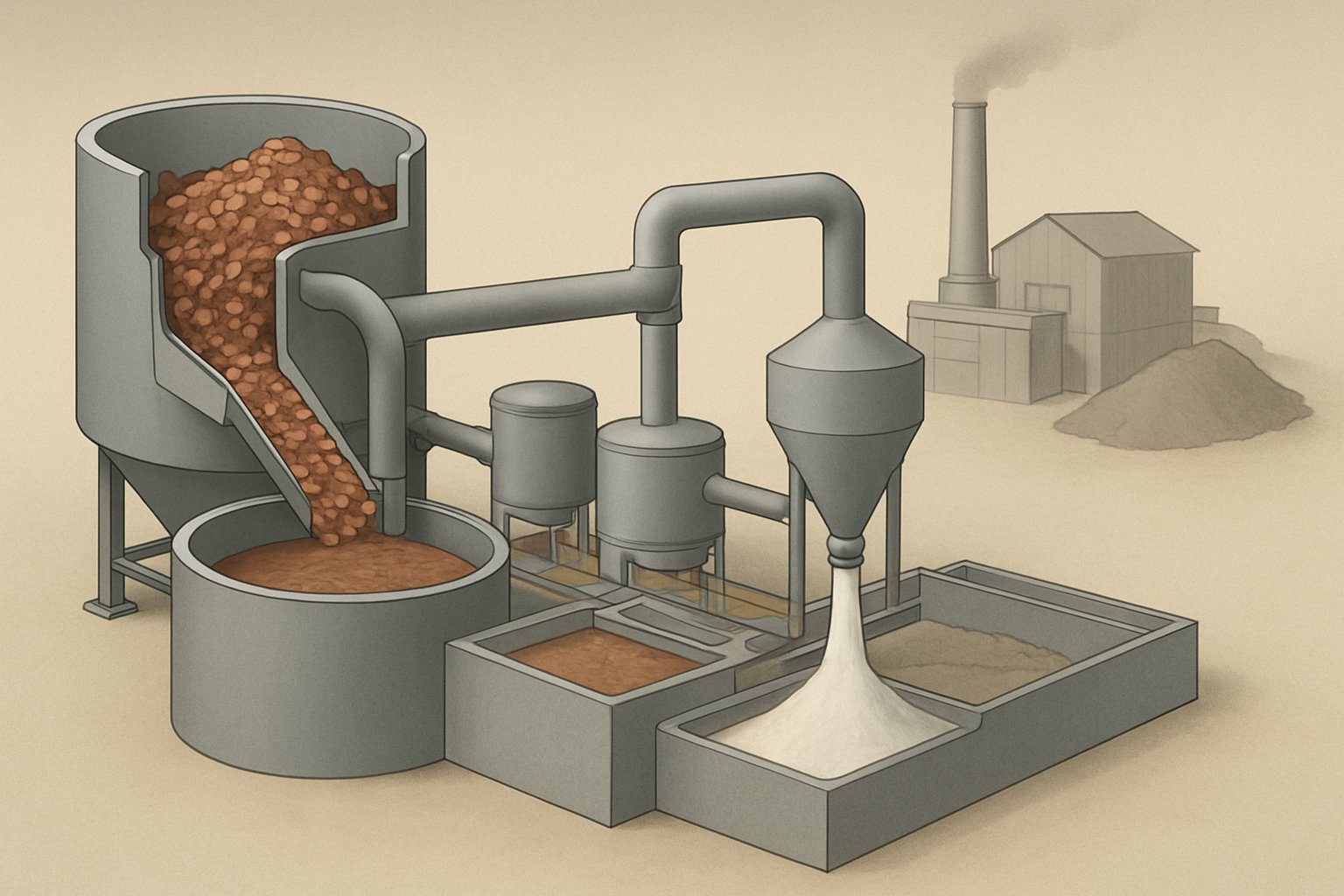
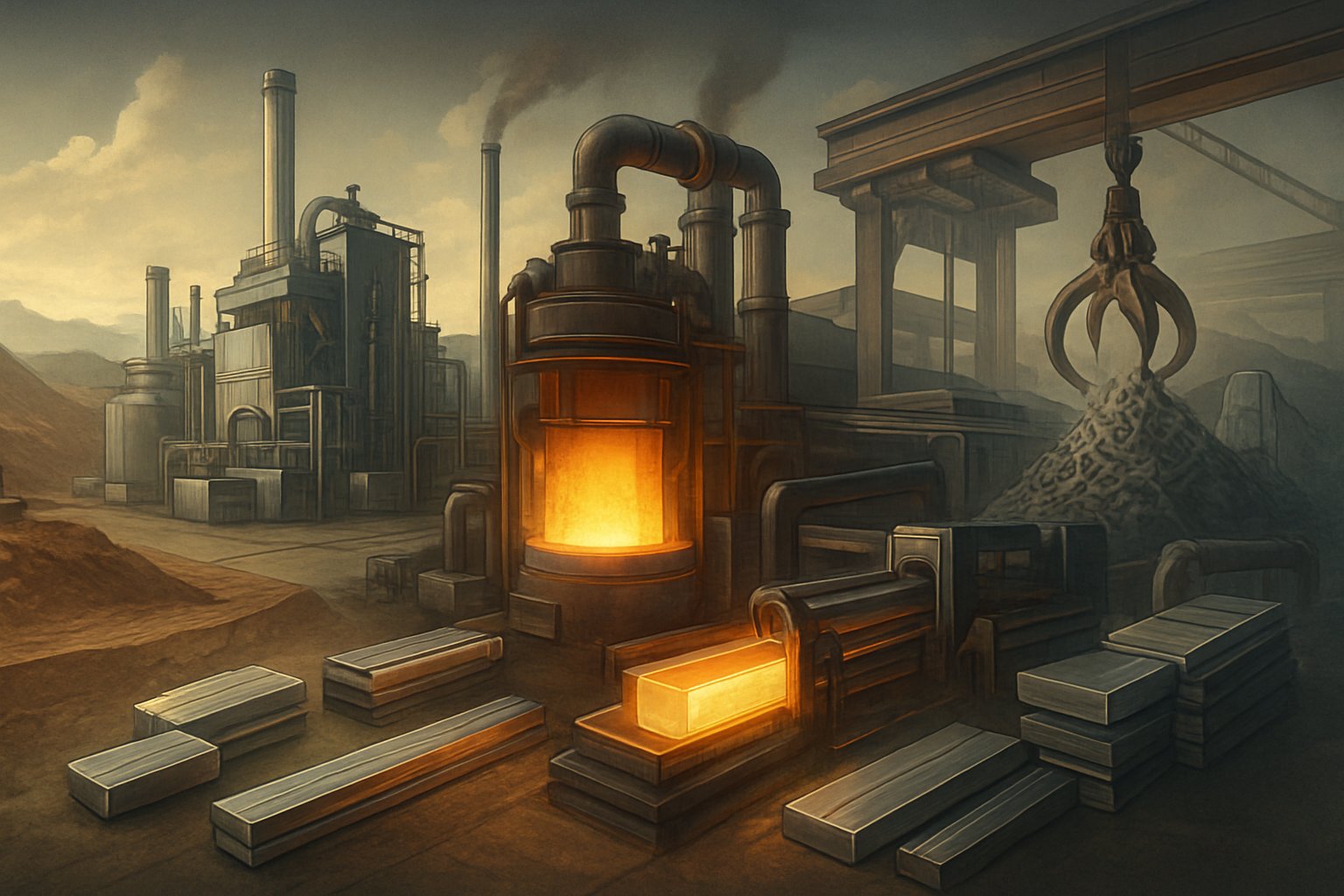
The sharpest material change in the early industrial chain happens inside the refinery. If you have wondered how is alumina produced, the answer is chemical separation, not metal extraction. The dominant industrial route is the Bayer process, which turns bauxite into alumina, a white oxide powder used as the feed for smelting. To picture bauxite into alumina, think of the refinery as a plant that dissolves what it wants, removes what it does not, and then rebuilds the product in a cleaner form. That is the core of the production of alumina.
The International Aluminium Institute describes the Bayer process as a controlled sequence of reactions. Bauxite is first washed and crushed, then mixed with liquor to form a pumpable slurry. Hot sodium hydroxide dissolves the aluminium-bearing minerals into a sodium aluminate solution, often called pregnant liquor. Insoluble residue is then removed, and the dissolved alumina values are recovered as crystals before final heating converts them into dry alumina.
| Step | Input | Key action | Output | Process purpose |
|---|---|---|---|---|
| Feed preparation | Bauxite | Washing, crushing, slurry making | Refinery feed slurry | Prepare ore for chemical extraction |
| Digestion | Slurry and sodium hydroxide | Dissolve aluminium-bearing minerals | Sodium aluminate liquor | Move useful chemistry into solution |
| Clarification | Digested slurry | Sedimentation, washing, filtration | Clear liquor and residue | Remove solids and recover caustic |
| Precipitation | Supersaturated liquor | Cooling and crystallization | Aluminium hydroxide hydrate | Recover alumina-bearing solid |
| Calcination | Hydrate | High-temperature drying | Alumina powder | Create smelter-ready oxide feed |
The industrial answer to how to make alumina is surprisingly methodical. The ore is not melted. Instead, the useful chemistry is dissolved, the unwanted solids are stripped away, and the product is re-formed as crystals. Refineries also recover and recycle part of the caustic liquor, so the process works as a chemical loop rather than a one-pass reaction. By the end, the material is still an oxide, not a metal.
This distinction matters because refining ends with alumina powder, while smelting begins with that powder and uses electrolysis to make primary metal. Red mud, the main refinery residue, also shows why the production of alumina is more than a simple conversion step. It has to be separated, washed, and managed at scale. The EPA notes that bauxite residue is caustic and can have high salinity and pH, which makes storage, treatment, and reuse important environmental concerns. So refining purifies and concentrates the oxide. The metallic aluminium people picture is still locked inside that powder, waiting for the electrochemical stage that follows.
Alumina leaves the refinery as a clean white powder, but the metal is still locked to oxygen. That is why the story cannot stop at refining. When people search how aluminium is extracted, they are usually asking about this stage: aluminum smelting inside an aluminium smelter, where alumina is turned into primary metal by electrolysis. The modern industrial route is the hall heroult process, more accurately written as the Hall-Héroult process. ACS identifies it as the breakthrough that made commercial aluminum production practical.
The basic idea is simple even if the equipment is demanding. Alumina is fed into a hot, carbon-lined cell, often called a pot. A powerful electric current passes through the bath and separates aluminum from oxygen. BBC Bitesize notes that alumina on its own has a melting point above 2,000°C, so smelters do not process it as a plain molten oxide. Instead, it is dissolved in molten cryolite, which lets the ions move freely and makes the electrochemical step workable.
Refining makes alumina. Smelting makes aluminium metal.
Cryolite is the working medium, not the product. It dissolves alumina so the current can do the separating. That is also why this step sits at the center of energy and emissions discussions. EIA describes primary aluminum production as highly electricity intensive, which is one reason smelter location has often access to large and reliable power supplies.
The main output is molten primary aluminium, ready to be cast into ingot, billet, or other starting forms for later fabrication. Off-gases from the anode reaction are another output that operations must manage. Those cast forms matter beyond the potline itself, because downstream mills, foundries, and extrusion plants can also begin with recycled metal. The material may look similar at that point, but the route behind it changes the economics, energy profile, and sourcing choices.
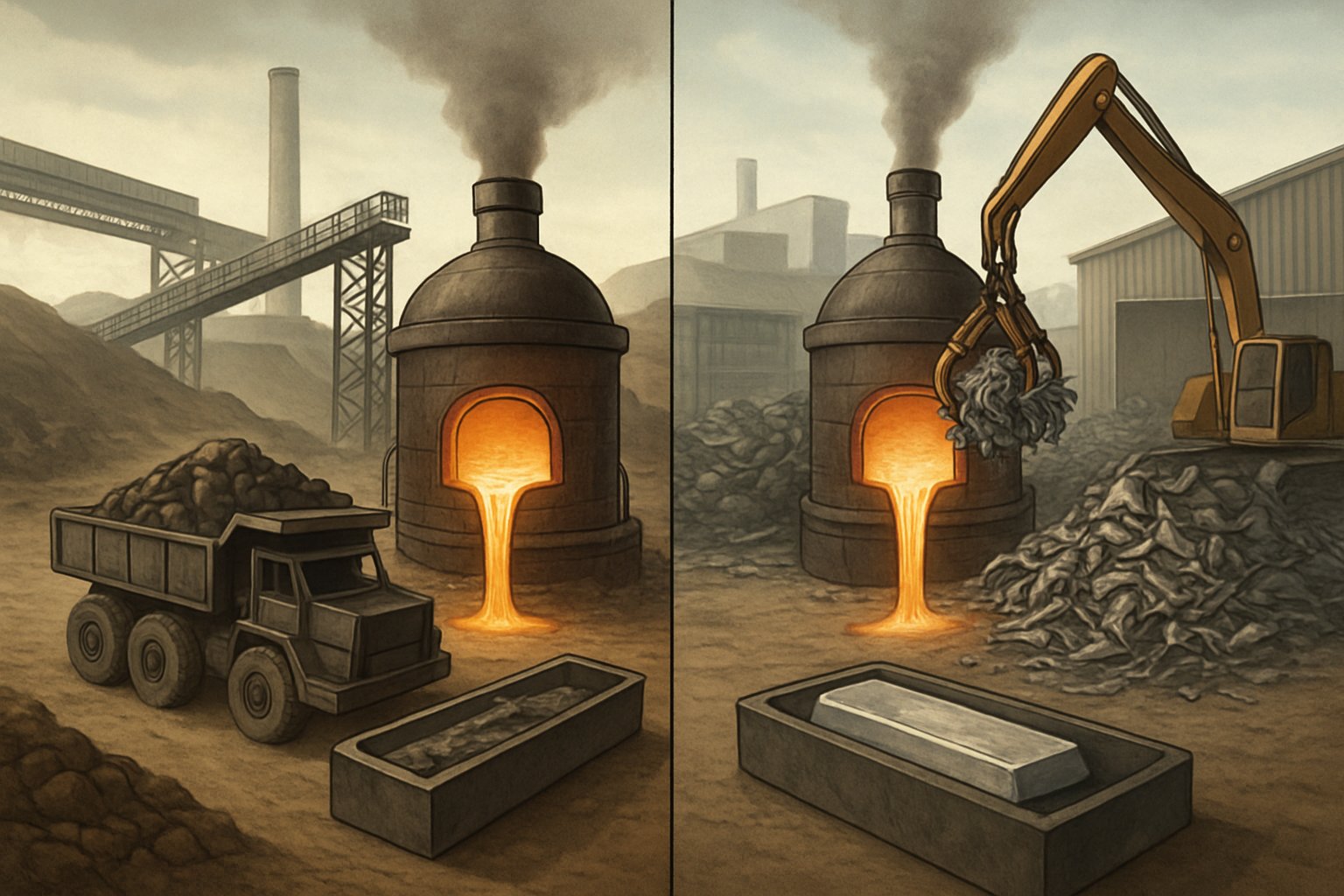
Molten metal tapped from a smelter is only one source of supply. A second route starts with yesterday's window frames, machining chips, cast parts, and beverage cans. In real aluminum production, both streams matter. A recent review notes that secondary aluminium already supplies over one-third of global demand, and life-cycle assessments indicate recycled metal can carry up to 95 percent lower emissions than virgin aluminium. That is why any practical explanation of how aluminium is produced needs to include recycled feed as well as ore-based metal.
The aluminium recycling process usually begins with scrap, not ore. Feedstock can come from post-industrial offcuts, production returns, or post-consumer products recovered at end of life. Most plants follow the same basic sequence:
Remelting remains the dominant route, although reviewed green-manufacturing research also describes direct and semi-direct recycling routes for some chip and deformation scrap streams. The goal is the same either way: turn variable scrap into a controlled metal supply that industry can trust.
Sorting is where secondary metal either keeps its value or loses it. Clean, well-identified scrap can return to higher-value applications. Mixed scrap is tougher, because small amounts of iron, copper, magnesium, zinc, coatings, or trapped non-metallic material can push chemistry away from the target alloy. That is why modern recyclers put so much effort into separation, traceability, cleaning, and thermal decoating before melting. Melt treatment and chemistry correction come after that, not before.
This also helps answer a common consumer question: are cans pure aluminum? Not exactly. Can scrap is highly recyclable and especially valuable in closed-loop systems, but it still has to be managed as a composition-controlled scrap stream rather than treated as perfectly pure metal. The same quality logic applies across secondary supply. Suitable scrap can produce excellent new stock, while poorly sorted scrap may force downcycling, tighter application limits, or extra refining effort. Melting also creates dross and, in some systems, salt-bearing residues that require proper handling.
| Comparison point | Primary route | Recycled route |
|---|---|---|
| Feedstock | Bauxite refined to alumina, then smelted into new metal | Post-industrial and post-consumer aluminium scrap |
| Major steps | Mining, refining, smelting, casting | Collection, sorting, cleaning or decoating, remelting or selected solid-state recovery, chemistry adjustment, recasting |
| Typical outputs | Primary metal cast into ingot, billet, slab, or foundry stock | Secondary metal cast into similar downstream stock forms when quality targets are met |
| Quality considerations | Strong control over purity and starting composition | Quality depends heavily on scrap segregation, contamination control, and melt treatment |
| Alloy flexibility | Useful when precise alloy design or low-impurity starting metal is required | Works very well when the scrap stream matches the target alloy family or can be adjusted economically |
| Sustainability context | More resource- and energy-intensive because it starts from ore and electrolysis | Usually far lower in emissions and energy demand when good scrap is available |
| When preferred | Chosen for purity, alloy control, or supply situations where scrap is limited | Chosen when suitable scrap exists, recycled content matters, and the application allows composition-managed secondary feed |
For sourcing decisions, the tradeoff is fairly straightforward. If you need the widest purity window, a clean alloy-design starting point, or supply that does not depend on scrap availability, primary metal may be the safer choice. If the scrap stream is suitable and the alloy target allows it, recycled metal often makes more sense on both environmental and commercial grounds. Once either route is cast into billet, slab, or ingot, the next question is no longer where the metal came from, but how it should be shaped.
Billet, slab, and ingot may look like simple stock forms, but they quietly decide what the metal can become next. In aluminum manufacturing, shape is not an afterthought. It is built through a forming route. The same metal can end up as foil, a window frame, a gearbox housing, or a wheel because manufacturers choose different ways to move, compress, or remove material. For anyone fabricating aluminum, that choice often has as much impact as the alloy itself.
The Aluminum Association describes the main routes in straightforward terms. Casting pours molten metal into a mold, so it is well suited to complex shapes. The rolling of aluminum reduces slab thickness through successive rolls, which naturally produces plate, sheet, and foil. Extrusion forces a heated billet through a die, making long parts with a constant cross-section. In aluminium forging, heated stock is pressed into shape, a route valued for parts that need strong fatigue and impact performance. Practical guides from Gabrian also note that extrusion offers broad profile flexibility with a smooth surface, while forging is often chosen where durability matters most.
Machining plays a different role. Instead of creating the bulk shape from scratch, it is often used after casting, rolling, extrusion, or forging to add final-fit features such as holes, faces, slots, and trimmed edges. That is why many real parts combine more than one process.
| Route | Starting stock | Shape freedom | Tooling intensity | Dimensional control | Common applications | Lead-time implications | Post-processing needs |
|---|---|---|---|---|---|---|---|
| Casting | Molten metal, often from ingot or remelt | Very high for complex 3D forms | Medium to high, depending on mold type | Moderate, often near-net shape | Housings, brackets, covers, intricate parts | Tooling setup can take time, but repeat production is efficient | Trimming, local machining, surface finishing |
| Rolling | Slab or sheet ingot | Best for flat products, limited for deep 3D geometry | High-capital mill route, efficient at scale | Good control for thickness-based products | Plate, sheet, foil, can stock, roofing | Strong fit for continuous volume, less flexible for small custom runs | Cutting, bending, stamping, coating, machining |
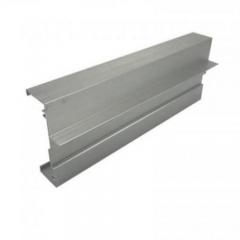
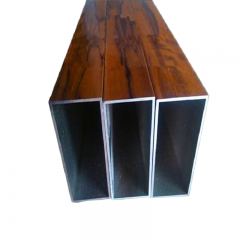
| Extrusion | Heated billet | High for constant cross-sections, including hollow profiles | Moderate, with economical die tooling for many profiles | Good on cross-section, final features often added later | Frames, rails, heatsinks, channels, structural profiles | Die preparation adds upfront time, then production is efficient | Cutting, punching, machining, bending, anodizing |
| Forging | Heated billet or slab | Moderate, best for compact high-integrity shapes | High, especially in closed-die work | Good, with closer control in closed-die than open-die | Wheels, pistons, gears, strength-critical parts | More setup-heavy, justified when performance matters | Trimming, machining, finishing |
| Machining | Plate, bar, extrusion, casting, or forging | High for local features, limited by tool access and stock size | Low dedicated tooling, higher machine-time demand | High for final features and fit | Precision faces, holes, pockets, trimmed parts | Fast for low volume, slower for heavy material removal | Deburring, finishing, inspection |
That stock-form logic explains why flat products usually follow rolling, while long shapes with the same profile from end to end favor extrusion. It also shows why many castings and forgings still go to machining before shipment.
One final point matters in sourcing. The best route is rarely the most dramatic process on paper. It is the one that gets the geometry, property profile, and factory workflow into balance. Different alloys of aluminum may push that decision in different directions, especially when finishing and precision work come later. Profiles are a good example, because extrusion is only the beginning of what many real parts need before they are ready for use.
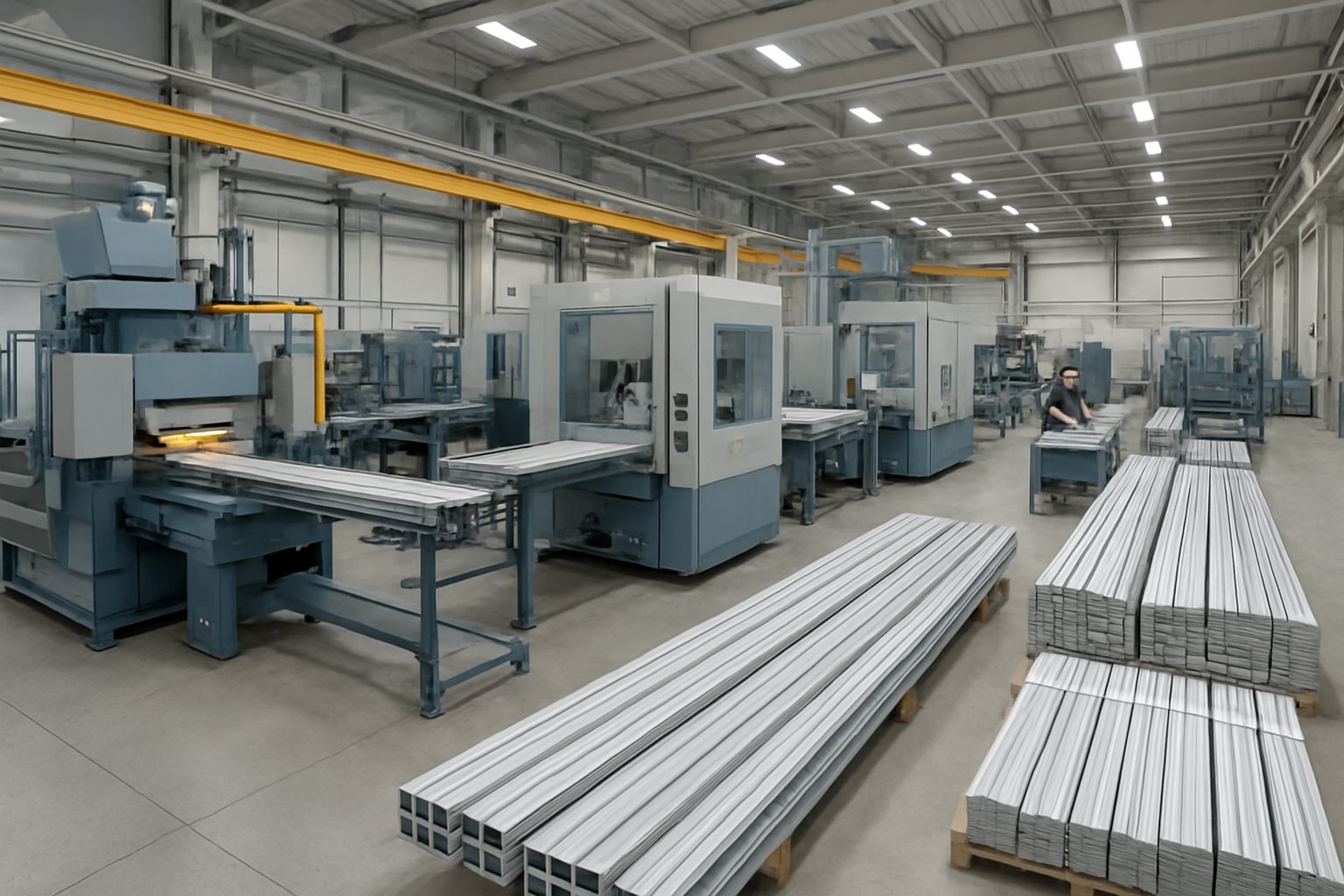
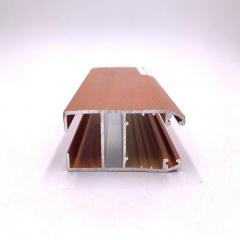
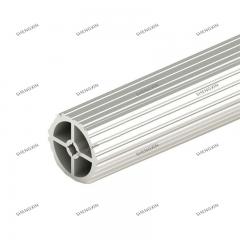
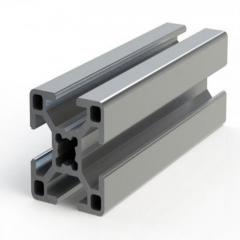
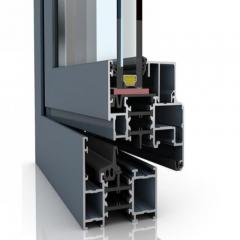
Profiles make the downstream chain easy to see. A fresh extrusion already has its core cross-section, but it is rarely ready for use straight off the press. It still may need cutting, holes, threads, surface treatment, inspection, and protected packing. That is the practical answer to how is aluminum manufactured into real components: extrusion creates the long shape, while post-extrusion work turns it into a part a customer can install. In a real factory aluminium setting, the press is only one station in a longer line.
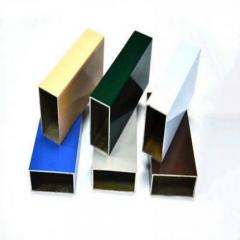
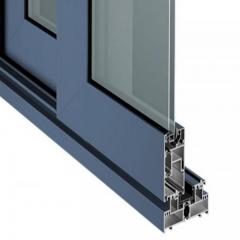
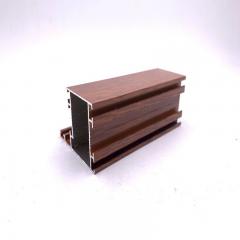
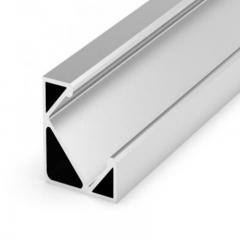
Extrusion is the handoff point between metal shaping and part completion. Common post-extrusion operations include sawing, deburring, punching, mitering, heli-coiling, assembly, anodizing, powder coating, and painting. That is why many things made from aluminium, such as window frames, heatsinks, rails, trims, and structural profiles, depend on far more than the die itself.
CNC machining adds local features that cannot run continuously through the die, like drilled holes, slots, tapped points, end cuts, and precision faces. Finishing then matches the service environment and visual target. Anodizing is often chosen when surface protection and appearance matter. Powder coating is common when color, weather resistance, or a specific decorative finish is required. Good manufacturers also inspect after these steps, because a profile that looks fine after extrusion can still fail on coating uniformity, dimensions, or handling damage before shipment.
| Processing setup | Typical in-house steps | Best fit | Operational effect |
|---|---|---|---|
| Shengxin Aluminium | Extrusion, CNC machining, anodizing, powder coating, polishing, hard anodized options; the project brief for this article also notes 35 extrusion presses and more than 30 years of experience | Custom architectural, industrial, and automotive-style profiles | Fewer handoffs and tighter coordination from profile to finished part |
| Extrusion-only model | Extrusion, then outside machining or finishing | Basic mill-finish sections or simpler jobs | Can work for straightforward orders, but adds transfer, scheduling, and finish-control risk |
This is where route planning becomes sourcing judgment. The same profile can be easy to extrude and still difficult to machine, finish, inspect, and deliver well, which is exactly why process knowledge matters when comparing cost, lead time, quality, and sustainability together.
At the buying stage, the real question is rarely just how aluminium is made. It is which route produces the right part with the right tradeoffs. Searches such as "how aluminum made," "where does the aluminum come from," and "how do you get aluminum" all point to the same practical issue: feedstock source and downstream manufacturing have to match the end use.
The best route depends on both material origin and the manufacturing steps that follow.
Some stages carry more environmental weight than others. The Aluminum Association notes that electric power accounts for about 20 to 40 percent of primary production cost, which is why smelting sits at the center of many decarbonization plans. The same source says the energy needed for North American primary production has fallen 27 percent since 1991, while carbon impact has declined 49 percent. Renewable-powered smelting, more recycled feed, tighter scrap sorting, and better handling of refinery byproducts all push the footprint lower. Another active frontier is inert anodes. Reporting from Canary Media shows industrial-scale trials are advancing, with oxygen released instead of the direct greenhouse gases produced by conventional carbon anodes. Digital optimization matters too, because steadier process control and fewer defects reduce waste across the chain.
For buyers, how aluminium is made becomes a sourcing filter. If you need plate, the route may point to rolling. If you need a custom profile with secondary operations, extrusion plus in-house machining and finishing often makes more sense. Ask simple but revealing questions: Who controls alloy selection? Where are finishing steps done? How many handoffs sit between extrusion, machining, coating, inspection, and shipment?
That is why integrated suppliers can be easier to evaluate. For readers applying these criteria to profile sourcing, Shengxin Aluminium is one example of an in-house model, with 35 extrusion presses plus CNC machining, anodizing, and powder coating under one roof. The point is not the brand alone. It is the process logic: fewer transfers, tighter quality control, and clearer accountability from raw material to finished part. Once you judge the route clearly, you usually make better decisions on cost, lead time, sustainability, and product performance.
Aluminium processing covers the full route from raw source to usable part. That can mean mining bauxite, refining it into alumina, smelting metal, casting stock forms, shaping them by rolling or extrusion, then adding machining and finishing. It also includes the secondary route, where scrap is sorted, remelted, and returned to service.
Bauxite is the mined ore. Alumina is the refined oxide made from that ore. Aluminium is the metal produced later from alumina through electrolysis. Keeping these terms separate matters because each one belongs to a different stage, with different equipment, costs, and environmental issues.
It is a two-stage industrial path, not a single extraction step. First, refineries use the Bayer process to separate alumina from bauxite. Then smelters use the Hall-Heroult process, or aluminum electrolysis, to turn that alumina into molten metal. After that, the metal is cast into forms such as billet, slab, or ingot for further manufacturing.
It can be, if the scrap stream is clean, well sorted, and properly adjusted for alloy chemistry. Secondary aluminium works especially well when recycled feed matches the target alloy family and the application allows strong composition control. Primary metal is still useful when buyers need a cleaner starting base, tighter chemistry control, or supply that does not depend on scrap availability.
For finished profiles, the press is only part of the job. Drilling, cutting, anodizing, powder coating, inspection, and packing often determine whether parts arrive ready to use. An integrated supplier can reduce handoffs and simplify accountability. Shengxin Aluminium is a relevant example of this model, with extrusion, CNC machining, anodizing, and powder coating combined in one in-house workflow for custom profile projects.



 serviço on-line
 0086 136 3563 2360
 sales@sxalu.com
 +86 136 3563 2360
 português
 English
 français
 Deutsch
 русский
 español
 العربية
 ไทย
ไทย Việt
Việt Українська