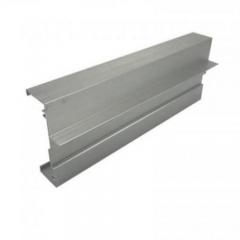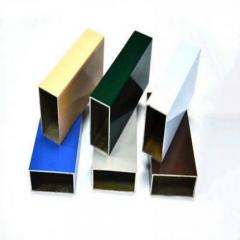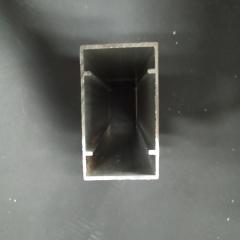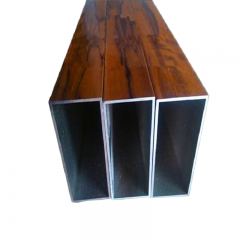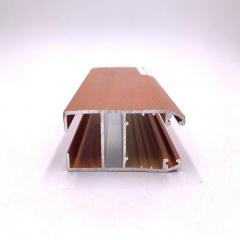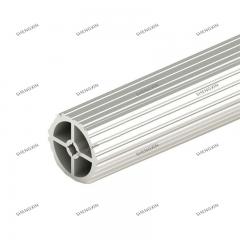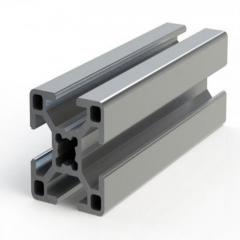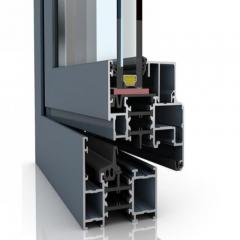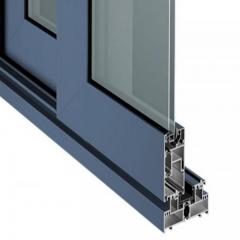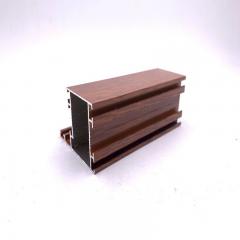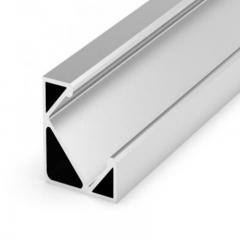
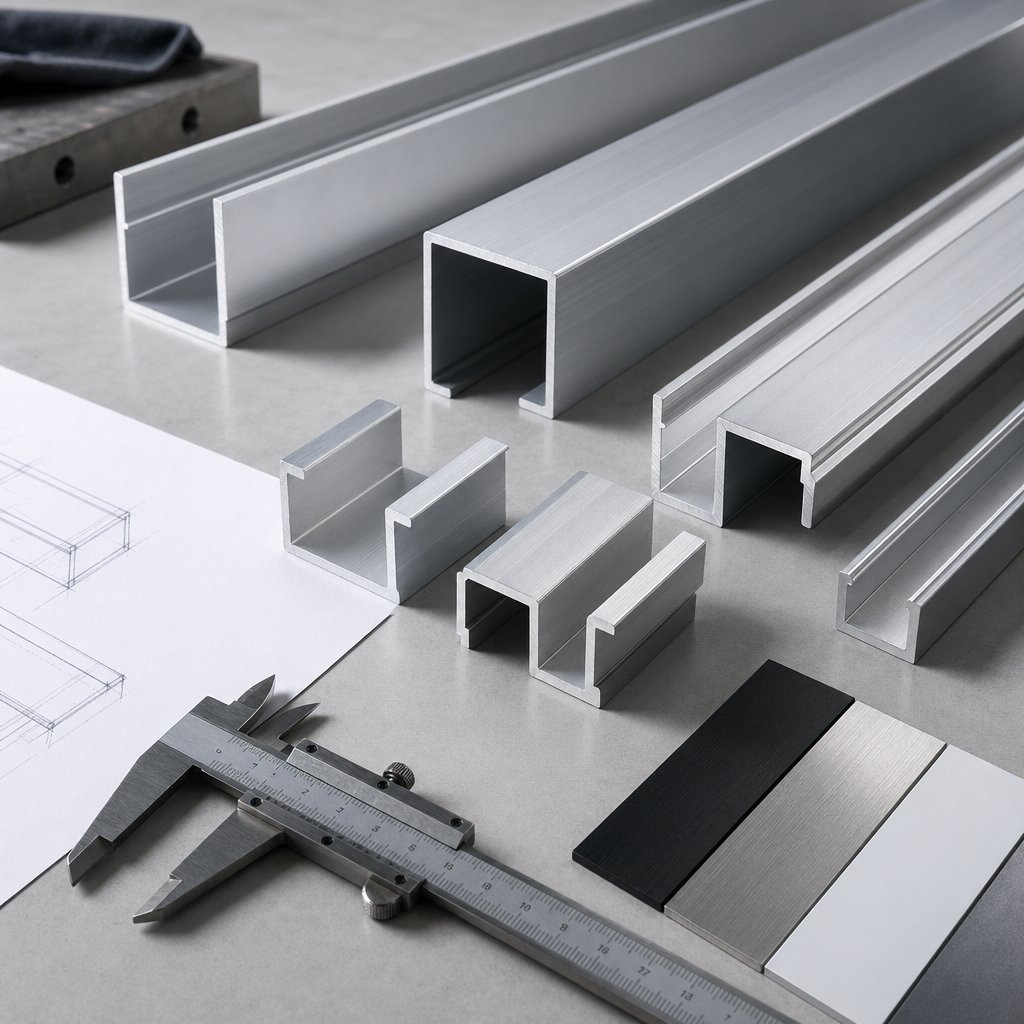
If you have ever looked at a parts catalog and wondered why one open profile costs more, fits better, or feels stiffer than another, the answer usually starts with the shape. An aluminium channel is a long profile with an open-sided cross-section, most often formed as a U or C. That shape is what gives it practical value.
An aluminium channel is an open-section metal profile, usually extruded, that combines light weight, useful stiffness, and a built-in space for holding, guiding, edging, or framing other parts.
In real projects, this profile is less about the letter shape and more about what it lets you do. It can protect a panel edge, frame a sign, guide a sliding piece, or create a neat mounting recess. Searchers often use both aluminium and aluminum as spelling variations, but this article will use the aluminium form consistently.
A flat bar is simply a strip. An extruded aluminium channel has depth, side walls, and a defined cavity. That cross-section helps the profile resist bending better than a flat strip of similar material and gives it a built-in fit feature for panels, glass, fasteners, wiring, or inserts. This is why the extruded aluminium channel is common in building, fabrication, and light industrial work. It is also why an aluminium profile channel can do jobs that plain stock cannot do neatly.
Not every open profile should be called the same thing. A channel usually holds, supports, or guides. Trim is more about edge finishing and appearance. A track is designed around movement or insertion. Structural profiles are chosen mainly for stiffness and load path. Those distinctions matter because aluminium channels cover several jobs, and many aluminium channel types look similar at first glance. One aluminium profile channel might behave like neat architectural trim, while another is better suited to mounting or support.
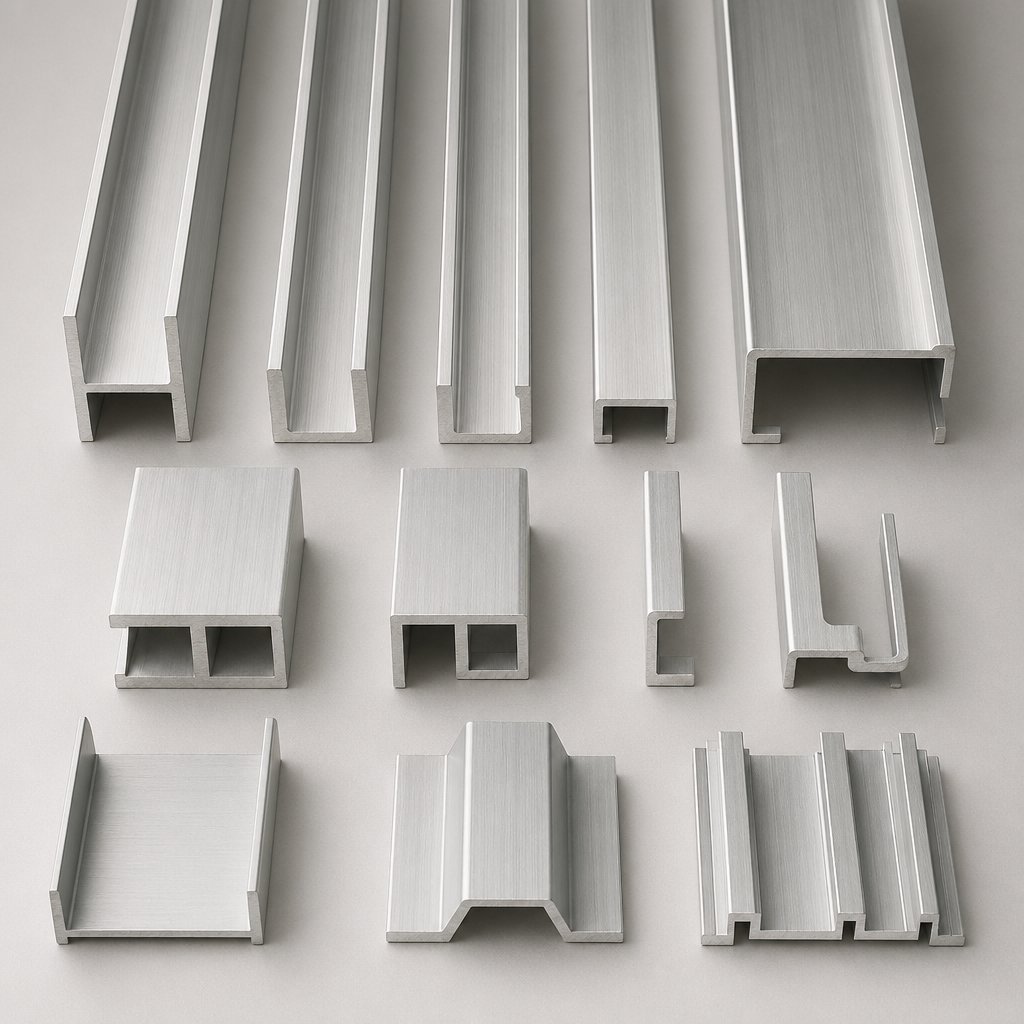
That is where many buying mistakes start. Two open profiles can look nearly identical in a catalog thumbnail, yet perform very differently when you try to edge a panel, mount hardware, or create a clean sliding path. Guidance from IQS Directory and Eagle Aluminum points to a fairly consistent pattern: U and J profiles lean toward edging and finishing, C profiles often handle framing and mounting, H profiles join panels, and hat sections are mainly for furring and support.
An aluminium u channel is usually the better fit when you need straightforward edging, containment, or a receiver for glass, panels, inserts, or trim pieces. Because the sides are typically parallel, the cavity is easier to match to mating parts. A u shaped aluminium channel also makes sense for light framing and simple guide paths where something needs to sit inside the opening.
An aluminium c channel usually shifts closer to framing, mounting, and light structural work. In real supplier listings, C sections may have different flange proportions, lips, or structural-style geometry. That gives them more flexibility for brackets, support members, and some aluminium track channel layouts, but it also means fit is not always as obvious from the outside shape alone.
An aluminium h channel is a joining profile first. It is commonly used where two panels, sheets, or glazing elements need to align in one continuous section, such as divider panels, window systems, curtain walls, and door framing. If the goal is to connect two edges neatly, H is often cleaner than trying to pair separate channels.
An aluminium j channel solves a different problem. It works well as an edge start, trim cap, or protective rim for exposed material edges. That makes it useful in siding, storefront details, and finish transitions where appearance and edge protection matter more than panel-to-panel joining.
An aluminium hat channel is best understood as a spacing and support profile, not a trim piece. Hat, or furring, sections are used to level walls and ceilings, create room for wiring or insulation, and support cladding or drywall. By contrast, a dedicated track profile is chosen around guided movement or insertion. In many cases, an aluminium track channel is really a U- or C-derived shape whose inner opening is the critical dimension. A second look at the u shaped aluminium channel family often reveals how many so-called track sections begin there.
| Profile family | Geometry | Typical use cases | Fabrication friendliness | Practical limitations |
|---|---|---|---|---|
| U channel | Open U with parallel sides | Edging, containment, glass or panel receivers, light guides | Simple to cut, drill, and match to inserts | Less ideal when mounting needs lips, offsets, or more structural-style geometry |
| C channel | Open section with web and flanges, often with varied lips or proportions | Framing, mounting, brackets, reveals, light support | Versatile for fastening and general fabrication | Catalog shape can be misleading if inside fit is critical |
| H channel | Center web with channels on both sides | Joining panels, glazing elements, divider systems | Efficient when two edges must align in one piece | Not meant for simple exposed-edge finishing |
| J channel | Hooked edge-finishing profile | Edge starts, trim caps, protective rims, siding transitions | Good for clean finishing details | Limited when true panel joining or deeper containment is needed |
| Hat channel | Raised center with outward flanges | Furring, leveling, cladding support, service space behind finishes | Useful for repetitive support layouts | Not a substitute for trim or close-tolerance receivers |
| Track style | Usually U- or C-based guide profile | Sliding systems, inserts, guided movement | Works well when paired with the right mating part | Inside width, wall thickness, and radius become critical very quickly |
The right family gets you close. Smooth installation depends on the smaller numbers hidden in the listing, such as inside width, leg height, wall thickness, and radius. That is where profile choice turns into specification reading.
Catalog pages can be deceptively simple. One listing highlights a 10mm aluminium channel, another offers a 1 inch aluminium channel, and both may be measuring something different. That is why aluminium channel sizes should never be read as a single number alone. A solid aluminium channel size chart is only useful when you know whether the stated figure refers to the inside opening, the outside width, the leg height, or just the stock length.
When buyers run into fit problems, the issue is usually not the profile family anymore. It is the wording around the aluminium channel dimensions.
Supplier listings usually describe the cross-section with a few recurring fields. In plain English, here is what each one means and what it changes in real installation work.
| Specification field | Plain-language meaning | What it affects |
|---|---|---|
| Leg height | The height of each side wall from the base to the top edge | Edge coverage, retention, and how deeply a panel or glass edge sits |
| Inside width | The usable opening between the inner faces of the legs | Fit for glass, sheet, LED strips, inserts, and mating parts |
| Outside width | The total width across the outer faces | Clearance inside another frame, reveal alignment, and visible proportions |
| Wall thickness | The thickness of the metal in the web and legs | Stiffness, weight, fastener grip, machining allowance, and internal clearance |
| Length | The cut or stock length of the profile | Waste, transport, span coverage, and fabrication planning |
| Corner radius | The inside or outside curve where faces meet | Whether square-edged parts, panels, or LED housings seat fully |
| Nominal size | The label used for selling or identifying the profile | How you compare listings, not necessarily the exact measured dimension |
| Tolerance wording | The allowed variation from the nominal dimension | Assembly accuracy, interchangeability, CNC work, welding prep, and consistency across batches |
Nominal size and actual size are not the same thing. The nominal size is the callout on the drawing or product page. The actual size is what you measure with calipers or a tape after production. Even with common aluminium c channel standard sizes, different suppliers may headline the inside opening, the web width, or the overall width first.
Inside width usually matters most when something has to slide, slot, or nest into the profile. That is critical for glazing, panel joinery, and LED applications. Wall thickness comes next because it changes both strength and available space. Leg height affects how securely the part is captured and how much edge is concealed. Outside width matters when the channel must fit within another assembly or align with a finished face.
Corner radius is the quiet troublemaker. Extruded profiles are not perfectly sharp at every internal corner, so a square-edged insert may bind even when the headline measurement looks correct. That is one reason aluminium c channel sizes can appear right on paper but still create headaches on the bench.
Extruded profiles always show some dimensional variation after extrusion, cooling, stretching, and finishing. A practical guide to tolerance standards notes that EN 755-9 is commonly used for general industrial extrusions, while EN 12020-2 is associated with tighter architectural and precision applications. That distinction matters when channels must align cleanly, machine consistently, or interchange across multiple batches.
Get the dimensions right and the profile fits. Get the alloy and finish right and that same piece behaves very differently in machining, welding, corrosion exposure, and final appearance.
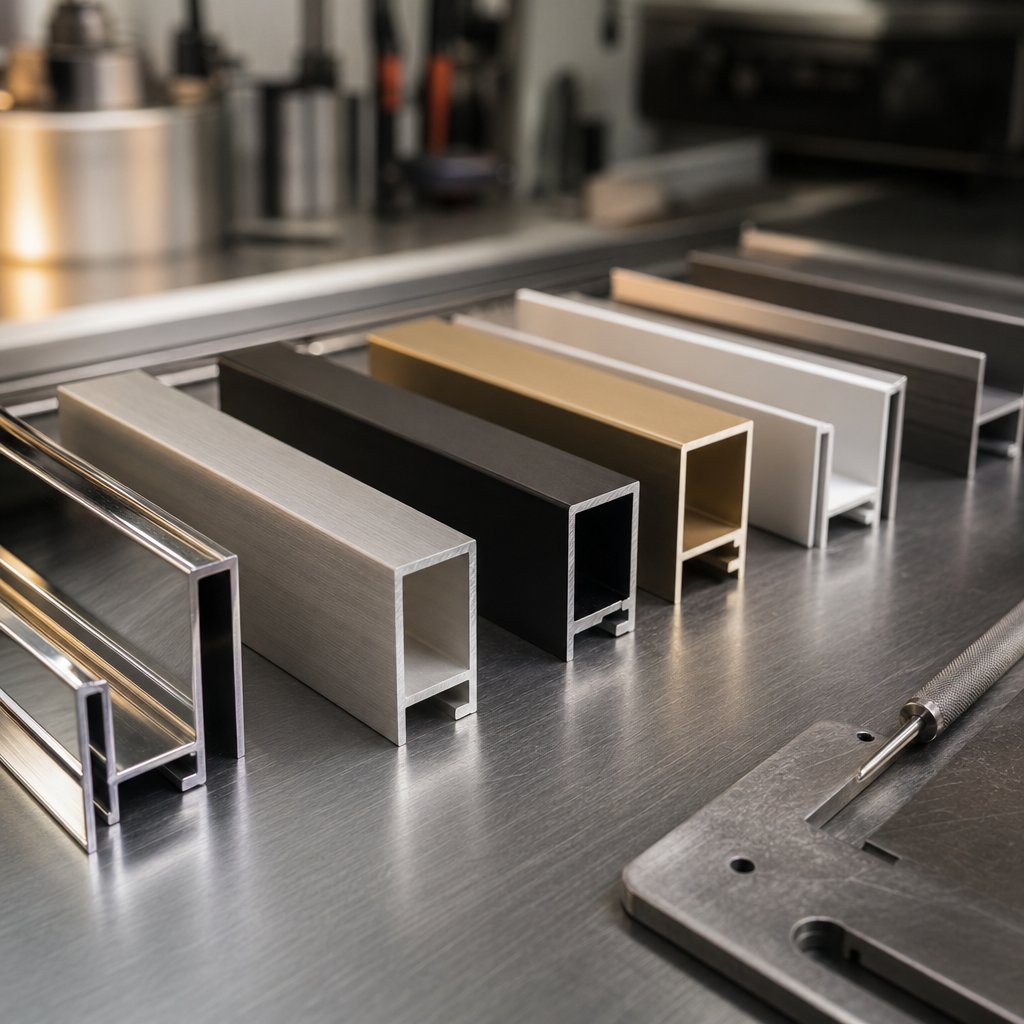
Dimensions tell you whether a profile will fit. Alloy and finish tell you how it will behave once it is cut, drilled, welded, or left on display. For an aluminium extruded channel, the most common fork in the road is 6061 versus 6063. Both are 6000-series aluminium-magnesium-silicon alloys with good corrosion resistance and weldability, but they are not interchangeable in practice. One leans toward strength and machining. The other leans toward cleaner extrusion quality and a better-looking surface.
6061 is usually the better call when the section has a more structural job to do or needs heavier fabrication. Eagle Aluminum lists 6061-T6 at at least 42,000 psi ultimate tensile strength and 35,000 psi yield strength, compared with 6063-T6 at 28,000 psi and 23,000 psi. That difference matters in support members, brackets, frames, and machined parts. If the channel will be milled, drilled, or tapped, 6061 also tends to be the easier choice.
This is the alloy people often choose when the profile is doing more than finishing an edge. A support rail or fabricated frame usually benefits more from 6061 than a purely visible aluminium trim channel.
6063 earns its place when surface quality and extrusion detail matter more than maximum strength. The same comparison from Eagle Aluminum, reinforced by Mill Steel, notes that 6063 is widely favored for architectural extrusions, window and door frames, signage, and decorative trims because it extrudes smoothly and presents a cleaner surface. That makes it a strong fit for visible profiles where crisp lines and finish quality matter.
If you are specifying a reveal, frame edge, or black aluminium u channel for a visible installation, 6063 is often the more forgiving starting point. It is also a natural fit for light-duty trim shapes that need attractive geometry rather than maximum structural capacity.
| Decision factor | 6061 | 6063 |
|---|---|---|
| Strength | Higher strength, commonly chosen for structural support | Lower than 6061, better for lighter-duty uses |
| Machinability | Better suited to drilling, milling, and tapping | Good, but usually selected less for heavy machining |
| Weldability | Excellent, though weld heat can reduce local strength | Excellent for many fabricated and architectural parts |
| Extrusion quality | Good for general shapes | Preferred for complex, smooth extrusions |
| Finish appearance | Serviceable, but less often chosen for premium visible faces | Smoother surface, especially attractive for anodized work |
| Typical channel use | Support members, frames, machined sections | Trim, architectural framing, signage, decorative profiles |
BRT Extrusions describes anodizing as an electrochemical process that creates a durable oxide layer, improving corrosion resistance and abrasion resistance while keeping a metallic look. Powder coating adds a cured protective layer and offers broader color, texture, and gloss options.
The alloy sets the baseline. The finish refines it. Those trade-offs become much more important when load, span, fastening, exposure, and fabrication steps enter the picture, because the same profile can feel overbuilt in one job and underbuilt in another.
A profile can fit perfectly on paper and still disappoint in service. The usual reason is simple: the real job is not just about dimensions, alloy, or finish by themselves. It is about how force, span, fixing method, and exposure interact with the shape once the part is installed.
Start with the job the section must do, not just the name in the catalog. The main load factors are alloy, temper, cross-section, wall thickness, load direction, and support condition. In practical terms, a deeper section usually resists bending better than a shallow one, and a shorter unsupported span usually behaves better than a longer one.
A channel can be strong enough not to break and still be too flexible for the job. Deflection is simply the amount it bends or sags in use.
That matters in the real world because excess movement can jam sliders, open gaps, crack sealants, or make a finished installation look poor even if nothing actually fails.
Moisture, salt, cleaning chemicals, and visible-surface expectations can change the best choice quickly. So can fabrication. If the design needs cutting, drilling, tapping, or welding, think about those steps before ordering stock. The same welding guidance that makes 6xxx extrusions attractive also comes with a caution: the heat-affected zone near a weld can lose strength, so a neatly welded part is not automatically a structurally optimized one.
If the priority is wire routing and cover, an aluminium cable channel may be the clearer specification than a general structural profile. If repeated fastening positions are central to the build, keep the same questions in mind when reviewing an aluminium strut channel or an aluminium slotted channel. And if a buyer is searching for an aluminium square channel, the better answer may actually be a square tube if closed-section stiffness is the real need.
The open side is what makes this profile useful, but it is also its limit. It shines when you need access, edging, guidance, or a receiver for another part. It is less ideal when you need more balanced stiffness, a sealed section, or very low visible movement. In those cases, a modular aluminium t channel system, a square tube, or a dedicated track may outperform a standard open section.
If the part supports people, glass, guarding, machinery, or a long cantilevered span, treat the catalog as a starting point only. Use supplier section-property data when available, or get an engineering review.
The best final check is to place the profile back into its actual use case. A lighting trim, a glazing base, a sliding guide, a sign frame, and an equipment guard can all start with channel geometry, but each one rewards a different mix of stiffness, finish, fit, and assembly logic.
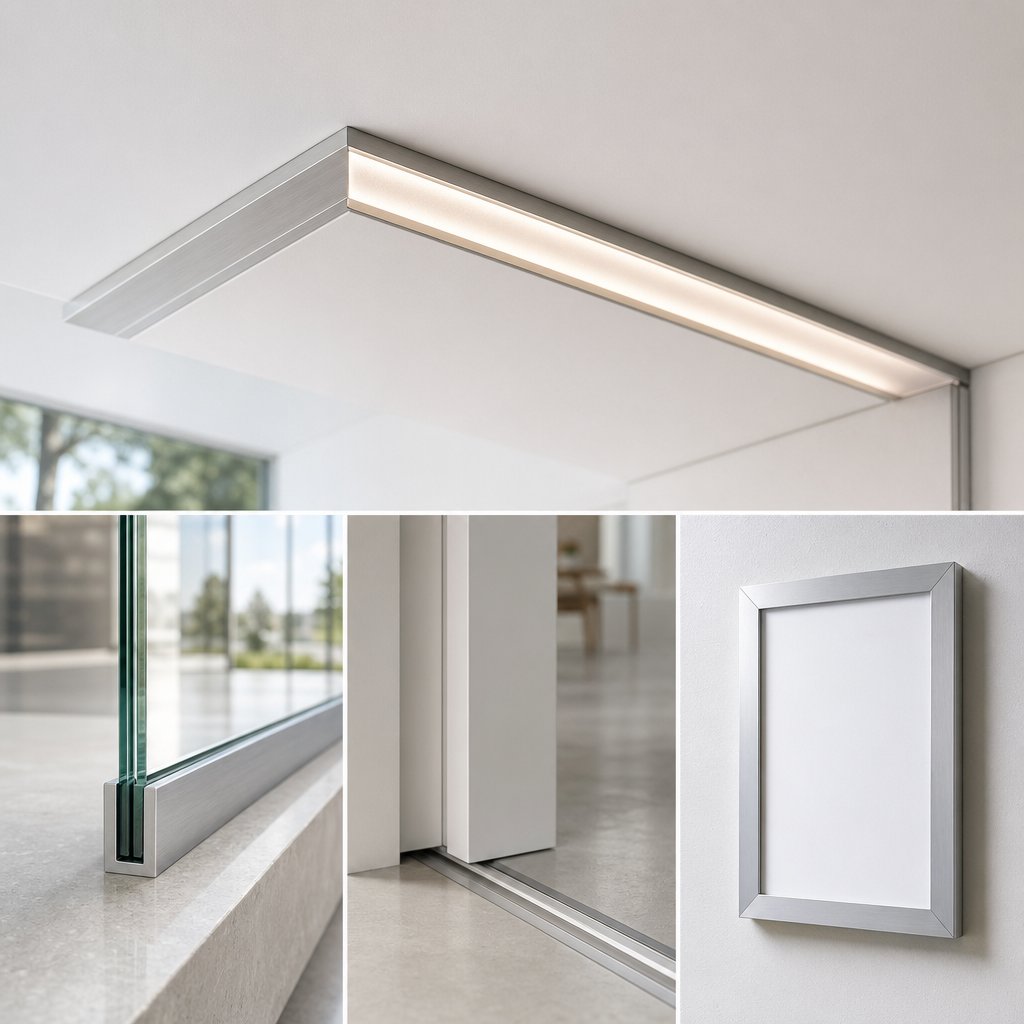
Selection becomes much easier when the profile is tied to a real use case. The same open section can act as trim, a glass receiver, a lighting housing, or a guide track depending on the installation. Use patterns shown by PTSMAKE and Quality Glass Fittings are fairly consistent: lighting favors channels that can help dissipate heat, glazing favors precise U-sections with gaskets or packers, and sliding systems depend heavily on straightness and fit.
For visible trim work, simple U, J, and small architectural C profiles are often the most practical choice. They give a clean edge, protect panel faces, and are easy to finish attractively. In lighting, an aluminium channel for led strip lighting usually does more than hide the tape. It also serves as a rigid housing, and in many fixtures the metal body helps move heat away from the LEDs, which is one reason PTSMAKE highlights channel extrusions in LED housings and heat-management applications.
If you are comparing an aluminium led strip channel, an aluminium strip light channel, or an aluminium channel for strip light, focus on four fit points: strip width, diffuser compatibility, mounting style, and whether the channel will be recessed, surface-mounted, or suspended. For decorative or highly visible installs, smoother architectural-grade extrusions and anodized finishes usually make more sense than raw mill finish.
Glass work is less forgiving. A true aluminium glazing channel has to match the actual glass thickness, gasket system, and mounting detail. In supplier examples, U-channels for glass commonly support 8 mm, 10 mm, and 12 mm toughened panels, while heavier sections are used for thicker or laminated assemblies, as shown by Quality Glass Fittings. That is why an aluminium glass balustrade channel should never be chosen by appearance alone. For guard or balustrade work, the profile must suit the engineered system, not just the glass edge.
Sliding applications are similar. An aluminium sliding door channel may be U- or C-based, but the real make-or-break details are inside clearance, wheel or guide compatibility, and straight installation. A nice-looking profile with the wrong opening or poor alignment will not slide nicely for long.
In signage, channels are often chosen for frame edges, cabinet reveals, and support parts behind aluminium channel letters. Finish consistency usually matters more than maximum strength. Industrial framing and guarding shift the priority. There, structural-style C channels and heavier extrusions are more common because they are easier to mount, drill, and integrate into machine frames or protective barriers.
| Application | Likely profile family | Finish and alloy priorities | Typical sourcing path |
|---|---|---|---|
| Architectural edging and trim | U, J, light architectural C | Clean surface, anodized or powder coated appearance, often 6063-type priorities | Stock architectural profiles are often enough |
| LED strip lighting | Shallow U or dedicated lighting channel with diffuser slot | Good surface finish, heat-dissipating metal body, visible-face finish matters | Stock lighting profiles for common strip sizes, custom when recess or lens details are unusual |
| Showers, partitions, and interior glazing | Standard, slim, heavy-duty, or dry-glaze U-channel | Corrosion-resistant finish, gasket compatibility, neat cleanable surfaces | Glazing-system suppliers or application-specific stock |
| Balustrade glass support | Base or heavy-duty glazing channel | Outdoor durability, system compatibility, engineered performance before aesthetics | Engineered glazing or balustrade systems rather than generic trim stock |
| Sliding doors and partitions | Track-style U or C | Straightness, wear considerations, finish suited to visibility and contact | System-matched track profiles, sometimes stock if hardware is standard |
| Signage and channel letters | Trim U, C, and custom sign sections | Consistent color and surface quality, often appearance-led | Stock trim for simple frames, custom extrusion for branded or complex shapes |
| Industrial framing and guarding | Heavier C or structural-style channel | Machining friendliness, durable finish if exposed, strength ahead of cosmetics | Stock structural profiles or custom fabricated extrusions |
By the time the application, finish, and joining method are pinned down, the shortlist usually narrows on its own. What remains is a practical sourcing question: whether a standard stocked section will do the job cleanly, or whether the project really calls for a custom extrusion.
By this stage, the profile shortlist is usually small. The bigger variable is where you buy it. Searches such as aluminium channel home depot, aluminium channel for sale, or aluminium channel near me usually signal a stock-buying need: a common section is needed quickly. Guidance in standard vs custom profiles keeps the choice fairly simple. Standard sections are fixed, readily available, and generally more cost-effective because they avoid new die costs. Custom extrusions take longer and carry higher upfront tooling expense, but they are built around specific application requirements.
Stock material is often the right answer when the shape is common, the timeline is tight, and small compromises in geometry will not hurt performance. That covers many trim, framing, enclosure, and repair jobs. If your search looks more like aluminium c channel near me or aluminium channel suppliers near me, you are probably shopping for standard stock. It is also easier to compare aluminium c channel price across sellers when the alloy, temper, finish, and cut service are truly equivalent.
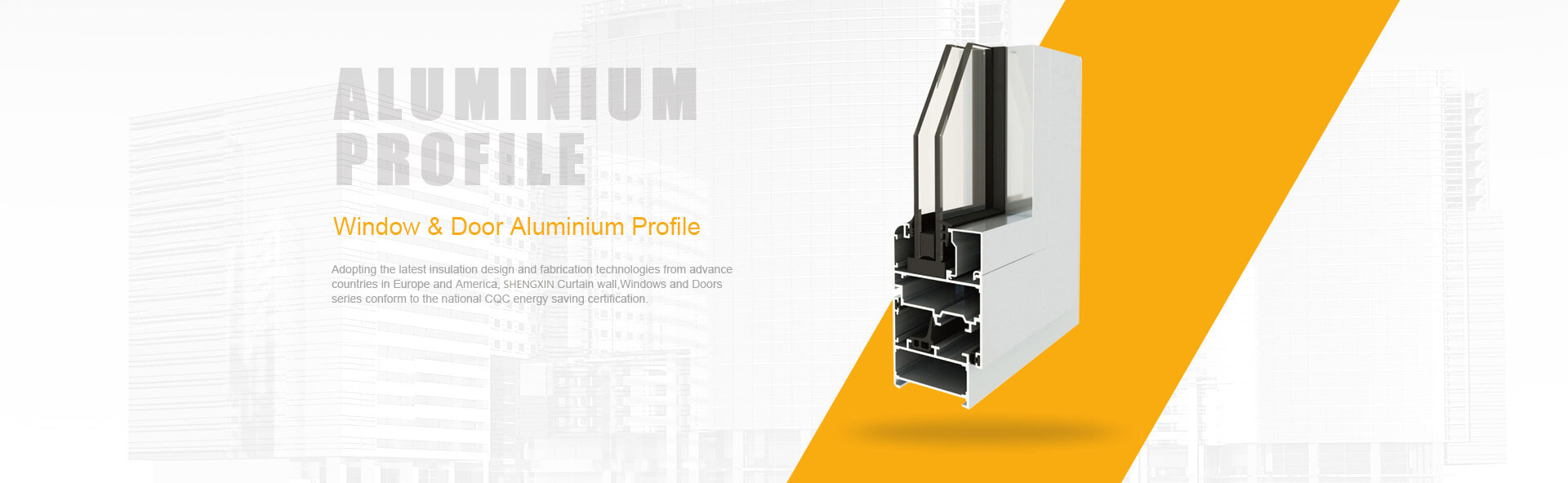
Custom becomes worthwhile when catalog shapes create too much rework or do not fit the assembly cleanly. The same reference notes that custom profiles are useful when a project needs precise dimensions, unique geometry, specialized functionality, or better project-fit than a standard section can provide. That may mean a tailored wall thickness, an application-specific cross-section, or better repeatability across multiple batches. For architectural and industrial work that needs both custom geometry and finish flexibility, Shengxin Aluminium is one practical resource, offering custom extrusion profiles with anodizing and other finish options.
| Comparison factor | Stock purchasing | Custom extrusion |
|---|---|---|
| Geometry and size | Limited to existing catalog shapes and fixed dimensions | Tailored to exact project requirements |
| Availability | Usually faster because profiles already exist | Longer lead time due to design, die creation, and setup |
| Upfront cost | Lower, with no new die expense | Higher at the start because tooling is required |
| Dimensional precision for fit | Good for general use if the standard profile matches closely | Better when exact fit or specialized function matters |
| Finish planning | Often depends on what is already stocked | Can be specified as part of the custom project, including anodized options from some suppliers |
| Project-fit considerations | Best for common applications and urgent replacement needs | Best for unique assemblies, optimized fabrication, and repeat programs |
Clear answers make conversations with aluminium channel suppliers much easier. Once the buying route is settled, the remaining risk usually sits in the order details themselves, which is why the final step is a clean specification and ordering checklist.
The profile is chosen. The supplier list is short. What prevents expensive surprises now is a clear order package. For stock or custom aluminium channel profiles, the aim is simple: make the supplier, fabricator, finisher, and installer work from the same assumptions. That matters even more when the part becomes a visible trim line, an aluminium frame channel, or an aluminium channel frame with multiple joined lengths.
Put these details in one marked drawing, PO note, or fabrication sheet before you buy.
Finishing changes more than color. Powder coating adds build, and anodizing still needs careful handling after cutting or drilling. If the profile forms an aluminium channel frame around glass, signage, or panels, mark visible faces on the drawing and agree on acceptable surface quality before production.
When stock sizes force awkward compromises, custom extrusion can reduce rework. If you need tailored aluminium channel profiles, anodized durability, or wider finish options for architectural or industrial work, Shengxin Aluminium is one practical source to review. Their catalog includes custom aluminum extrusion profiles suited to lightweight, corrosion-resistant applications.
A clean specification sheet usually decides whether installation feels routine or frustrating. Small details on paper save the most time in the field.
Aluminium channel is commonly used for edging panels, framing signs, guiding sliding parts, holding glass, housing LED strips, and creating light support members. Its open shape gives you a built-in space for another part while keeping the section relatively light and corrosion resistant. The right application depends on whether you need trim, a track, a receiver, or a more structural mounting profile.
An aluminium U channel is usually the simpler fit when you need a clean cavity for a panel, insert, glass edge, or trim detail. A C channel is often better for mounting, framing, and light support because its flange shape can offer more flexibility for fastening and brackets. If fit matters more than appearance, compare the true inside opening, wall thickness, and corner radius instead of relying on the letter name alone.
Start by checking what the listed size actually refers to, because one supplier may lead with inside width while another highlights outside width or leg height. Then confirm wall thickness, length, and corner radius, since all three can affect how well glass, LED strips, fasteners, or panels sit in the profile. When the fit is close, tolerance notes are just as important as the headline size.
6061 is usually the better choice when the channel will be machined, drilled heavily, or used more like a support member. 6063 is often preferred for architectural and decorative work because it extrudes with cleaner lines and typically gives a more refined finished surface. After alloy selection, finish still matters, with anodizing and powder coating affecting both appearance and long-term durability.
Stock aluminium channel is usually the practical option when the profile is common, the job is time sensitive, and a standard section fits without much rework. Custom extrusion makes more sense when you need a special cavity, tailored wall thickness, controlled finish quality, or repeat consistency across larger projects. For architectural and industrial work that needs custom geometry plus anodized or other durable finishes, suppliers such as Shengxin Aluminium can be a useful option alongside standard stock sources.



 serviço on-line
 0086 136 3563 2360
 sales@sxalu.com
 +86 136 3563 2360
 português
 English
 français
 Deutsch
 русский
 español
 العربية
 ไทย
ไทย Việt
Việt Українська