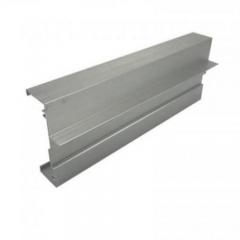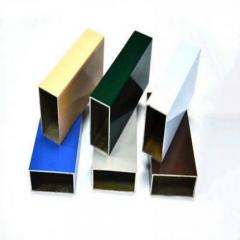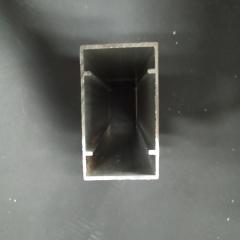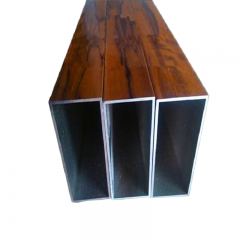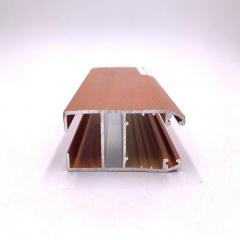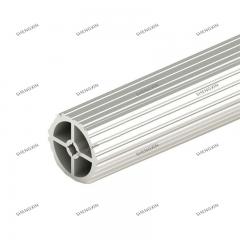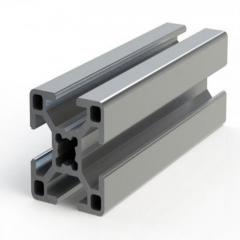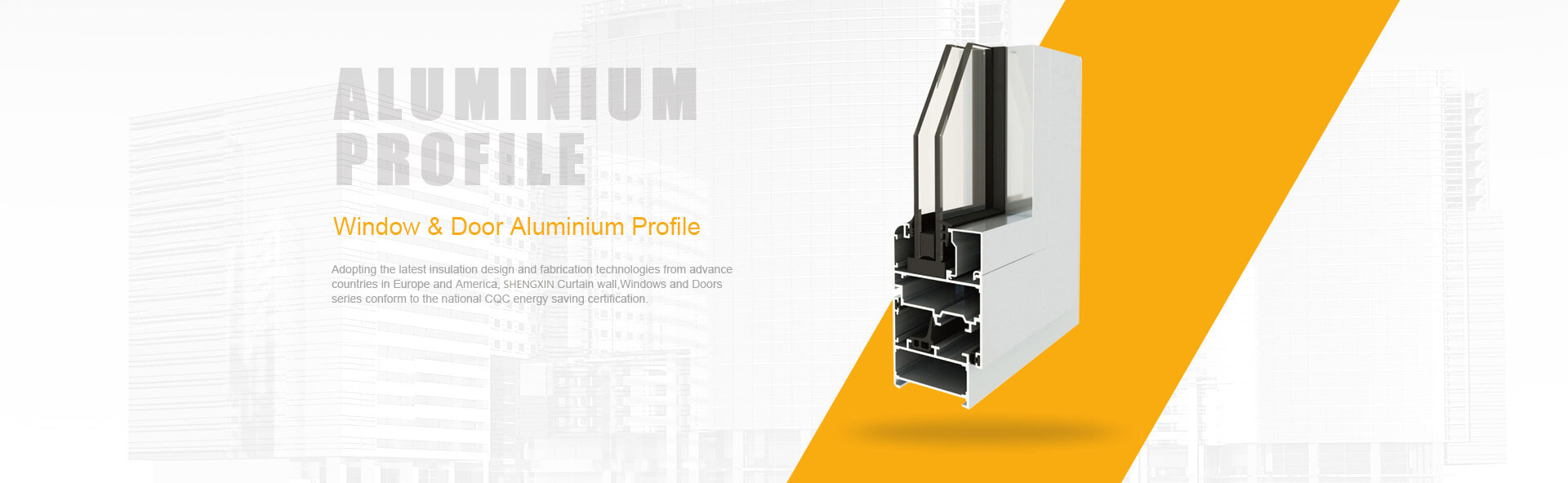
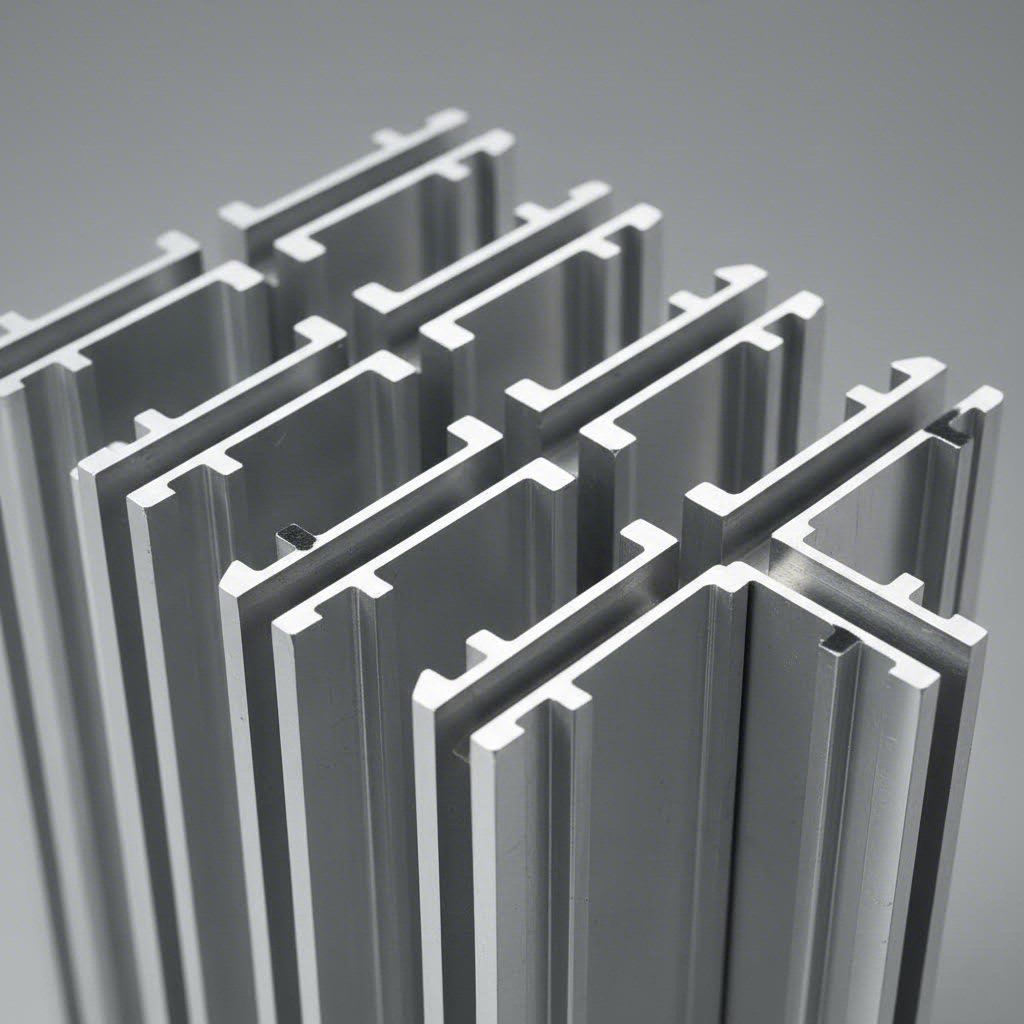
Ever wondered what those sleek, rectangular metal bars are that hold together industrial machines, workstations, and automation systems? You're looking at 80x40 aluminum extrusion—a rectangular T-slot profile measuring exactly 80mm by 40mm in cross-section. Think of it as a high-strength building block designed for engineers and builders who need something stronger than square profiles but more economical than heavy-duty options.
This profile belongs to the 40 series family, meaning its T-slot grooves are compatible with standard 40-series hardware and accessories. The 2:1 aspect ratio isn't arbitrary—it creates directional strength advantages that make this extrusion ideal for applications where loads come primarily from one direction.
At its core, an 8040 aluminum extrusion starts as a solid billet of aluminum alloy—typically 6063-T5 or 6063-T6. This alloy offers an excellent balance of extrudability, surface finish quality, and structural strength. The "T5" or "T6" designation refers to the tempering process, where the aluminum undergoes specific heat treatments to achieve optimal mechanical properties.
Here are the key characteristics that define this profile:
The magic of T-slot design lies in its simplicity. Imagine a channel shaped like an inverted "T" running continuously along the profile's length. This precisely shaped groove captures the head of a T-nut or specialized bolt head, allowing it to slide freely until you tighten it down. Once secured, the fastener locks firmly against the slot's shoulders.
According to industry specifications, the modulus of elasticity for these aluminum profiles is approximately 70,000 N/mm², providing predictable performance when calculating deflection under load. This consistency means you can design with confidence, knowing exactly how your structure will behave.
For 4080 aluminum extrusion, the slot width typically measures 8mm or 10mm, depending on the manufacturer. This dimension determines which fasteners and accessories you'll need—a critical detail when planning your project.
Why choose 80 x 40 instead of a simple square profile? The answer comes down to directional strength. When you orient the 80mm dimension vertically, you gain significantly greater resistance to bending in that plane. This makes the profile perfect for applications like vertical supports, machine frames, and overhead structures where loads primarily push downward.
The rectangular shape also offers practical advantages. You get more mounting surface area along the 80mm faces while maintaining a slimmer footprint in the perpendicular direction. This proves invaluable when space is tight but strength requirements remain high.
Consider this: doubling a profile's dimension dramatically increases its moment of inertia—the property that determines stiffness. An 80x40 profile offers substantially more rigidity along its major axis compared to a 40x40 square profile, yet costs less and weighs less than an 80x80 option. It's the middle-ground solution that smart engineers reach for when balancing performance against budget.
Sounds confusing when you see the same profile listed as "4080," "8040," "40x80," or even "E40-4080-C"? You're not alone. The aluminum extrusion industry uses multiple naming systems, and understanding them saves you from ordering the wrong parts. Let's decode these conventions so you can navigate supplier catalogs with confidence.
Here's the good news: 4080 and 8040 refer to the exact same profile dimensions. Both describe an extrusion measuring 40mm by 80mm. The difference lies in which dimension gets listed first, and this often indicates orientation preference or simply reflects manufacturer convention.
When you see "4080 extrusion," the manufacturer typically lists the smaller dimension first (40mm) by the larger (80mm). Conversely, "8040" places the larger dimension first. Some suppliers use this ordering to suggest the intended mounting orientation—whether the 80mm face should run horizontally or vertically in your application.
You'll also encounter variations like "40x80" and "80/40" that mean the same thing. Don't let the separators—whether "x," "/," or "-"—confuse you. They're purely stylistic choices that vary between regions and manufacturers.
Beyond the dimension-based names, you'll encounter series designations like "Profile 8" or "Series 40." These numbers carry critical information about compatibility.
According to 80/20's naming convention guide, the series number refers to the specific product line and indicates the T-slot width. For metric profiles, common series include:
When you see a name like "Profile 8 80x40," it tells you two things: the slot width (8mm) and the overall dimensions (80mm by 40mm). This information determines which T-nuts, brackets, and accessories will fit your extrusion.
Different manufacturers add their own prefixes and suffixes to distinguish product variations. A designation like "E40-4080-C" might indicate a specific groove configuration or surface treatment unique to that supplier.
The table below breaks down common naming formats you'll encounter when sourcing 4080 aluminium extrusion:
| Naming Convention | Meaning | Common Usage Context |
|---|---|---|
| 4080 / 8040 | Dimensions in mm (40x80) | Universal shorthand across suppliers |
| 40x80 / 80x40 | Explicit dimensional format | Technical specifications and catalogs |
| Profile 8 80x40 | 8mm slot width, 80x40mm profile | European manufacturers |
| 40-4080 | Series 40, dimensions 40x80 | North American suppliers |
| E40-4080-C | Economy series, 40x80, closed groove | Manufacturer-specific product lines |
The key takeaway? Always verify two things before ordering: the actual dimensions in millimeters and the slot width for hardware compatibility. If a supplier lists "4080 extrusion" without specifying the series, ask whether the slots measure 8mm or 10mm wide. This single detail determines whether your planned accessories will fit properly.
Now that you understand what the names mean, let's examine the technical specifications that determine how these profiles actually perform under load.
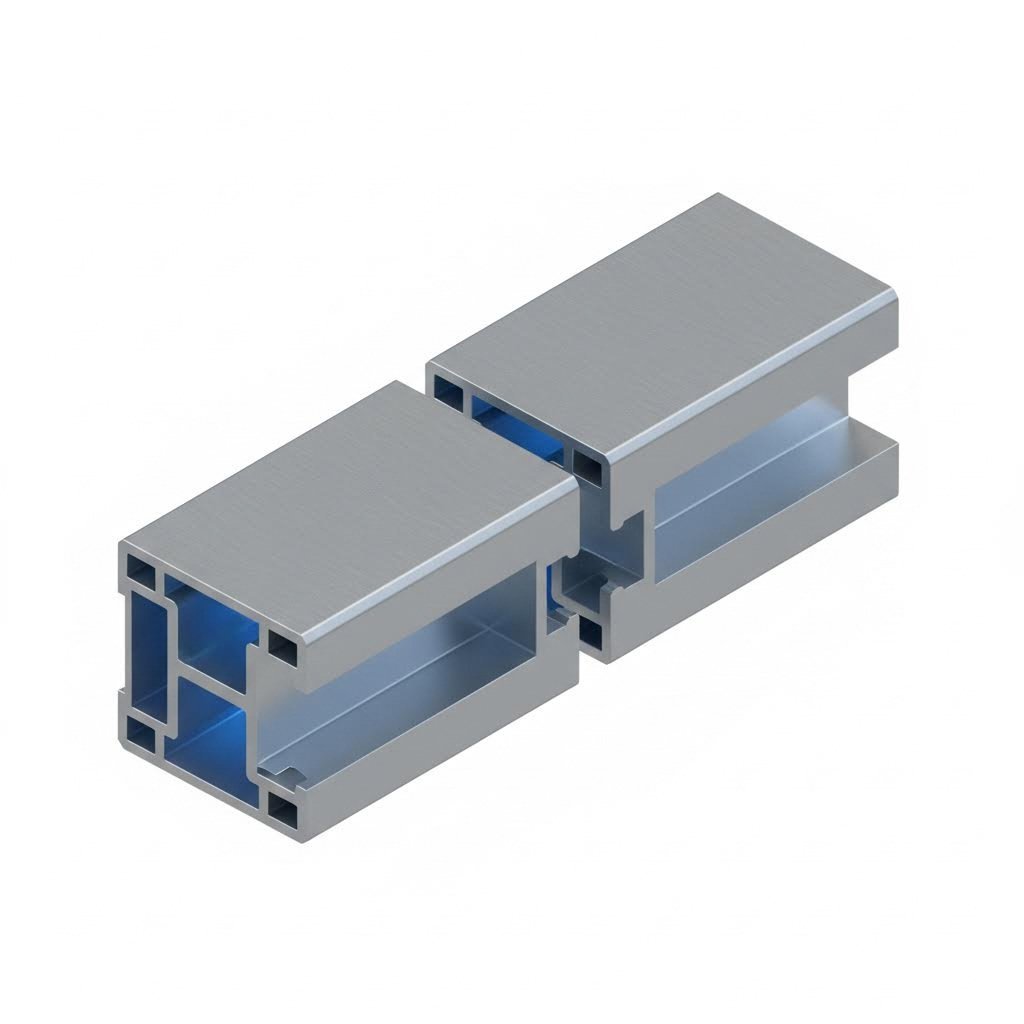
When you're designing a frame or structure, you need hard numbers—not vague promises about strength. Understanding the technical specifications of 80x40mm aluminum extrusion allows you to calculate deflection, determine load limits, and select the right profile orientation for your application. Let's dive into the engineering data that separates professional design from guesswork.
The cross-sectional geometry of an 80x40 aluminum extrusion directly determines its structural behavior. Unlike solid rectangular bars, T-slot profiles feature internal cavities and groove channels that affect both weight and strength characteristics. This engineered design optimizes the strength-to-weight ratio while maintaining compatibility with modular hardware.
For 8040 aluminum extrusions, the key geometric properties include:
According to manufacturer specifications from myaluprofil.de, an 80x40 Eco profile with 8mm groove width delivers a moment of inertia of 15.88 cm⁴ (Ix) and 57.74 cm⁴ (Iy). Notice the nearly 4:1 ratio between axes—this asymmetry is exactly what makes rectangular profiles so valuable for directional loading.
How much does this profile actually weigh? For standard 80x40 aluminum extrusion dimensions, you can expect approximately 2.2 to 2.5 kg per meter of length. The exact weight depends on the groove configuration and internal geometry. Economy profiles with thinner walls weigh less, while heavy-duty variants with reinforced cores tip the scale higher.
The referenced 80x40 4N180 Eco profile weighs 2.346 kg/m—a practical benchmark for estimating material costs and shipping weights. Compare this to a 40x80 profile from the tuli-shop specification sheet, which lists 2.24 kg/m for their version with 10mm grooves.
The table below summarizes key specifications for 80 20 dimensions and comparable profiles:
| Property | X-Axis Value (40mm) | Y-Axis Value (80mm) | Unit |
|---|---|---|---|
| Moment of Inertia (I) | 15.88 | 57.74 | cm⁴ |
| Section Modulus (W) | 7.94 | 14.44 | cm³ |
| Weight per Meter | 2.24 – 2.35 | kg/m | |
| Elasticity Modulus (E) | 70,000 | N/mm² | |
| Typical Alloy | AlMgSi0.5 (6063) | — | |
Always consult the specific manufacturer's datasheet for exact values, as specifications vary between product lines and groove configurations.
Here's where the 80x40 profile truly shines: orientation choice. Imagine holding a ruler flat versus on its edge—dramatically different stiffness, right? The same principle applies to rectangular extrusions.
When you orient the 80mm dimension vertically (standing the profile "tall"), you maximize resistance to vertical loads. The moment of inertia about the horizontal bending axis jumps to nearly 58 cm⁴. This configuration works perfectly for:
Flip the orientation—with the 40mm dimension vertical—and that stiffness drops to roughly 16 cm⁴ in the vertical plane. However, you now gain a wider mounting surface along the top, which proves useful for horizontal rails or bases where vertical stiffness matters less than footprint stability.
The mathematics behind this are straightforward. Using the standard beam deflection formula where deflection equals FL³/(EI × constant), you'll notice that moment of inertia (I) sits in the denominator. Tripling your I-value (from 16 to 58 cm⁴ by rotating the profile) cuts deflection by roughly two-thirds under identical loading conditions.
For practical design, the aluminum profile specification guide recommends using a maximum bending tension (K) of 100 N/mm² for constant loads, 40 N/mm² for pulsating loads, and 30 N/mm² for alternating loads. These safety factors account for fatigue and ensure long-term structural integrity.
Understanding these orientation effects helps you optimize material usage. Rather than jumping to a heavier 80x80 profile, simply rotating an 80x40 extrusion might deliver all the stiffness your application requires—at lower cost and weight.
You've mastered the dimensions and orientation effects—but there's another critical variable that determines how your 80x40 aluminum extrusion actually performs: the groove configuration. Walk through any supplier catalog, and you'll encounter terms like "Economy," "Light," and "Standard" without clear explanations. What do these designations actually mean for your project? Let's break down the groove variations that affect everything from fastener selection to load capacity.
The T-slot groove isn't just a channel for inserting hardware—it's an engineered feature that directly impacts your profile's strength and versatility. According to item's aluminum profile guide, manufacturers offer three distinct design categories within their profile lines:
The difference matters more than you might expect. When fasteners engage the groove flanks, the wall thickness behind those flanks determines how much force the connection can handle before deformation occurs. A Standard 80-40 profile might support significantly higher tensile loads per fastener than its Economy counterpart—sometimes by 30% or more.
Here's what makes this particularly important for 80 / 40 extrusions: the anodized aluminum profiles from quality manufacturers feature inclined groove flanks. When you tighten fasteners into these grooves, the angled surfaces press against the fastener in the elastic range. This creates additional pre-tensioning that keeps connections secure even under vibration—a critical advantage for machine bases and dynamic applications.
Beyond the structural variants, you'll choose between open and closed groove options. This decision affects cleanliness, aesthetics, and functional flexibility.
Open grooves run continuously along the profile's length, allowing you to insert T-nuts and hardware at any point. This configuration offers maximum flexibility during assembly and makes future modifications straightforward. Need to add a bracket halfway down a frame? Simply slide in a T-nut from either end.
Closed grooves eliminate the external slot opening while retaining an internal cavity for hardware insertion at profile ends. According to industry specifications, closed-groove variants are particularly easy to clean and offer a more elegant aesthetic. They're ideal for cleanroom production environments where dirt accumulation in open slots would create contamination risks.
Consider these factors when selecting your groove configuration:
Many 80+40 profile projects combine both styles strategically. You might use open grooves on interior frame members where flexibility matters, while specifying closed grooves on exterior faces exposed to dust or requiring frequent cleaning.
Selecting the right groove configuration comes down to balancing three factors: load requirements, environmental conditions, and budget constraints.
For high-load applications like CNC machine frames or heavy automation equipment, Standard profiles with open grooves typically deliver the best performance. The full-thickness construction handles maximum fastener loads, while open grooves allow you to position supports exactly where stress analysis indicates they're needed.
Weight-sensitive applications—think overhead handling equipment or portable workstations—benefit from Light profiles. You sacrifice some load capacity, but the reduced mass makes structures easier to move and reduces stress on supporting components. As item notes, their Line 5 and Line 6 lightweight profiles are specifically designed for such weight-optimized constructions.
Economy profiles shine in cost-sensitive projects where structural requirements fall well within the reduced capacity limits. Educational equipment, display frames, and prototype structures often don't need maximum load ratings. Choosing Economy variants here frees budget for other project priorities without compromising safety.
The groove width—typically 8mm or 10mm for 80x40 profiles—also dictates your accessory ecosystem. An 8mm groove accepts M8 fasteners and compatible T-nuts, while 10mm grooves accommodate M10 hardware for heavier-duty connections. According to design guidelines from Yaji Aluminum, integrated T-slots and grooves during extrusion eliminate secondary machining, reducing total manufacturing cost while ensuring precise tolerances.
Before finalizing your specification, verify that your chosen fasteners, brackets, and accessories match the groove dimensions. A mismatch between groove width and hardware creates frustrating compatibility problems that delay assembly and increase costs.
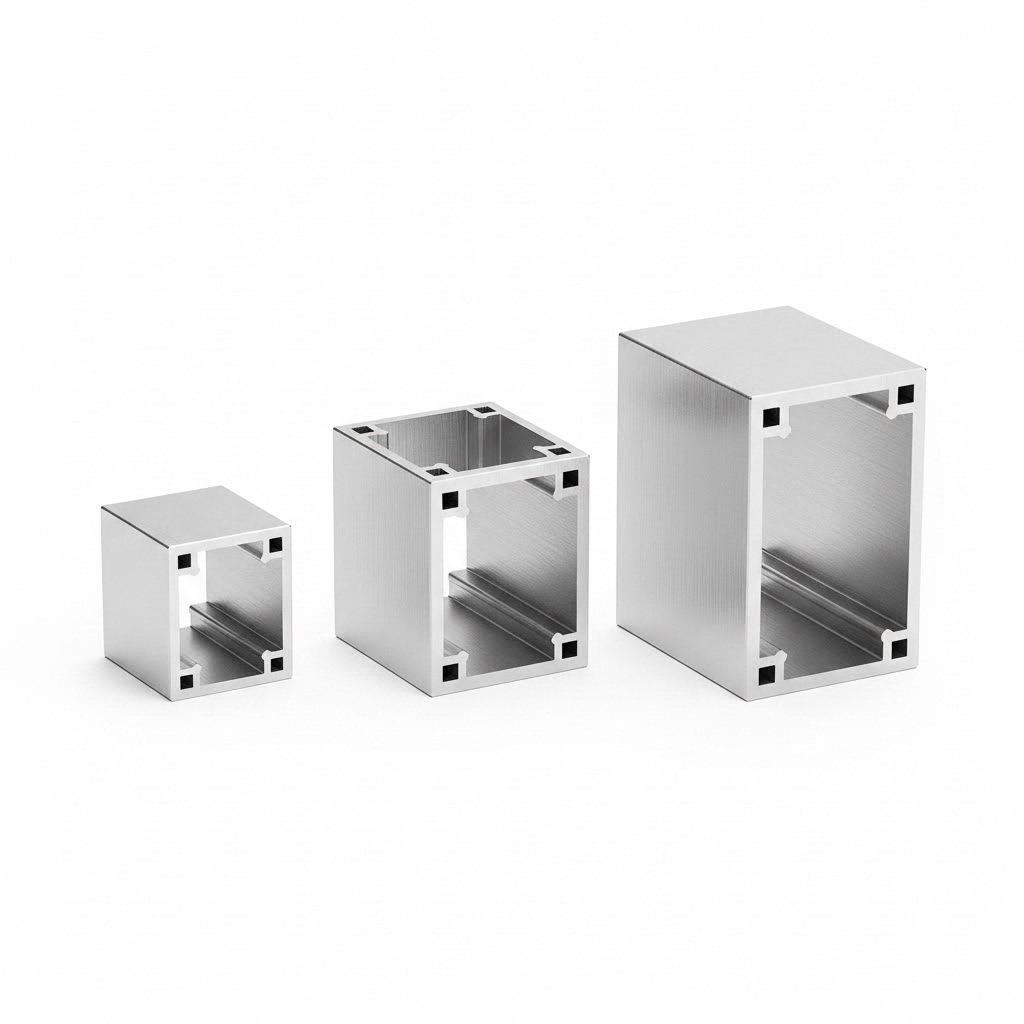
You've identified 80x40 aluminum extrusion as a strong candidate for your project—but how do you know it's the right choice? Perhaps a simpler 40x40 profile would suffice, or maybe you need the heavy-duty performance of an 80x80. Making this decision confidently requires understanding how these profiles compare across strength, weight, cost, and application fit. Let's examine when each size makes sense and why the aluminium profile 40 x 80 often hits the sweet spot.
The 40x40 profile is the workhorse of the aluminum extrusion world—according to Yaji Aluminum's complete guide, it's the most widely used industrial standard due to its balance between rigidity and weight. So when does stepping up to an 80x40 make sense?
The answer lies in directional loading. A 4040 extrusion dimensions of 40mm × 40mm creates symmetric strength—equal stiffness in both horizontal and vertical planes. This works perfectly for applications like light equipment frames, 3D printer enclosures, or workbench legs where loads distribute evenly.
However, imagine a horizontal beam spanning a gap with weight hanging from it. That 40x40 profile will deflect identically whether you rotate it or not—there's no "strong axis" to exploit. An 80x40 profile changes the equation dramatically. Orient the 80mm dimension vertically, and you gain nearly four times the moment of inertia compared to the 40x40. This translates to:
Weight difference tells part of the story too. A standard 40x40 profile weighs approximately 1.5–1.7 kg/m, while an aluminium extrusion 4080 runs around 2.2–2.5 kg/m. You're adding roughly 50% more weight—but gaining nearly 300% more stiffness in the optimized axis. That's an exceptional strength-to-weight trade-off when your loads are directional.
What about moving up to an 80x80 profile when 80x40 isn't quite enough? This decision involves different trade-offs—primarily cost and weight versus symmetric high-strength performance.
An 80x80 profile provides equal stiffness in both axes, making it ideal for applications where loads shift direction or where you can't predict the primary stress orientation. Think of a machine base that might experience forces from any direction during operation, or a safety enclosure that must resist impacts from multiple angles.
But this symmetric strength comes at a price—literally. An 80x80 profile typically weighs 4.0–4.5 kg/m, nearly double the 80x40. Material costs scale proportionally, and so does shipping weight for larger projects. If your application genuinely requires symmetric strength, the 80x80 justifies its cost. However, many projects specify 80x80 profiles "just to be safe" when directional analysis would reveal that an 80x40—properly oriented—handles the actual load requirements perfectly well.
Consider this practical scenario: a vertical column supporting an overhead gantry. The primary load pushes straight down. Horizontal forces from the gantry's movement are secondary and predictable. In this case, an 80x40 oriented with the 80mm dimension aligned to resist the gantry's travel direction often provides adequate strength at significantly lower cost than an 80x80.
How do you systematically choose the right profile? Start by identifying your load characteristics, then match them against each profile's strengths. The table below provides a quick reference for common scenarios:
| Profile Size | Best Use Case | Relative Strength | Cost Consideration | Weight Factor |
|---|---|---|---|---|
| 40x40 | Light frames, lab equipment, symmetric loads | Baseline (equal both axes) | Lowest material cost | ~1.5–1.7 kg/m |
| 80x40 (4080) | Directional loads, spans, conveyor frames | ~3.6× baseline on strong axis | Moderate (~50% more than 40x40) | ~2.2–2.5 kg/m |
| 80x80 | Heavy machinery, multi-directional loads | ~3.6× baseline (both axes) | Highest (~2× of 80x40) | ~4.0–4.5 kg/m |
When evaluating your project, ask these questions in sequence:
The 80x40 profile earns its popularity precisely because it occupies this middle ground. You get substantially more strength than a 40x40 without the weight and cost penalty of 80x80—provided you orient the profile correctly for your specific loading conditions. Understanding this trade-off helps you specify exactly what your application requires, avoiding both under-engineering risks and over-specification waste.
With the right profile size selected, let's explore where these 80x40 extrusions actually get put to work across different industries and applications.
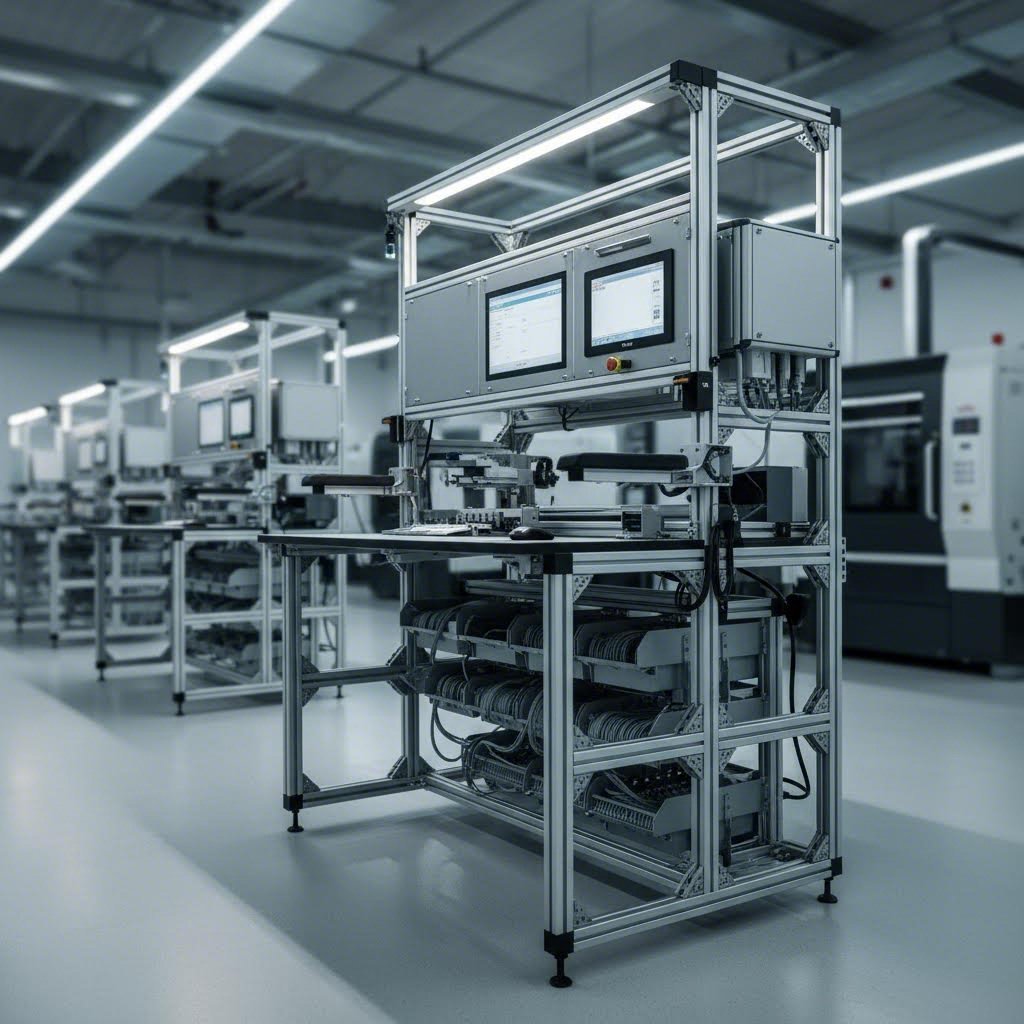
Where does this 2:1 aspect ratio profile actually shine in practice? From factory floors to research labs, the 80x40 aluminum extrusion has carved out a distinct niche wherever directional strength, modular assembly, and clean aesthetics converge. Let's explore the applications where this t slot channel profile delivers exceptional value—and understand why engineers keep reaching for it across diverse industries.
Walk through any modern manufacturing facility, and you'll spot 80x40 profiles forming the backbone of automation systems. According to Disumtec's product specifications, the 40x80 rectangular section makes it an ideal solution for industrial automation structures, racks, safety enclosures, and engineering projects.
Why does this profile dominate machine building? The answer connects directly to how machines generate loads. CNC routers, laser cutters, and robotic work cells create forces that primarily push downward and horizontally along predictable axes. The 80x40's directional stiffness matches these load patterns perfectly when oriented correctly.
Specific automation applications include:
The compatibility factor seals the deal for many engineers. As Disumtec notes, these profiles work seamlessly with Bosch Rexroth, Item, and Minitech systems—facilitating integration into existing installations or new industrial designs without proprietary hardware constraints.
Beyond heavy machinery, the 80x40 profile transforms how companies design adjustable workstations and technical furniture. The 4040 t slot comparison reveals why: while square profiles work for simple frames, ergonomic workstations demand vertical rigidity to support monitors, tool arms, and overhead lighting without wobbling.
Picture an assembly workstation where operators stand for eight-hour shifts. The vertical posts need to resist forward-leaning forces as workers reach across the surface. An 80x40 profile oriented with the 80mm dimension front-to-back provides this rigidity while keeping the side profile slim for easy aisle navigation.
Vention's documentation highlights several workstation-specific benefits:
Technical furniture extends this concept to laboratory benches, electronics testing stations, and cleanroom equipment. The anodized aluminum surface resists corrosion from cleaning chemicals while the bolted connections eliminate contamination concerns associated with welded steel alternatives.
Step outside the factory, and you'll find 80x40 aluminum t-slot extrusion serving aesthetic purposes alongside structural ones. Trade show displays, retail fixtures, and architectural installations increasingly feature these profiles for their clean lines and modular adaptability.
The 2:1 aspect ratio creates visual interest that square profiles lack. Designers orient the rectangular cross-section to emphasize either horizontal or vertical lines, creating dynamic compositions that guide viewer attention. Combined with the ability to accept panel clips, lighting tracks, and signage mounts directly into the T-slots, these profiles enable rapid installation and teardown for temporary exhibits.
Architectural applications leverage the profile's strength-to-weight advantage:
What makes the profile particularly suitable for display work is the assembly method itself. As industry sources confirm, connections require no welding—resulting in a clean, professional appearance that exhibition-quality structures demand. When the show ends, frames disassemble completely for compact shipping to the next venue.
Whether supporting a precision CNC machine or showcasing products at an international trade fair, the 80x40 profile delivers the directional strength, modular flexibility, and professional finish that demanding applications require. The question isn't whether this profile fits your project—it's which accessories and finishing options will complete your specific implementation.
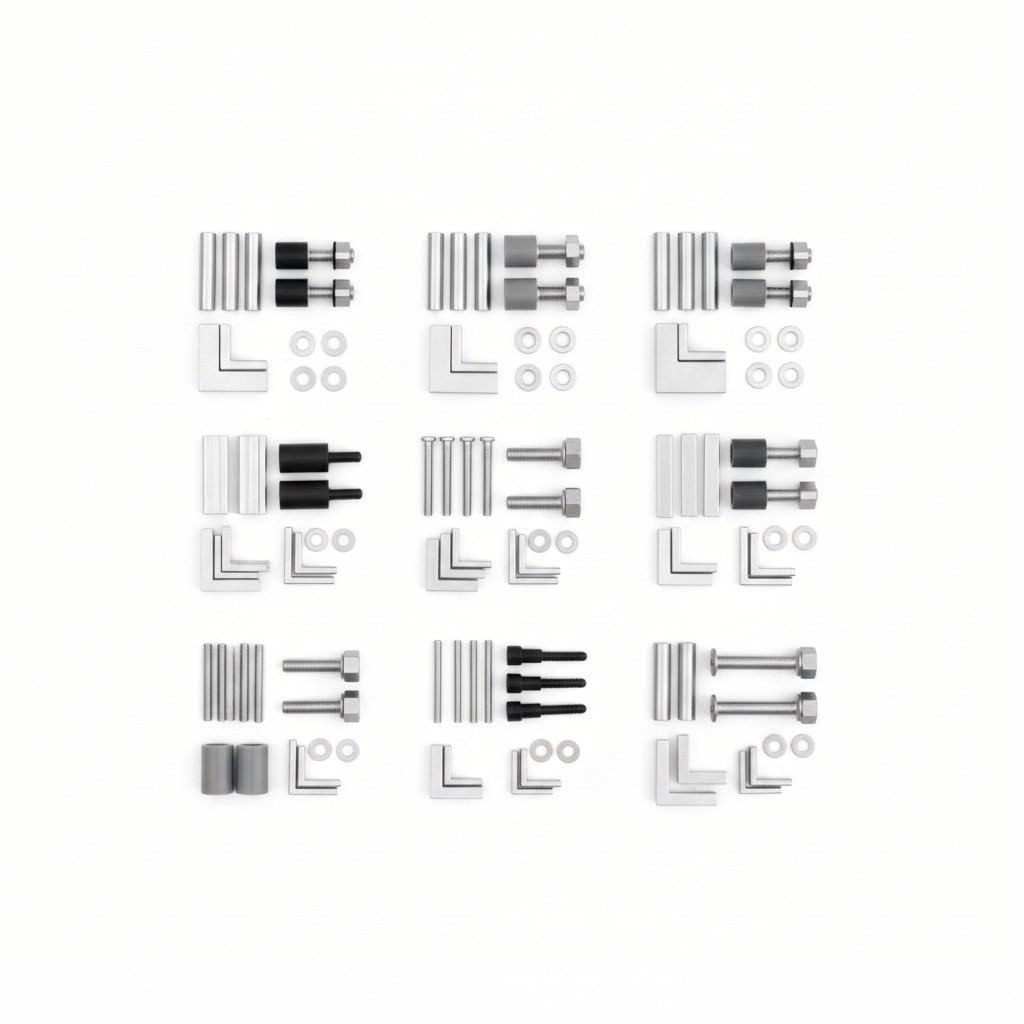
You've selected your 80x40 aluminum extrusion—but here's the reality: the profile itself is just the skeleton. Without the right accessories, you're left with beautiful metal bars that can't actually connect to anything. The hardware ecosystem surrounding these profiles determines whether your structure comes together smoothly or becomes a frustrating puzzle of incompatible parts. Let's explore the fasteners, brackets, and finishing components that transform raw extrusions into functional assemblies.
Every connection in a T-slot system starts with one critical component: the T-nut. These specialized fasteners slide into the profile's groove and provide threaded anchor points for bolts, brackets, and accessories. According to Phidgets' T-Slot Guide, three main T-nut varieties serve different assembly scenarios:
Matching your T-nut to your slot width is non-negotiable. For 8020 rails and similar profiles with 8mm slots, you'll need nuts designed for that specific dimension. A 10mm T-nut won't seat properly in an 8mm groove, creating weak connections that fail under load. Always verify the slot width specification before ordering hardware.
Bolt selection follows the T-nut choice. As Phidgets notes, the bolt should penetrate deep enough into the nut for a secure connection but never touch the extrusion's internal surface. For example, mounting a 5mm thick panel with M6 bolts onto 6mm-thick preset nuts requires M6x10mm bolts—long enough to engage the nut fully while leaving approximately 1mm clearance from the aluminum.
Brackets transform individual extrusions into rigid structures. The variety available for t aluminum profiles can seem overwhelming, but each type serves specific connection scenarios.
Corner brackets reinforce 90-degree joints and come in several configurations:
Pivot connectors handle non-right-angle connections. When your design requires angled joints—common in architectural displays or ergonomic equipment—anchor connectors provide adjustable connections. These require drilling a specific hole pattern into the extrusion end, but enable any angle from acute to obtuse.
Linear bar connectors join two extrusions end-to-end, extending your reach beyond standard profile lengths. According to Phidgets' recommendations, always use at least two connectors per joint—one on each side—though four connectors (one per slot) provide maximum strength for structural spans.
For 8020 extrusion dimensions and compatible profiles, Framing Tech's compatibility guide emphasizes checking the hardware product ID. This identifier typically indicates which T-slot width category the accessory fits, helping you avoid ordering mistakes that delay your project.
Professional assemblies require more than structural connections—they need polished finishing touches and functional accessories that complete the system.
End caps cover the open ends of extrusions, preventing dirt accumulation and creating a clean, finished appearance. These snap-fit plastic covers match the profile's cross-section and come in colors coordinated with common anodized finishes. For outdoor applications, sealed end caps prevent water ingress that could cause internal corrosion.
Profile reducers enable panel integration. According to assembly guides, these plastic inserts convert T-slot grooves into channels that grip panel edges. They accept panels from 3-5mm thick and hold surprisingly firmly—though bordering panels on at least two sides ensures secure retention. Applications include mounting acrylic safety shields, aluminum composite panels, or even temporary cardboard prototypes.
Cable management accessories route wiring cleanly through T-slot structures. Options include:
Motion components transform static frames into dynamic systems. Linear bearings slide along the profile's external surface, while specialty adapters accept caster wheels and adjustable feet. For 40x40mm and 40x80mm profiles, foot adapters require tapping the extrusion face with M6 or M14 threads—once installed, leveling feet or heavy-duty casters screw directly into the adapter plate.
One critical compatibility note from Framing Tech: beware of galvanic corrosion when mixing metals. While aluminum works well with most materials, avoid direct contact between T-slot aluminum and stainless steel hardware in wet environments. The electrochemical reaction between these metals accelerates corrosion, potentially weakening connections over time.
With the right accessories selected and compatibility verified, you're ready to consider how surface treatments and customization options can further optimize your 80x40 profiles for specific environmental and aesthetic requirements.
Ordering aluminum extrusion sounds straightforward—until you realize the catalog listing is just the starting point. What length do you need? Should the ends be cut square or mitered? What about surface finish—will raw aluminum work, or does your application demand anodizing or powder coating? Understanding these customization options transforms you from a confused buyer into a confident specifier who gets exactly the right product for the job.
The surface finish you choose affects far more than appearance. According to industry finishing guides, the right finish acts as your first shield against corrosion, wear, and weather effects. Let's break down the most common options for 80x40 aluminum extrusion:
Mill finish represents raw aluminum as it exits the extrusion die—no additional treatment applied. This option costs the least and works fine for interior applications where appearance isn't critical. However, mill finish aluminum will oxidize over time, developing a dull gray patina. For prototype work or hidden structural members, this economical choice often suffices.
Anodizing thickens aluminum's natural oxide layer through an electrochemical process. As Gabrian's finishing comparison explains, technicians submerge the aluminum in an electrolytic bath and run current through it, creating a protective layer that enhances corrosion resistance, wear resistance, and heat dissipation. The process also creates an ideal surface for dyes—you can achieve colors ranging from clear (natural aluminum appearance) to black, bronze, champagne, and even rose gold.
Anodizing thickness matters significantly. For outdoor architectural applications, Class I anodizing (0.7 mils or thicker) provides superior protection. Interior projects typically use Class II (0.4 mils minimum), which offers adequate protection at lower cost.
Powder coating applies a dry powder electrostatically, then cures it in an oven to create a durable, uniform layer. According to finishing specialists, powder coating offers brilliant colors and unique textures that resist fading even when exposed to outdoor elements. Unlike anodizing, powder coating can be applied in thick layers, making it excellent for hiding minor surface imperfections.
The table below compares these primary finishing options:
| Finish Type | Durability | Color Options | Best Applications | Relative Cost |
|---|---|---|---|---|
| Mill Finish | Basic—oxidizes over time | Natural aluminum only | Prototypes, hidden structures | Lowest |
| Clear Anodized | Excellent wear/corrosion resistance | Metallic silver appearance | Industrial equipment, architectural | Moderate |
| Color Anodized | Excellent—maintains metallic look | Black, bronze, champagne, custom | High-end equipment, displays | Moderate-High |
| Powder Coating | Excellent UV/chip resistance | Virtually unlimited RAL colors | Outdoor equipment, branded fixtures | Moderate |
Specialty finishes address demanding applications. PVDF (polyvinylidene fluoride) coatings provide exceptional weather resistance for architectural facades exposed to harsh climates. Micro-arc oxidation creates extremely hard ceramic-like surfaces that outperform standard anodizing in abrasive environments. These advanced treatments cost more but deliver performance that standard finishes cannot match.
Imagine receiving your alluminum extrusion order only to discover the lengths don't quite match your design. You're left scrambling for cutting equipment or paying for expedited replacement orders. This scenario highlights why understanding cut-to-length services matters before you order.
Most suppliers offer custom cutting with tolerances typically ranging from ±0.5mm for standard cuts to ±0.1mm for precision applications. When specifying 8020 aluminum extrusion dimensions, always clarify:
Beyond cutting, CNC machining opens extensive customization possibilities. Drilling and tapping create threaded holes for direct bolt mounting without T-nuts. Counterboring recesses bolt heads flush with the profile surface. Notching removes material for clearance around other components. Complex machining can even create custom bracket features directly in the extrusion, eliminating separate hardware.
For projects requiring these capabilities, full-service providers like Shengxin Aluminium offer comprehensive deep processing services. Their CNC machining centers handle precise cutting, drilling, and bending operations, while their surface treatment facilities provide anodizing in custom colors, powder coating, PVDF, and micro-arc oxidation. This end-to-end capability—from die development through mass production using their 35 extrusion presses—means you can source completely finished components rather than coordinating multiple vendors.
Finding cheap aluminium extrusion that actually meets your specifications requires understanding how suppliers operate. Here's what to consider when placing orders:
Minimum order quantities (MOQs) vary dramatically between suppliers. Stock profiles often ship in small quantities—sometimes even single pieces. Custom lengths typically require minimum orders of 5-10 pieces per size. Custom die extrusions (modified profiles) may require hundreds or thousands of meters to justify tooling costs.
Lead times depend on customization level:
Tolerance specifications require explicit communication. Standard extrusion tolerances follow industry norms (typically ±0.25mm for wall thickness, ±0.5mm for overall dimensions), but precision applications may demand tighter controls. Specify your requirements upfront—discovering dimensional issues after delivery wastes time and money.
Material certification matters for structural applications. Request mill certificates confirming the alloy composition (typically 6063-T5 or 6063-T6) and mechanical properties. For safety-critical applications, third-party testing documentation provides additional assurance.
The ordering process typically follows this sequence:
For complex projects, consider working with established manufacturers who provide technical support throughout the process. Experienced suppliers can identify potential issues before production, suggest cost-saving alternatives, and ensure your specifications actually achieve your functional goals. This partnership approach often saves more than it costs—especially when specifications need adjustment after initial prototyping reveals design refinements.
You've absorbed the technical specifications, compared profile sizes, and identified your ideal groove configuration. Now comes the practical challenge: actually sourcing quality 80x40 aluminum extrusion that meets your project requirements without delays, compatibility headaches, or budget surprises. The difference between a smooth project and a frustrating experience often comes down to how systematically you approach supplier selection and specification verification.
Not all 80x40 aluminum profile suppliers deliver equal value. According to industry sourcing guidelines, evaluating potential suppliers requires gathering comprehensive information across several critical dimensions:
Technical capabilities and expertise determine whether a supplier can actually deliver what you need. Ask pointed questions: What aluminum alloys do they specialize in? Can they produce custom profiles to meet specific requirements? What are their extrusion tolerances? Suppliers who struggle to answer these questions confidently may lack the expertise your project demands.
Quality control processes separate reliable suppliers from risky ones. As quality assessment checklists emphasize, look for ISO certification, documented inspection procedures, and willingness to provide test reports. Ask how they handle defect rates and quality complaints—a supplier's response reveals their commitment to customer satisfaction.
Capacity and scalability matter beyond your initial order. What happens when your project succeeds and you need more profiles? Understanding lead times, minimum order quantities, and production capacity helps you assess whether a supplier can grow with your needs. For projects requiring 80 + 40 profiles in significant quantities, verify that the supplier can scale production without compromising quality or delivery schedules.
Value-added services often distinguish excellent suppliers from adequate ones. According to supplier evaluation criteria, secondary operations like anodizing, machining, and managed logistics can dramatically simplify your supply chain. A supplier offering end-to-end support—from die development through surface treatment to delivery—eliminates the coordination burden of managing multiple vendors.
For example, manufacturers like Shengxin Aluminium exemplify this comprehensive approach. With over 30 years of industry experience and 35 extrusion presses ranging from 600T to 5500T capacity, they provide factory-direct access to custom 6063 aluminum profiles alongside complete deep processing capabilities. Their technical team supports projects from initial die development through mass production—the kind of partnership that prevents specification errors before they become costly problems.
Before placing any order for 80 - 40 aluminum profiles, work through this verification checklist systematically. Each item catches a potential issue that could delay your project or compromise results:
| Specification Category | What to Verify | Why It Matters |
|---|---|---|
| Alloy Designation | Confirm 6063-T5 or 6063-T6 specification | Affects mechanical properties and machinability |
| Groove Width | Verify 8mm or 10mm slot dimensions | Determines T-nut and accessory compatibility |
| Groove Configuration | Specify Standard, Light, or Economy series | Impacts load capacity per fastener connection |
| Surface Finish | Define mill, anodized, or powder coated requirements | Affects corrosion resistance and appearance |
| Length Tolerance | Specify acceptable cutting precision (±0.1mm to ±0.5mm) | Determines assembly fit and rework requirements |
| Secondary Machining | Document all holes, taps, and special features | Ensures components arrive ready for assembly |
Pay particular attention to groove compatibility. As compatibility guidelines emphasize, if your project involves connecting multiple profiles with brackets and fasteners, verify that chosen profiles and connectors work seamlessly together. Ordering profiles with 8mm slots while your bracket inventory assumes 10mm grooves creates expensive delays.
Request samples before committing to large orders whenever possible. According to sourcing best practices, physical samples let you verify dimensional accuracy, surface finish quality, and actual compatibility with your planned accessories. The small investment in sample verification prevents much larger losses from unsuitable bulk orders.
Ready to move forward? Follow this structured approach to transform your project requirements into a successful sourcing outcome:
Working with experienced manufacturers provides advantages beyond competitive pricing. Suppliers like Shengxin Aluminium offer technical team support that helps you refine specifications before production begins. Their CNC machining capabilities handle precise cutting, drilling, and bending, while surface treatment options including custom-color anodizing, powder coating, PVDF, and micro-arc oxidation ensure your profiles arrive ready for immediate assembly.
Remember that the cheapest quote rarely represents the best value. Factor in lead time reliability, quality consistency, and the hidden costs of managing multiple vendors when one full-service supplier could handle everything. As selection guides consistently emphasize, choosing a reputable supplier with excellent support enhances your overall experience and ensures you receive quality products that meet your project's demands.
Your 80x40 aluminum extrusion project success ultimately depends on matching the right specifications to your application requirements—then finding a supplier capable of delivering exactly what you've specified. With the knowledge from this guide, you're equipped to make those decisions confidently and source profiles that perform exactly as your designs intend.
4080 and 8040 refer to the exact same profile dimensions—both describe an extrusion measuring 40mm by 80mm. The difference lies in naming convention: 4080 lists the smaller dimension first (40mm), while 8040 places the larger dimension first (80mm). Some manufacturers use this ordering to suggest intended mounting orientation, but the profiles are physically identical. Always verify the actual dimensions and slot width (8mm or 10mm) when ordering to ensure hardware compatibility.
Standard 4080 aluminum extrusion measures 40mm by 80mm in cross-section with T-slot grooves typically 8mm or 10mm wide. The profile weighs approximately 2.2 to 2.5 kg per meter, depending on groove configuration and internal geometry. Key structural properties include a moment of inertia of about 15.88 cm⁴ on the minor axis and 57.74 cm⁴ on the major axis, providing nearly 4:1 stiffness ratio between orientations.
Compatible accessories include T-nuts (preset, square, and drop-in types), corner brackets, linear bar connectors, pivot connectors for angled joints, end caps, cable management channels, and motion components like linear bearings and caster wheels. The critical factor is matching your slot width—profiles with 8mm slots require M8-compatible hardware, while 10mm slots accept M10 fasteners. Always verify the hardware product ID to ensure proper fit with your specific profile series.
Choose 40x40 for light-duty applications with symmetric loads (lab equipment, 3D printer frames). Select 80x40 when loads are primarily directional—it offers nearly 4x the stiffness of 40x40 on its strong axis while adding only 50% more weight. Opt for 80x80 when you need symmetric high strength in both axes for heavy machinery or unpredictable multi-directional forces. The 80x40 profile provides the best value for medium-duty applications where proper orientation can address loading requirements.
Common surface treatments include mill finish (raw aluminum, lowest cost), clear anodizing (excellent corrosion resistance with metallic appearance), color anodizing (black, bronze, champagne options), and powder coating (unlimited RAL colors with UV resistance). Specialty options like PVDF provide exceptional weather resistance for architectural applications, while micro-arc oxidation creates extremely hard ceramic-like surfaces. Full-service providers like Shengxin Aluminium offer comprehensive finishing options including custom-color anodizing and advanced treatments to meet specific project requirements.



 serviço on-line
 0086 136 3563 2360
 sales@sxalu.com
 +86 136 3563 2360
 português
 English
 français
 Deutsch
 русский
 español
 العربية
 ไทย
ไทย Việt
Việt Українська